
During my time in Lilongwe, Malawi, I will spend time in the Kamuzu Central Hospital Oncology Clinic, Hematology Clinic, and Palliative Care Clinic for both clinical and educational purposes. The Palliative Care Clinic has recently been established within the Malawi National Cancer Center, with the aim of providing integrated, multidisciplinary care to ease suffering of patients with advanced cancer. It has so far been staffed primarily by nursing staff with some palliative care training, and I will provide physician support for clinical care while helping to develop clinic workflows.
In addition, there is currently limited capacity for palliative care consults for inpatients on the Oncology wards. These patients often have the highest symptom burden or are near end of life. I will see inpatient consults while in Malawi, and use experience I gained from an inpatient palliative care consult service in Uganda to develop a strategy for an ongoing consult service after my departure, which will include education of faculty and housestaff in Oncology.
Finally, I will work in the Hematology clinic at Kamuzu Central Hospital, where the use of hydroxyurea in pediatric patients has been scaled up since 2017. While sickle cell disease in sub-Saharan Africa typically has high mortality in childhood, there are now over 400 patients 16 and older receiving sickle cell care in this clinic. The majority of adult sickle cell research has been conducted in high-resource settings, so this population represents an opportunity to understand the full spectrum of sickle cell related complications faced by adolescents and young adults in Africa. I will assist with an ongoing assessment of patient-reported outcomes including symptom burden and psychosocial effects on quality of life. These assessments will guide future work to improve care for this population.
There are two major populations I will work with while in Malawi. The first is the population of palliative care patients seen at the cancer center, who have advanced cancer with high symptom burden. In contrast to the extensive resources devoted to patients in major cancer centers across the US, patients with advanced cancer in Malawi often suffer greatly from lack of care. Patients in low-resource settings often delay seeking care due to lack of funds and of nearby medical resources. When they do seek care, the travel to a medical center and initial diagnostic testing may exhaust their funds as well as valuable time. After finally reaching a cancer center in a major health center, they may be told that treatment is financially nonviable or that their disease has advanced too far for treatment to be offered. Since there is seemingly nothing the health system can aid them with, they are discharged home to die. The death that awaits them is far more painful than it need be due to a lack of basic resources for symptom management and psychosocial support. At a palliative medicine service in Uganda, I have seen the tremendous impact palliative care can have on easing symptoms with relatively simple interventions as well as talking patients through difficult decisions and providing support for end of life.
The second is the population of adolescents and young adults suffering from sickle cell disease, an emerging population in sub-Saharan Africa. It is only recently that these patients are living beyond childhood and facing a new set of challenges. I am part of a growing movement to incorporate palliative care into sickle cell care in the US, and plan to concurrently work to provide the same in Africa. My background in med-peds especially suits me to work with the adolescent and young adult population in Malawi.
I am a current palliative medicine fellow who has been involved in global health work since my undergraduate years, working in Kenya, Tanzania and Uganda. As a palliative care physician, my goal is to work to expand palliative care services to the sub-Saharan African population.
During this trip, I will help develop sustainable workflows for a palliative medicine clinic embedded in a cancer center as well as an inpatient consult service. These efforts will have a lasting impact on one of the sickest populations in Malawi by improving how palliative care is being delivered. We will also create a plan for collecting information about these patients, including demographics, diagnoses, and specific palliative care related symptoms and needs, which will allow us to continue to improve the services delivered.
In addition, successful introduction of hydroxyurea for sickle cell disease has led to a growing population of adolescent and young adult sickle cell patients in Malawi. Laying the groundwork for a needs assessment will be the first step to providing them support via integration of palliative care into the sickle cell center.
This experience will also give me valuable experience for future projects aimed at expanding palliative care services in similar settings. For example, I have previously worked with an inpatient palliative care consult service in Uganda and can bring insights from their practice to UNC-Malawi, where such a service is being developed. Conversely, I have not previously worked in an outpatient palliative medicine clinic in sub-Saharan Africa, so the exposure I get during this rotation will give me necessary experience to help develop outpatient palliative care services in similar settings. Therefore, I believe the trip will have a lasting impact beyond the patients I see clinically while on site, both for the patient population in Malawi and those I will see in my global health career in future.


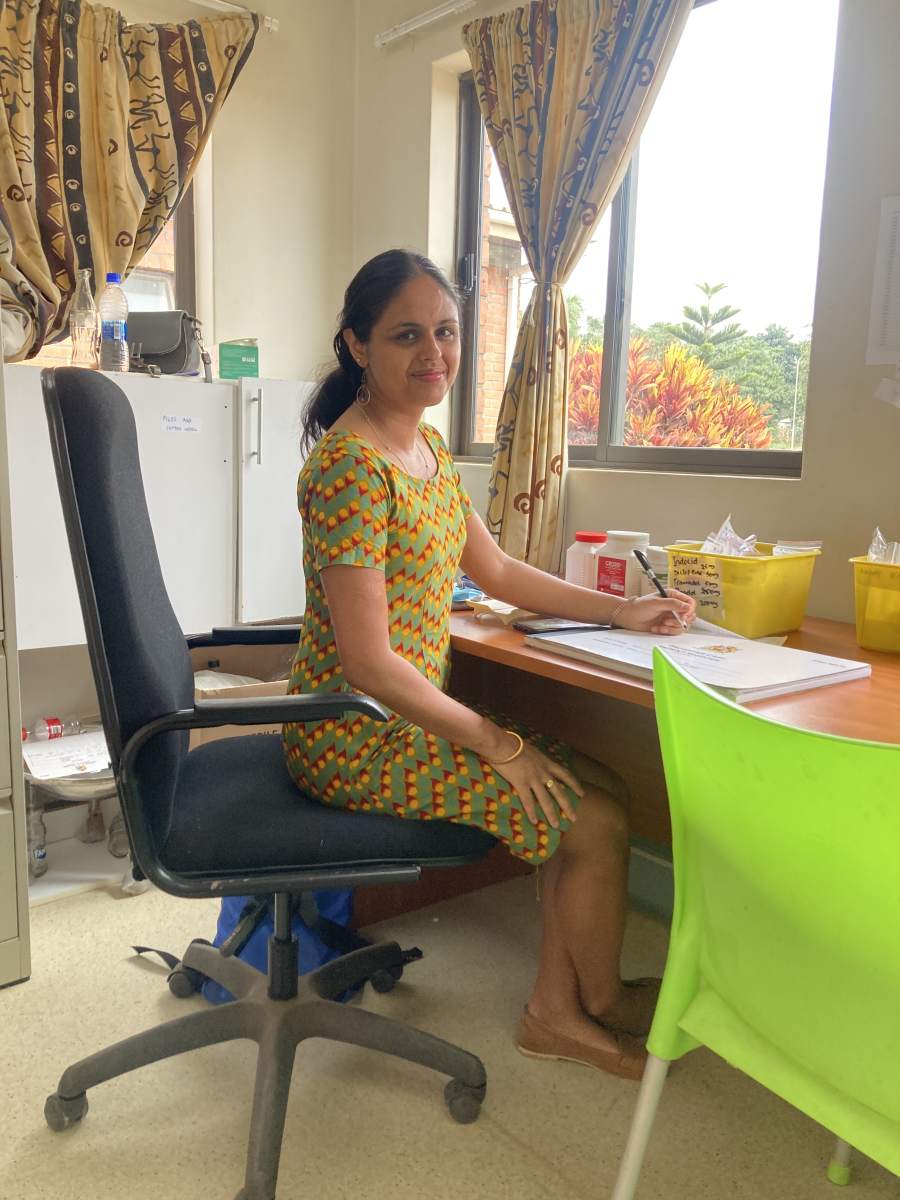


During my time in Lilongwe, Malawi, I worked in Kamuzu Central Hospital Palliative Care Clinic, Hematology Clinic and Oncology Ward. The Palliative Care Clinic was recently established within the Malawi National Cancer Centre, with the aim of providing integrated, multidisciplinary care to ease suffering of patients with advanced cancer. The clinic is currently primarily staffed by nursing staff with specialised palliative care training, and I provided physician support for clinical care while helping to develop clinic workflows. We completed holistic assessments of the impact of the cancer diagnosis on patients and families, made connections with resources and consultants when possible, provided anticipatory guidance and treated symptoms such as pain, nausea/vomiting, and constipation. I also saw palliative care consults for inpatients on the Oncology wards, who had the highest symptom burden and were often near end of life. Working alongside palliative care nursing staff and medical trainees, we saw how holistic assessment and compassionate communication about their illness could help patients and families make difficult decisions in ways that eased their suffering at the end of life.
Unfortunately, there was a national shortage of morphine sulfate during my time in Malawi, making it very difficult to control patients’ pain. This led me to liaise with contacts at the Palliative Care Association of Malawi, Central Medical Stores, Ndi Moyo Palliative Care Centre and Hospice Africa Uganda to understand the logistical and supply chain barriers to maintaining stock and explore alternative formulations which have been developed in low-resource settings. Finally, I observed that the cumbersome paper documentation system in the Cancer Centre led to difficulty in accessing the comprehensive psychosocial information gathered at initial palliative care visits and keeping track of symptom evolution over time. I worked with palliative care and oncology staff, National Cancer Centre leadership and the Digital Health Team to create a template for an electronic Palliative Care Clinic Registry, to be developed over the coming year as KCH moves toward an electronic health record system. I am hopeful that in addition to contributing to the care of patients I saw during my time in Malawi, this work will contribute to improving the quality of care for patients seen in the National Cancer Centre Palliative Care Clinic in the future.