
I will be traveling to Gaborone, Botswana to assist in the first of several planned ultrasound courses and training of emergency medicine (EM) resident physicians at the University of Botswana. The one-week course will be an intensive immersion of basic to advanced ultrasonography with a focus on developing the psychomotor skills of performing these exams. I will be traveling with several colleagues to assure adequate faculty to learner ratio needed to optimize the experience for the learners. This will be the first course of this long-term project with a mission of providing the future EM physicians in Botswana with proficient training in a bedside radiographic study that is more readily available. We know that this will allow for improved health outcomes for local patients where the ability to pay for another radiographic study might be a barrier to receiving care.
The immediate population served are in-training EM physicians. The use bedside ultrasound is largely a bygone conclusion in most emergency departments in the United States, however there is still a large dependence of radiology technician-performed ultrasounds for diagnostic exams, with radiologist interpretation. In many countries, radiologists are trained in the performance and interpretation of ultrasonography, and in yet many other countries, including Botswana, patients may not have easy access to these comprehensive exams, and thus physicians training in Emergency medicine must learn to perform and interpret these exams. In this and in subsequent missions to Botswana, I hope to impact the local health system both directly and indirectly by better equipping their health care providers with the tools and knowledge they need to optimally care for their fellow citizens.
My mission centers on best methods for effective, actionable, and sustainable efforts. To this end, I ultimately focus on providing the foundation and platform for learning that can be built upon, whether by virtual learning sessions when not in-country, and with staggered in-person courses to push proficiency. By providing long-term education and mentoring to physicians who are passionate about ultrasound, the learning continues when my team departs, improving access to care, time to diagnostics and overall medical care these settings.

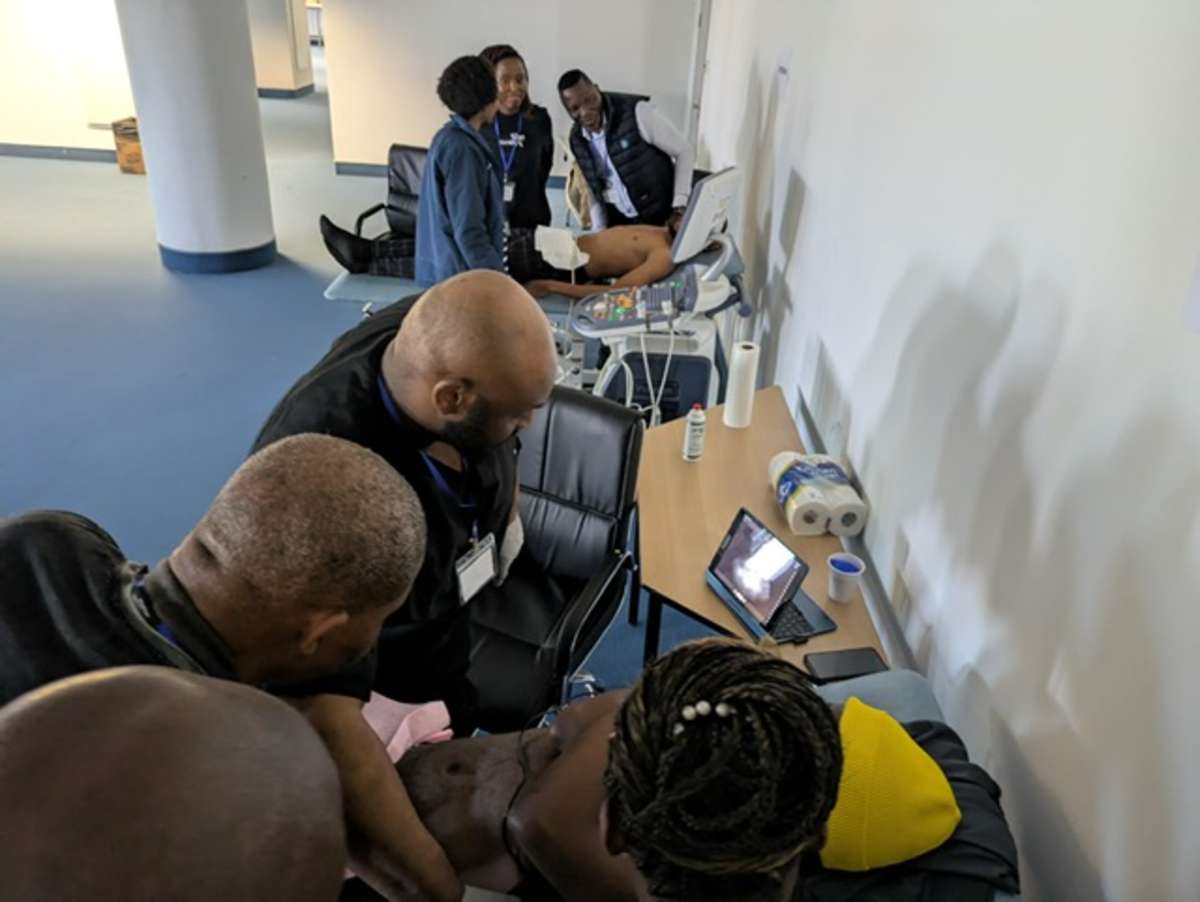


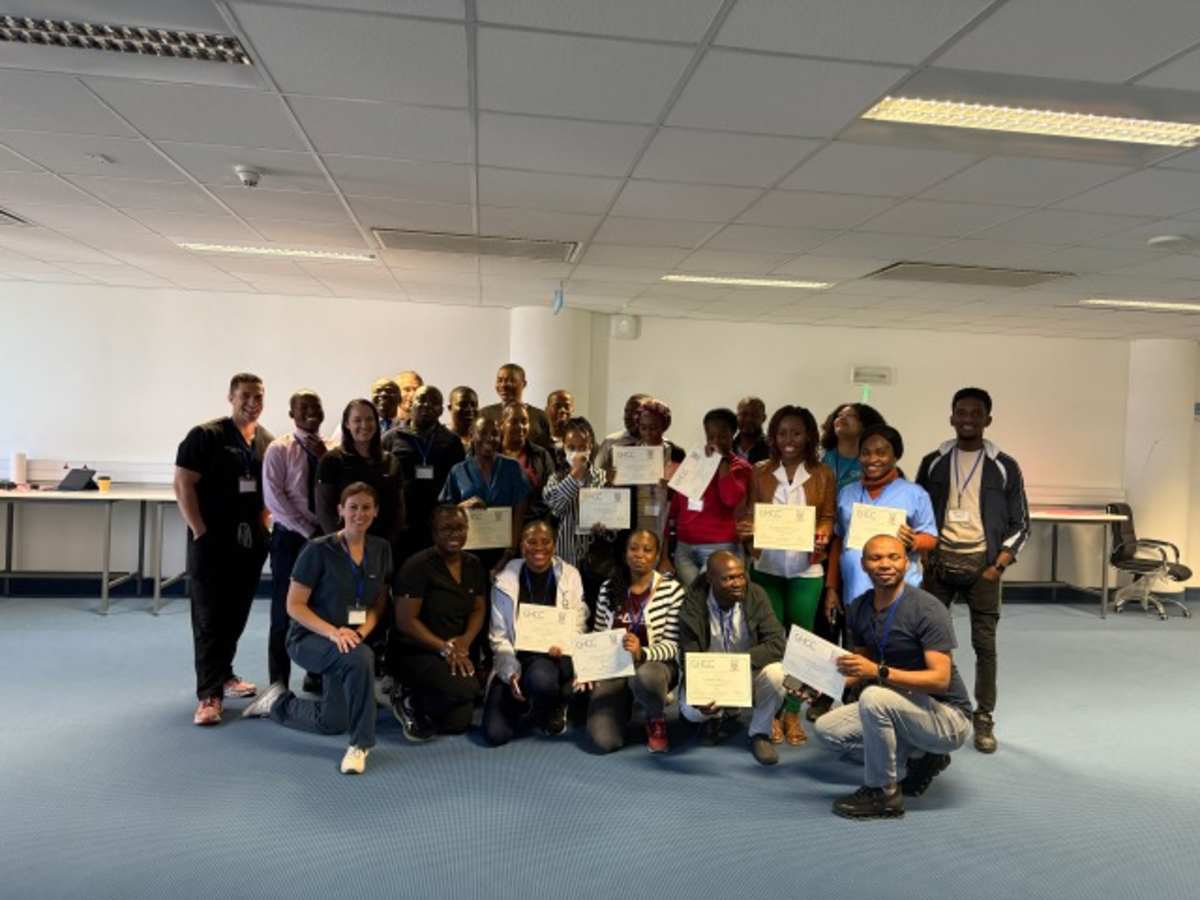






On this trip, our team lead a training workshop with the University of Botswana emergency medicine residency, the only one of its kind in Botswana. This was the first of hopefully long and productive relationship.
Here, we trained a group of mostly EM residents in core and advanced point-of-care ultrasonography, with several days dedicated to core exams- largely a review for these trainees that mostly had some, although very limited, exposure to ultrasound. The latter days were spent building and expanding on the knowledge from prior days with advanced ultrasound topics.
This high intensity training course had a strong focus on skill acquisition. To this end, each day was structured so that this a majority of the time was spent in skills lab, first with standardized patients, then the group would mobilize to the wards so that the learners could real time direct supervision. Patients with known or suspected pathologies, and those with undifferentiated presentations were scanned by learners, which aided in accelerated competence and confidence of the learner to perform the reviewed modalities.
The residents here have an independent motivator to continue building on learned applications as they have formal examinations during their training that include ultrasound topics, similar to the ITE (In-training exam) in the States. In preparation for this important exam, we administered OSCEs (objective structured clinical exam) at the end of the workshop to assess short term information retention and skill advancement.
Given their limited access to resources, investment these trainees have on their education and the retention level is truly inspirational.
This was the first of what I hope and we plan to be a longstanding relationship with the University of Botswana emergency medicine residency with eventual inter-disciplinary expansion, with annual and possibly biannual ultrasound workshops to build on the knowledge garnered.