I am seeking support to participate in a two-week surgical mission trip to Malindi, Kenya, providing comprehensive head and neck surgical care to a semi-rural community. This mission, led by Dr. Jim Netterville of Vanderbilt University, brings together a multidisciplinary team of surgeons, anesthesiologists, nurses, OR staff, fellows, residents, and students. The trip has taken place annually for over a decade and has fostered a long-standing partnership with Tawfiq Muslim Hospital.
The primary objective is to identify and treat patients with a wide range of head and neck pathologies, particularly head and neck cancer. Patients are pre-screened by local providers in collaboration with visiting surgeons. During the mission, a spectrum of otolaryngologic procedures is performed—from adenotonsillectomies to complex surgeries such as mandibulectomies with free flap reconstruction. Many of these advanced procedures are not otherwise available in the region, and their introduction significantly improves both oncologic and functional outcomes. In addition to surgery, a high volume of patients are evaluated in clinic, screened for malignancies, and managed accordingly. Outpatient procedures are performed in a designated procedure clinic, and surgical patients are followed closely postoperatively with daily rounds conducted jointly by visiting and local care teams.
An equally important goal is surgical education and process improvement. Visiting surgeons and residents provide hands-on training to local surgeons, building capacity for sustained impact. Data on patients, surgeries, and pathology are routinely collected and analyzed to assess and improve outcomes.
My role will include evaluating patients in clinic, managing the inpatient service, leading the procedure clinic, and overseeing a research project aimed at measuring the mission’s ongoing impact.
This mission primarily benefits Kenyan patients with head and neck pathology, many of whom have limited or no access to subspecialty surgical care. A large portion of Kenya’s population lives in rural areas, where access to otolaryngologists—and particularly head and neck surgeons—is scarce. Currently, there are an estimated 40 otolaryngologists serving a population of over 40 million. As a result, patients often present with advanced disease, and many procedures are not feasible due to limited resources, equipment, or subspecialty training.
Tawfiq Muslim Hospital in Malindi, our local partner, serves a diverse patient population, with most patients coming from Malindi and surrounding towns. However, nearly one-third of the patients travel over 100 kilometers for evaluation and treatment, underscoring the high demand for care. This trip helps fill a critical gap by delivering complex surgical care otherwise unavailable in the region and by identifying areas for long-term improvement. Previous initiatives have introduced hearing screening protocols, implemented mobile applications for follow-up care, and trained local providers in ultrasonography to aid in diagnosis.
In addition to patient care, the mission supports sustainable progress through education. Kenyan surgical residents and attending physicians are involved in all aspects of care—from preoperative evaluation to postoperative management and intraoperative training. This exposure helps foster interest in head and neck surgery and builds local capacity for ongoing care. By equipping local surgeons with the skills and confidence to independently manage routine cases, we aim to create continuity of care year-round and reserve future missions for the most complex cases—thereby maximizing the mission’s lasting impact.
This trip is expected to have both immediate and lasting impacts. In the short term, we aim to provide comprehensive evaluation and treatment to underserved patients with head and neck pathology. This includes screening, surgical resection when indicated, reconstruction, and postoperative care. For many patients, this is their first opportunity to be evaluated by subspecialty-trained surgeons. In addition to direct care, we will help establish treatment or surveillance plans for patients not undergoing immediate surgery.
There will also hopefully be indirect benefits of this trip. By increasing awareness of head and neck disease and potential treatment options, we hope to empower more patients to seek timely care. In Kenya and similar settings, elective surgery is often delayed due to cost concerns and limited resources. As patients and families share their experiences, others may be encouraged to seek evaluation earlier in their disease course.
The trip also plays a vital role in the education of local surgical residents and junior faculty. By working alongside visiting surgeons, they gain exposure to head and neck surgical oncology, develop technical skills, and build confidence managing these patients. The goal is for local surgeons to feel prepared to handle routine cases independently and to expand access to this care beyond the duration of the mission.
Personally, I expect to grow as a clinician and educator. The trip requires careful coordination of clinic, OR, and postoperative care, sharpening my organizational and leadership skills. Teaching Kenyan residents will challenge me to clearly communicate complex surgical concepts and inpatient management. Lastly, operating in a resource-limited environment will push me to be more adaptable and solution-oriented—which will be valuable preparation for senior residency and beyond. I hope to carry these lessons forward in my future global surgery work and in my domestic practice as well.
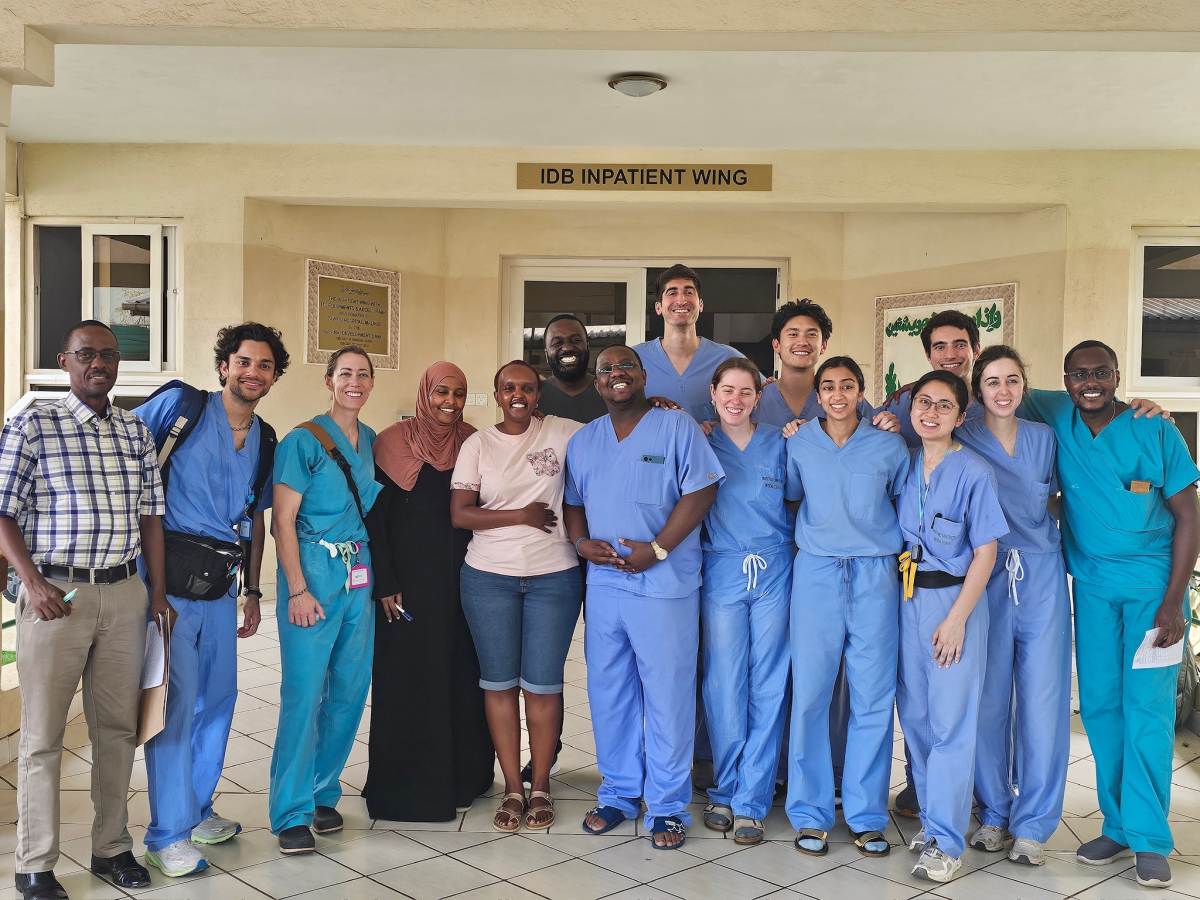
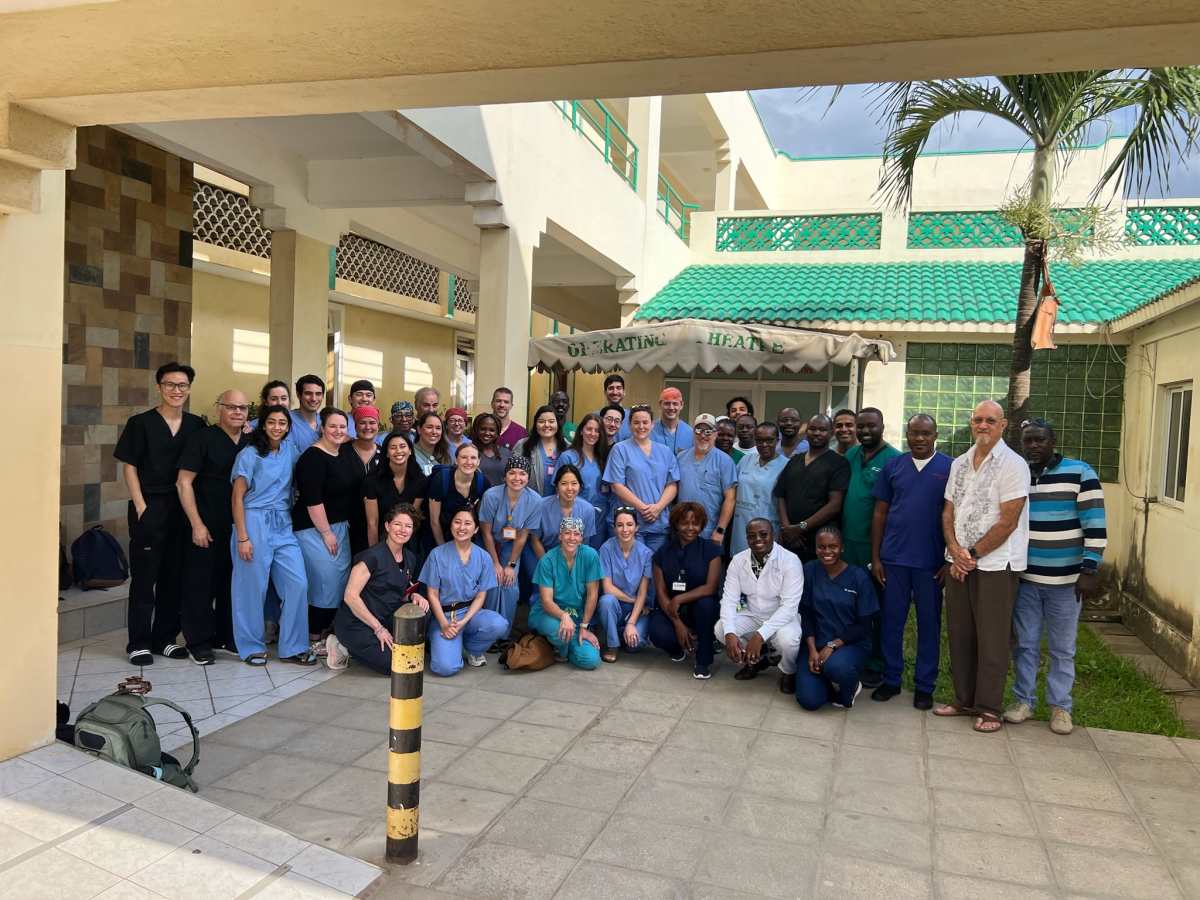
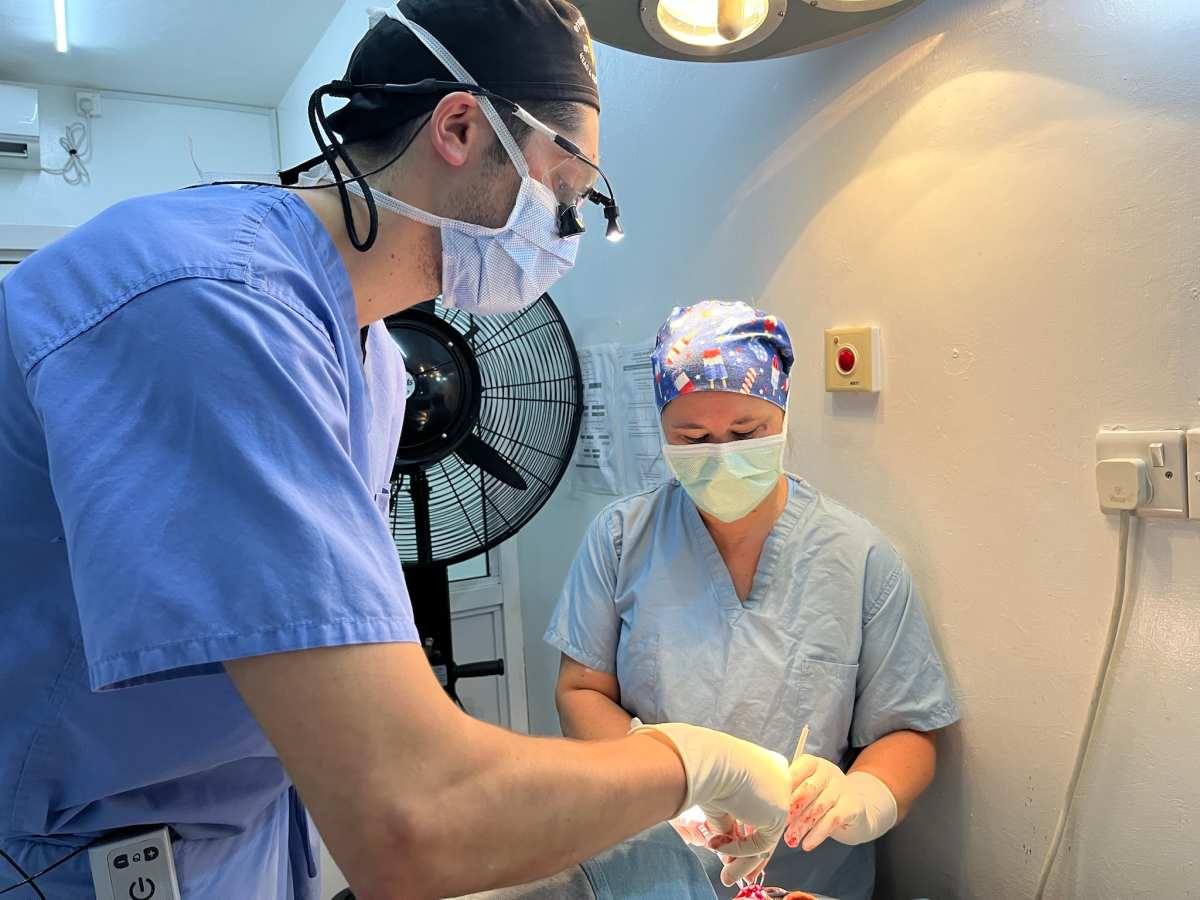
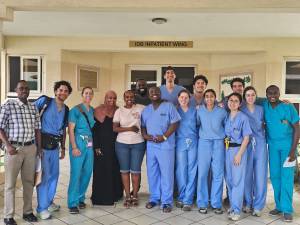
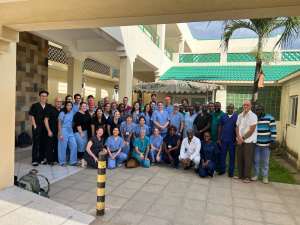
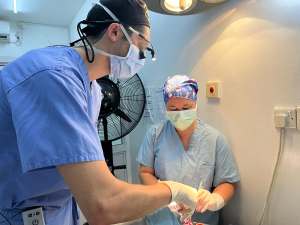
The dual purpose of our Head and Neck surgical mission trip to Malindi, Kenya was to provide needed surgical oncology care for patients as well as contribute to the education of ENT residents / attendings from Kenya and surrounding countries. A group of American residents and attendings joined forces with nurses, scrub techs, residents, attendings from Kenya to provide patient care. We provided care to both pediatric and adult patients. In addition to the 60 patients who were operated on, we evaluated ~300 patients in clinic, prescribing medication when necessary. We also ran a minor procedures clinic where we removed various masses and lesions from the head and neck under local anesthesia.