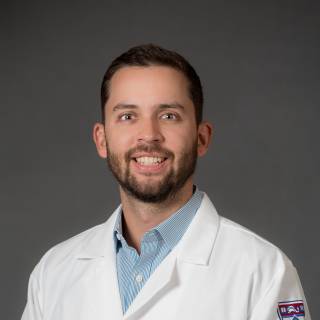
From September to October 2025, I will spend six weeks in Botswana, working alongside the radiology team at Princess Marina Hospital in Gaborone and Letsholathebe II Memorial Hospital in Maun. During this rotation, I will assist with interpreting diagnostic imaging exams and support the education of medical students and clinical staff. I am also eager to continue the collaborative work initiated by previous Penn residents and their Botswanan colleagues, helping to build sustainable, locally informed radiology services. These experiences are a vital component of my professional development. I am excited to contribute to the Gaborone community as a diagnostician, researcher, educator, and advocate for expanding access to imaging in resource-limited settings. Ultimately, my goal is to become a radiologist who champions accessible, high-quality healthcare—locally and globally.
The objectives for this trip are: 1) Understand the local radiology workflows and get acquainted with the cultures. 2) Work as a licensed radiologist in Botswana reading diagnostic exams and performing basic image-guided procedures. 3) Organize and lead teaching sessions and hands-on didactics for local medical students and providers in Botswana. 4) Complete the needs assessment at Letsholathebe II Memorial Hospital to understand the local supply chain for acquiring products and to determine what areas can be impacted by new interventions. 5) Create educational content to support the mission of the Department of Radiology at Princess Marina Hospital.
My trip will be focused on two hospitals in Botswana: Princess Marina Hospital which is located in the capital city (Gaborone) and Letsholathebe II Memorial Hospital, located in Maun (north of the country).
Princess Marina Hospital is the largest referral hospital in the country and serves as a teaching hospital for the University of Botswana's Faculty of Medicine. It has 530 inpatient beds and serves a population of around 30,000 in Greater Gaborone and surrounding areas. Despite its size, its Department of Radiology is considerably small, and there is usually a lag of 2-3 weeks before CT scans are reported.
Letsholathebe II Memorial Hospital is located in Maun, and despite having multiple X-ray machines and a CT scanner, there is no radiologist on site. Studies are send by mail courier to Gaborone where they are interpreted and sent back, which leads to a delay of 4-6 weeks between getting the study and having a report. This significantly affects patient care for a population of approximately 10-15 thousand people who live in this region.
The University of Pennsylvania and the Government of Botswana/Ministry of Health have a long-standing relationship (Botswana-UPenn partnership), which aims to build healthcare and research capacity in Botswana through numerous partnerships, including medical education initiatives and clinical care. The Botswana-UPenn partnership is a continuing collaboration that will enable future radiology trainees and faculty to travel to Princess Marina Hospital and support the shared mission of enhancing access and developing the Department of Radiology's infrastructure. My trip will also start the collaboration with Letsholathebe II Memorial Hospital, with the plan to include this site within the Botswana-UPenn partnership.

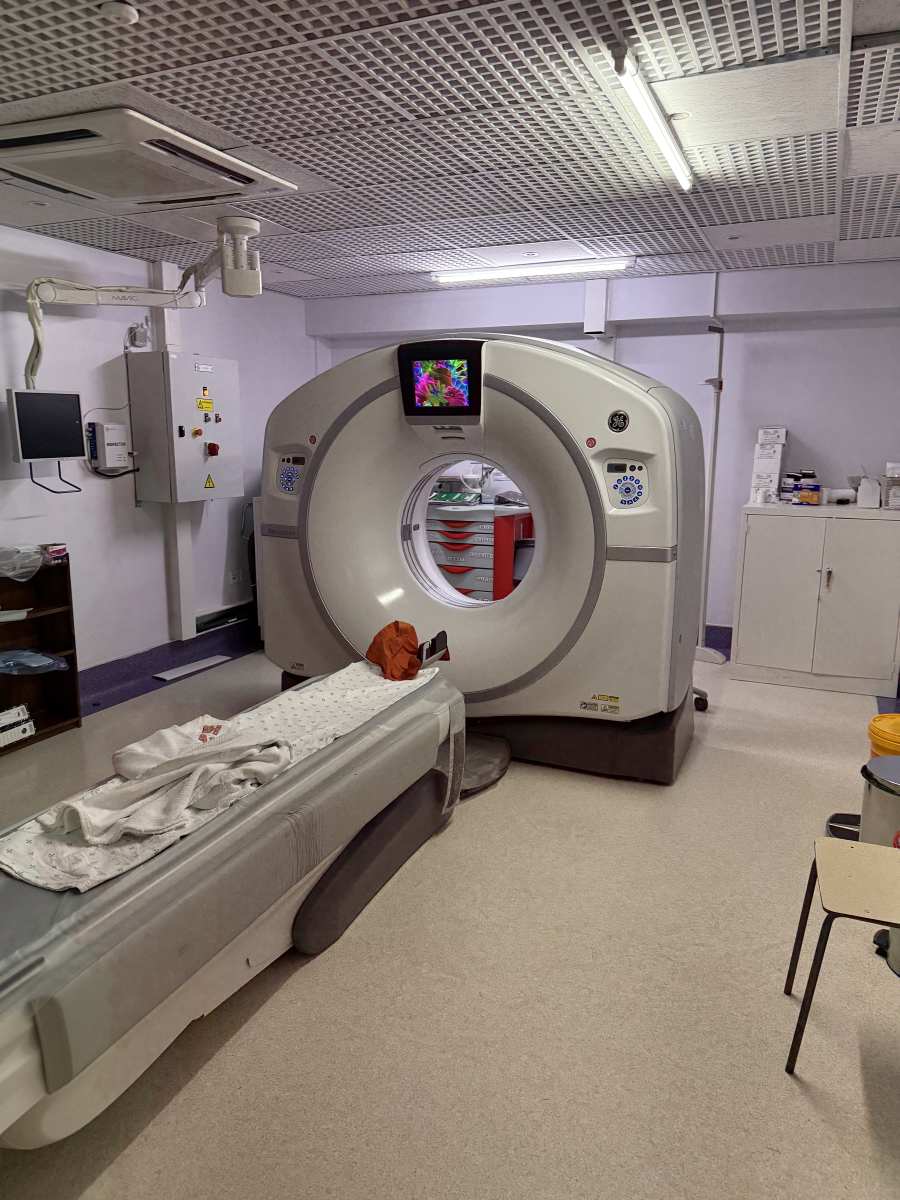


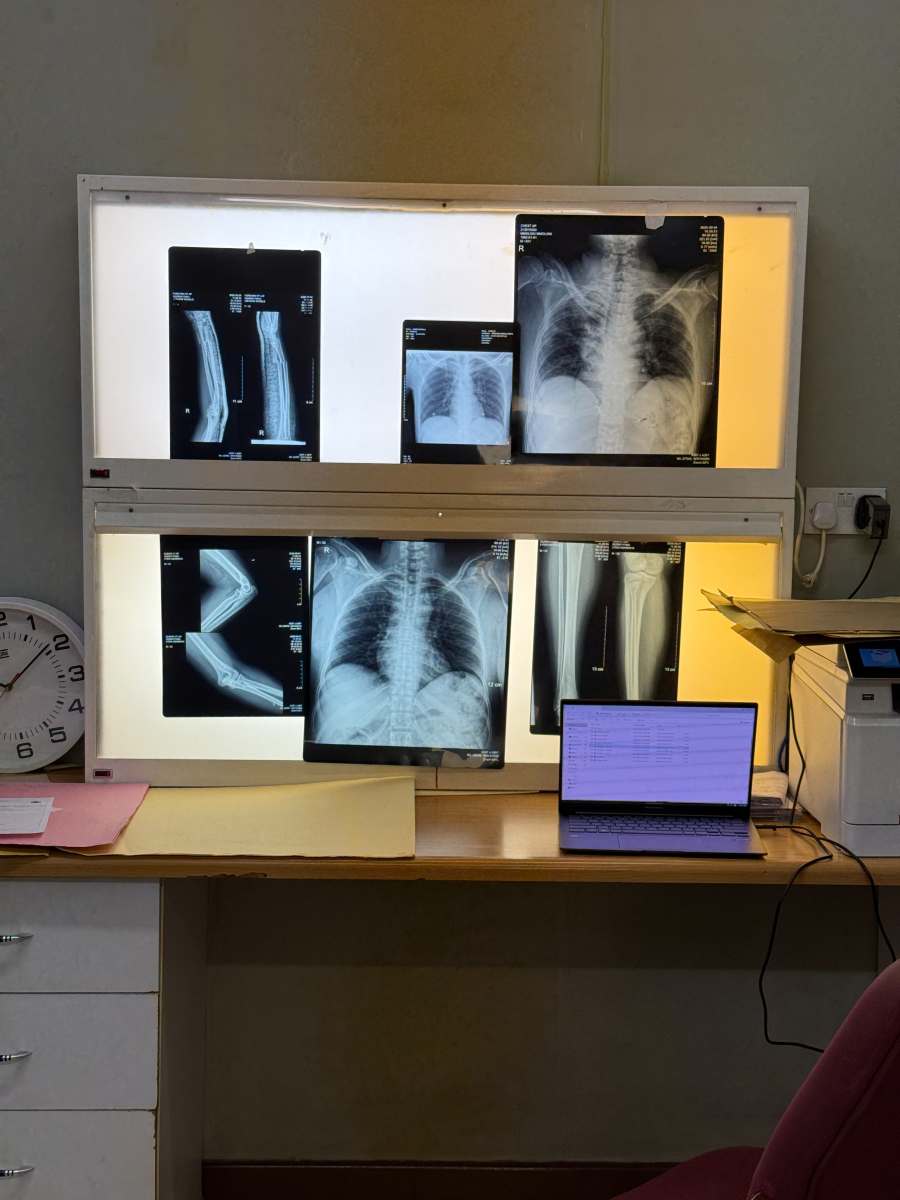


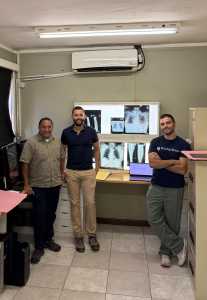
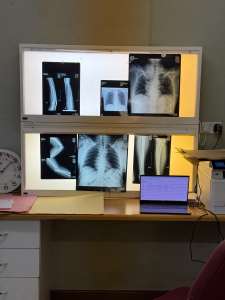
I spent four weeks in Botswana supporting clinical radiology services at Princess Marina Hospital in Gaborone and Letsholathebe II Memorial Hospital in Maun. Each day, I helped interpret X-rays, ultrasounds, and CT scans for patients whose diagnoses often depended entirely on timely imaging, ranging from trauma and infectious diseases to cancer and complex chronic conditions.
Many of the patients I cared for had traveled long distances from rural areas, often waiting hours or days for the opportunity to receive a study that would guide their treatment. Working alongside the local radiologists allowed us to keep up with the high clinical volume and ensure that patients received imaging reports that informed urgent decisions in the emergency department, inpatient wards, and outpatient clinics.
In Maun, we also helped assess radiology workflow and equipment limitations, observing firsthand how supply constraints and regional remoteness affect patient access. These insights are now guiding efforts to strengthen radiology services for the community.
Overall, the most meaningful impact of this trip was the direct clinical care provided to hundreds of patients, each imaging study contributing to clearer diagnoses, better treatment decisions, and more equitable access to lifesaving radiology services.