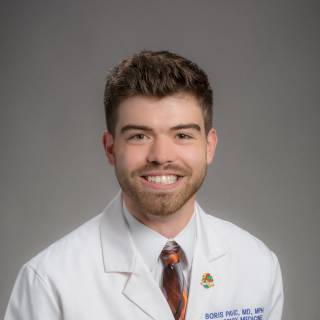
I will participate in a combined clinical and teaching rotation in Lesotho through Partners In Health (PIH), followed by humanitarian work in the Democratic Republic of Congo (DRC). In Lesotho, my work will focus on teaching bedside and didactic point-of-care ultrasound (POCUS), with emphasis on the evaluation and management of TB-related effusions (pleural, pericardial, and abdominal), where ultrasound guidance can be lifesaving. In addition, I will be teaching how to use POCUS to perform various ultrasound-guided procedures to improve safety, success rates, and minimize complications.
In addition to teaching, the rotation will also focus on gaining hands-on experience with the national tuberculosis (TB) elimination program, particularly in understanding the challenges PIH has faced in scaling this ambitious initiative across both urban and rural contexts. I will rotate at the TB hospital in Maseru, where patients with advanced and complicated TB/HIV co-infection are treated, and in nurse-led mountain clinics that provide care in some of the most geographically and resource-challenged regions in the world. This experience will allow me to appreciate both high-volume urban care and the realities of rural healthcare delivery. I also aim to observe and participate in PIH’s “TB Hunter” outreach program, which involves community-based contact tracing and treatment of TB exposures, offering critical insights into public health implementation.
Following this rotation, I will continue my NGO work in Goma, DRC, where I co-lead Fesser and Friends. We recently opened a new demobilization center for ex-child soldiers, our second center in the last five years, and my work will involve program evaluation, medical follow-up, and supporting psychosocial reintegration in a region deeply affected by ongoing conflict.
This project will directly serve two highly vulnerable populations in Southern and Central Africa. In Lesotho, the focus is on patients affected by tuberculosis and HIV, two of the most pressing public health challenges in the country. Lesotho has one of the highest per-capita rates of TB and TB/HIV co-infection worldwide, with a particularly high burden in pregnant women and patients with multidrug-resistant (MDR) or extensively drug-resistant (XDR) TB. Many of the patients I will encounter come from underserved rural mountain communities where healthcare access is limited by geography, infrastructure, and stigma. These populations rely heavily on nurse-led clinics and outreach programs like the “TB Hunter” initiative to bring diagnosis and treatment to their communities.
In Goma, Democratic Republic of the Congo, the population served includes children who have been forcibly recruited as soldiers by armed groups and are now in the process of demobilization and reintegration. Sadly, the DRC is the epicenter of child soldier recruitment and utilization; however, this fact and the Congo conflict in general are rarely discussed in the media, and how Western interests, particularly in the tech/EV sector, drive these conflicts. These children are some of the most marginalized and traumatized individuals in the world, often survivors of violence, abuse, and profound loss. The new center in Goma, supported by our NGO Fesser and Friends, provides shelter, medical care, psychosocial counseling, and vocational training as they transition back into civilian life. My work there will directly impact their health and reintegration, while also supporting local staff and community partners. Collectively, this project focuses on two populations deeply affected by poverty, conflict, and infectious disease, both of whom benefit from collaborative, sustainable, and compassionate global health engagement.
This project is designed to have both immediate and long-term impact on the populations and institutions I will work with, while also shaping my growth as a global emergency physician. In Lesotho, I expect to contribute to capacity building by teaching clinicians and nurses’ practical POCUS applications that can improve safety and outcomes in TB care. The ability to rapidly identify and drain TB-related effusions is lifesaving and can be sustainably taught to local providers who will continue to use these skills and teach others long after my rotation. By rotating in both the TB hospital and mountain clinics, I will gain a deep understanding of how TB and HIV care are delivered across different contexts, and I will be able to share these lessons within my residency and future global health fellowship, strengthening knowledge transfer. Participation in the “TB Hunter” outreach program will expose me to a scalable public health model for contact tracing and treatment of exposures, lessons that can inform broader TB elimination strategies in other high-burden settings. In Goma, my work with Fesser and Friends will directly support the care and rehabilitation of former child soldiers at our newly opened center. By providing medical follow-up, coordinating with local clinicians, and supporting program evaluation, I will help ensure the center’s sustainability during a critical period of growth. Longer term, my involvement strengthens the bridge between UW EM, PIH Lesotho, and Fesser and Friends in the DRC, demonstrating how academic residency training can partner with NGOs to address humanitarian crises. The impact will extend beyond individual patients, contributing to system-level capacity building and durable global partnerships.





Global health work lives or dies by the people involved, the ones you serve, the ones you learn from, and the ones whose lives you hope are a little different because you showed up. This trip brought me to two countries and introduced me to communities I will carry with me for the rest of my career.
1) The Clinicians and Nurses at PIH Maseru
The first people I think about are the nurses and clinicians I worked alongside at the Partners in Health MDR-TB ICU in Maseru. These are professionals practicing at an extraordinary level under extraordinary constraint, managing some of the most complex TB and HIV cases in the world, often without the diagnostic tools, staffing ratios, or specialist backup that physicians in high-income settings take for granted. They are not making do. They are excelling in ways that humbled me daily.
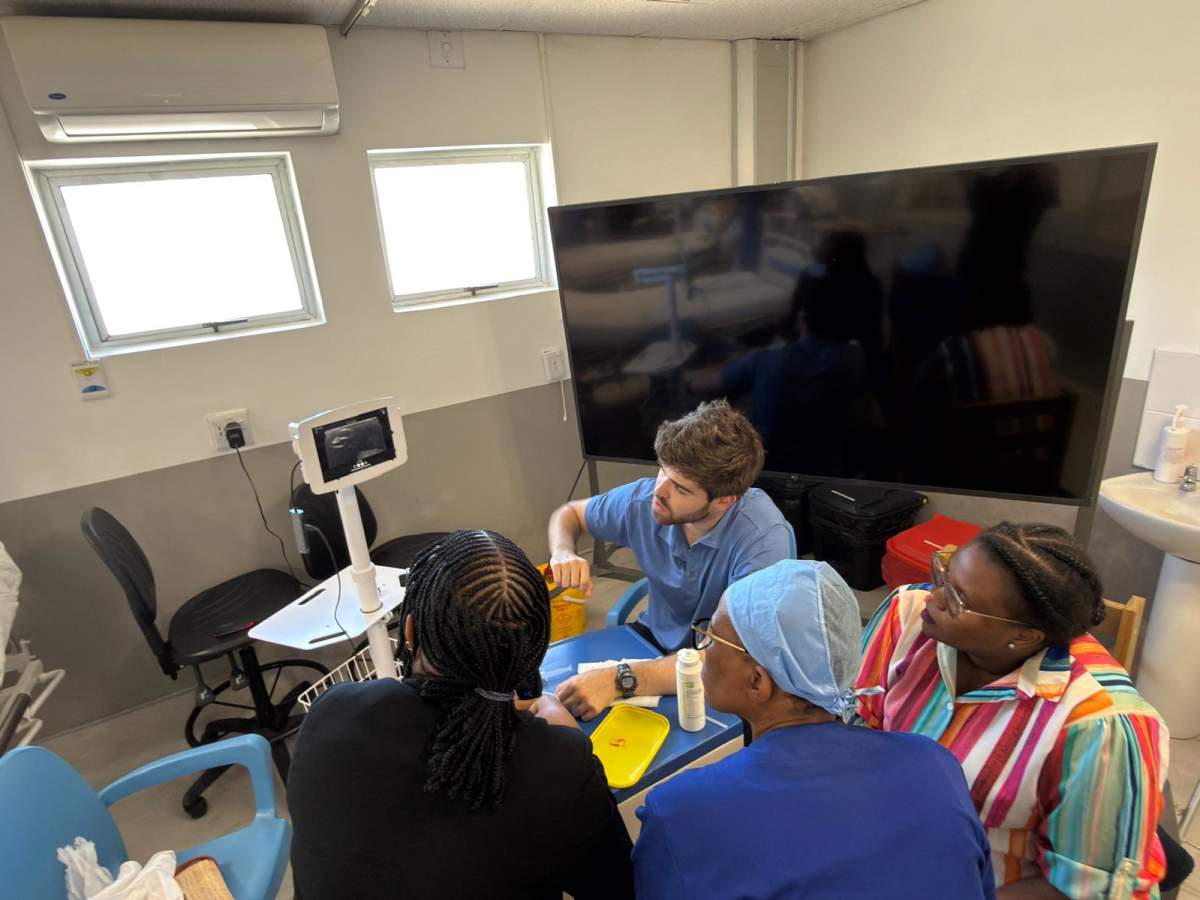
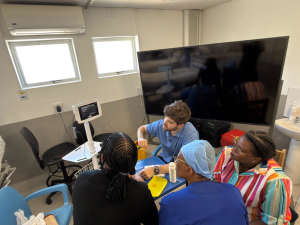
My primary work with them centered on point-of-care ultrasound (POCUS). Many had little or no prior POCUS training, yet their hunger to learn was immediate and genuine. We worked through echocardiography, the FASH exam for extrapulmonary TB, and ultrasound-guided procedures (peripheral IV placement, central line placement, thoracentesis, and paracentesis). To help procedural skills stick without risking patients during the learning curve, I built low-fidelity physical models using locally available materials so clinicians could practice the needle guidance technique hands-on before approaching a real patient. Watching someone move from uncertainty to confidence is one of the most satisfying things I have experienced in medicine.
These clinicians are multipliers. Every skill they gain, they pass forward. The practitioners who learned the FASH exam in rural Lesotho will use it on patients for years to come, and in a country with no dedicated emergency medicine training program, identification and ultrasound guidance for effusion drainage can be the difference-maker for accurate, expedited diagnosis of TB and proper treatment. That is who was impacted, not just the patients in those beds, but every future patient those clinicians will ever see.
2) The Patients in the MDR-TB ICU
I will not use names, but I will say this: I have never cared for patients quite like the ones I encountered at the PIH MDR-TB hospital. Many had been sick for a long time before reaching Maseru, delayed by geography, by stigma, by interrupted medication supplies that had grown worse in the weeks before my arrival, following sweeping cuts to USAID and international aid programs. Some had pericardial effusions large enough to cause tamponade. Others had ascites or pleural collections requiring drainage. All of them were navigating illness while carrying the weight of lives shaped by poverty, rural isolation, and a health system under siege.
What I could offer was clinical care and, where possible, procedural intervention with ultrasound guidance. What I received in return was a clearer sense of what emergency medicine is actually for, not just the controlled environment of a well-resourced ED, but the raw, high-stakes moments where a skill, a probe, and a steady hand are all that stand between a patient and the worst outcome. I left those wards a better physician to serve patients both at home and abroad.
3) The Communities in the Mountain Clinics
Outside Maseru, I visited nurse-led clinics in Lesotho's rural highlands, small posts perched in mountain communities accessible only by narrow roads that drop away into valleys. The patients here are among the most geographically isolated in the world. The nurses who care for them operate largely independently, without physicians, managing TB, complicated pregnancies, and chronic disease with limited supplies and almost no diagnostic infrastructure.
I brought portable ultrasound to these clinics and ran teaching sessions focused on two applications: the FASH exam for detecting extrapulmonary TB, and fetal heart rate measurement to improve prenatal care. These are not complicated skills, but in these settings, they are transformative. A nurse who can identify a peritoneal effusion consistent with TB, or confirm fetal viability in a high-risk pregnancy, is providing care that would otherwise simply not happen. The patients in those mountain communities, mothers, elders, and children, were impacted not because I was there, but because the nurses I worked with now carry tools they didn't have before.
4) The Boys at the Fesser and Friends Center in Goma
From Lesotho, I traveled to Goma, in eastern DRC, where I co-led an NGO called Fesser and Friends with my colleague and best friend, Dr. Nico Fesser. We recently opened our second center, focused on demobilization for former child soldiers, boys who have been forcibly recruited by armed groups and are now, painstakingly, rebuilding their lives. This leg of the trip was not clinical. It was something harder to name, part humanitarian, part organizational, part simply being present with kids who have survived things most people will never have to imagine. We visited the center, walked through the vocational training programs we have established, and distributed water filters to families. We also completed some simple renovations of the facility, creating a safer and more dignified space for the boys who live and heal there.
The eastern DRC has been in conflict for decades, driven in part by international demand for minerals that power the global technology and electric-vehicle industries. This reality is almost entirely absent from Western media coverage. The boys at our center are among the most invisible victims of that violence, children who were robbed of their childhoods and are now being asked to find their way back to some version of normal. What they need is structure, safety, and specialized support. What we are trying to build is exactly that.
5) The Mental Health Partnership with the New Hope Center
One of the most significant things we accomplished in Goma was meeting with the leadership of the New Hope Center, a local organization that will now formally partner with Fesser and Friends to provide mental health services for the boys at our center. This includes individual psychosocial counseling, as well as play therapy and art therapy specifically adapted for children who have experienced conflict-related trauma.
This partnership matters enormously. Until now, our programming has focused heavily on shelter, medical follow-up, and vocational training, all essential, but incomplete without dedicated psychological care. The boys we serve carry invisible wounds alongside the visible ones. Play and art therapy offer something that talk-based counseling alone cannot: a non-verbal language for processing experiences that words often fail to reach. The staff at the New Hope Center understands the specific context of eastern DRC, the M23 conflict, and the psychological profile of former child soldiers in ways that outside organizations rarely can. That local knowledge is irreplaceable, and building this partnership was one of the most important things we did on this trip.
6) The New M23 Government Representatives
We also met with representatives of the new M23-affiliated government in Goma to discuss pathways for supporting vulnerable children in the region beyond our current center. These conversations are delicate and complicated, as operating in a post-conflict political environment always is. But they are necessary. NGOs that work in isolation, without engaging local governance structures, rarely achieve a durable impact. Our goal was not endorsement or alignment, but relationship-building: making clear that Fesser and Friends is a committed, long-term partner in the region, interested in expanding its reach to serve more children affected by the conflict. These conversations represent the future of what we are building, a recognized presence in Goma that can advocate for vulnerable children at both the community and governmental levels.
A Final Word
Every person I encountered on this trip, the ICU nurse in Maseru learning ultrasound-guided IV placement, the mountain clinic provider measuring a fetal heartbeat for a mother who'd walked hours to be seen, the boy at our center in Goma learning a trade and beginning to trust the world again, every one of them is the reason this work matters. The Doximity Foundation made it possible for me to be there. I do not take that lightly, and I will spend the rest of my career trying to be worthy of it.