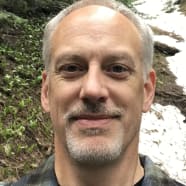
I propose to return to Sonja Kill Memorial Hospital in southern Cambodia to contribute to the training of residents and early-career physicians. Sonja Kill is rapidly establishing itself as a national center for medical education and is an incubator for emerging talent. Following the devastation of the Khmer Rouge regime, Cambodia has faced a severe shortage of physicians, along with poor quality medical education that lacked relevance to the country’s main health needs, and was inherited from a colonial model that emphasized rote memorization over critical thinking. While efforts are actively underway nationally to strengthen medical education, progress is constrained by limited resources. I would like to help support these efforts. Cambodian physicians are bright and eager to learn, and I seek to help build their professional growth through mentorship and teaching, so they can better serve their communities.
This project will directly strengthen the capacity of healthcare workers at Sonja Kill Memorial Hospital, with the ultimate goal of improving health outcomes for the people of Cambodia. As one of the poorest nations in Southeast Asia, Cambodia faces the dual burdens of neglected tropical diseases and a rapidly increasing prevalence of chronic diseases. These challenges align closely with my training and expertise in internal medicine, global health, and tropical medicine. I believe one of the most effective ways U.S. physicians can contribute to global health is by strengthening the ability of local providers to deliver high-quality care. Many of those who have trained at Sonja Kill have gone on to prominent positions at health centers throughout the country.
The expected impact of this project is that participating physicians (about twenty in total) will strengthen their clinical skills, expand their medical knowledge, and refine their clinical reasoning. Bridging the “know–do gap” remains a critical need in Cambodia, and my teaching approach is designed to help doctors more effectively translate medical knowledge into high-quality clinical decision-making. I first partnered with Sonja Kill Memorial Hospital in March 2025 and intend to establish a long-term collaboration with the institution. I have learned that sustained engagement with the same community over time is essential. It allows me to better understand local health priorities, tailor educational efforts, and build trust with colleagues—ensuring continuity, momentum, and effectiveness. I also plan to continue to support the providers after my trip through virtual didactic sessions and other forms of remote learning.
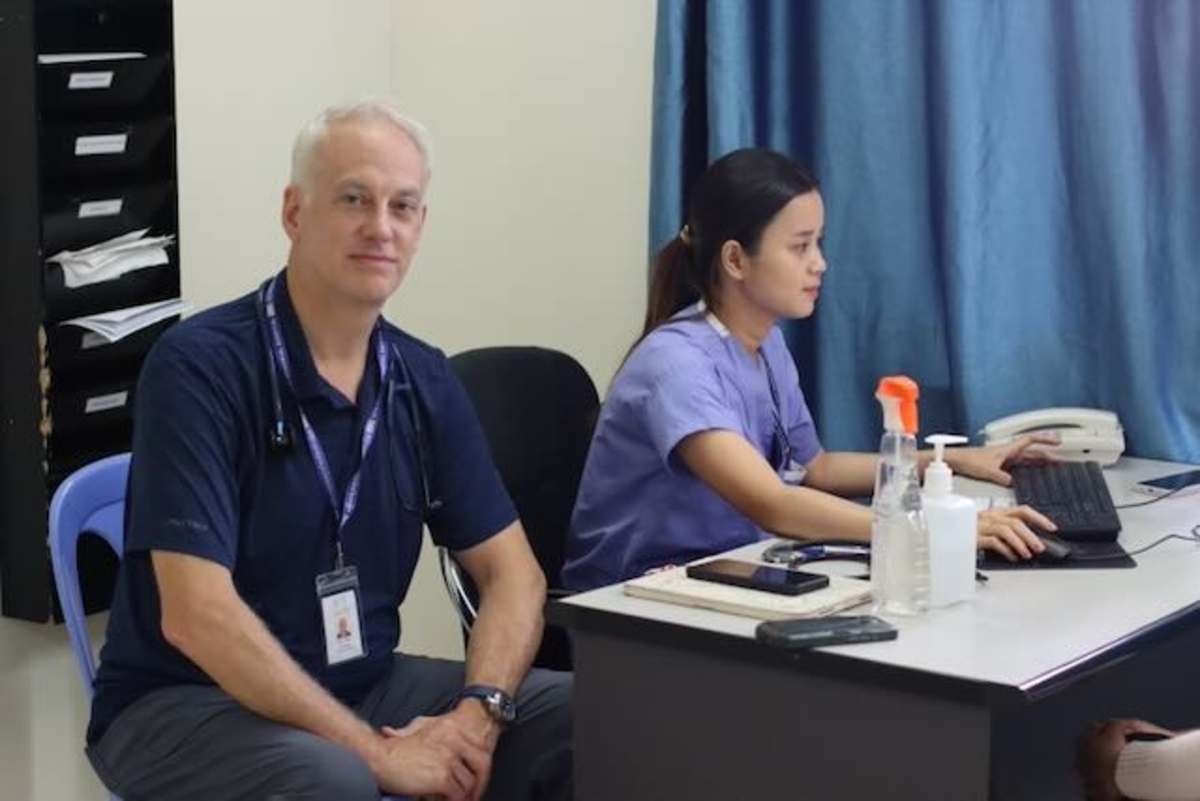
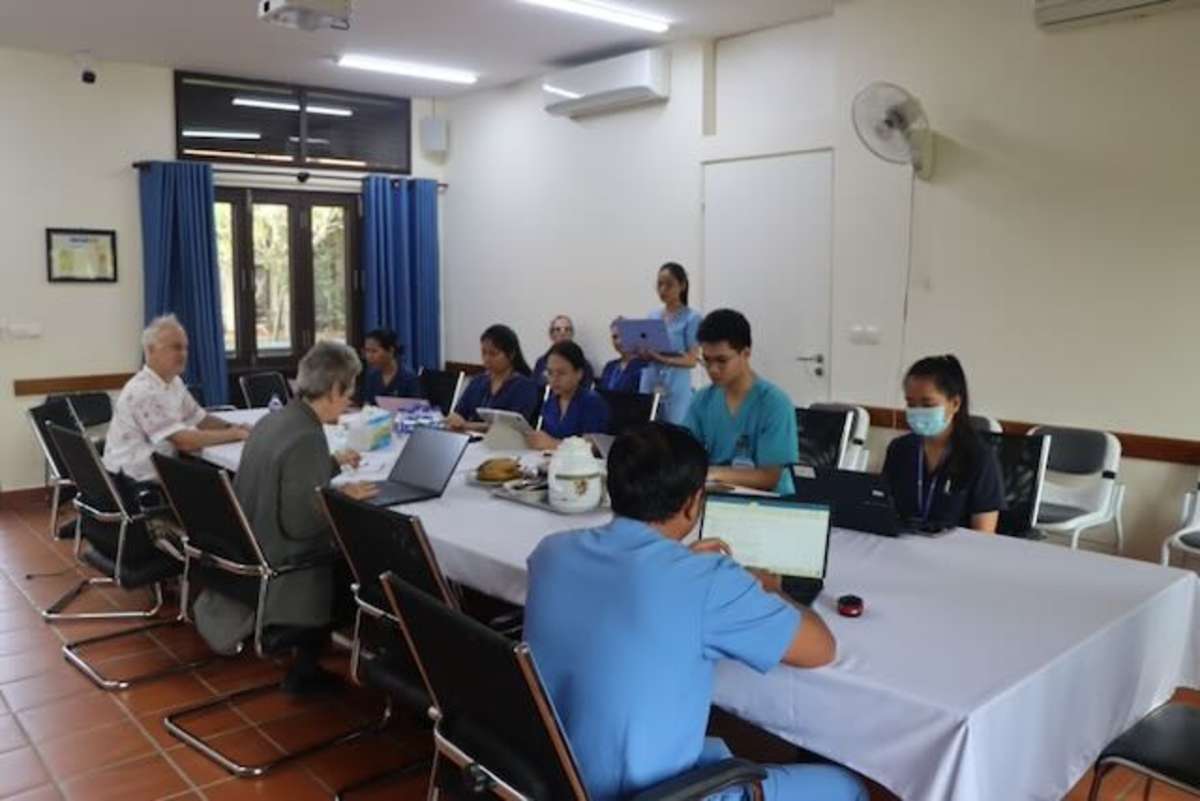

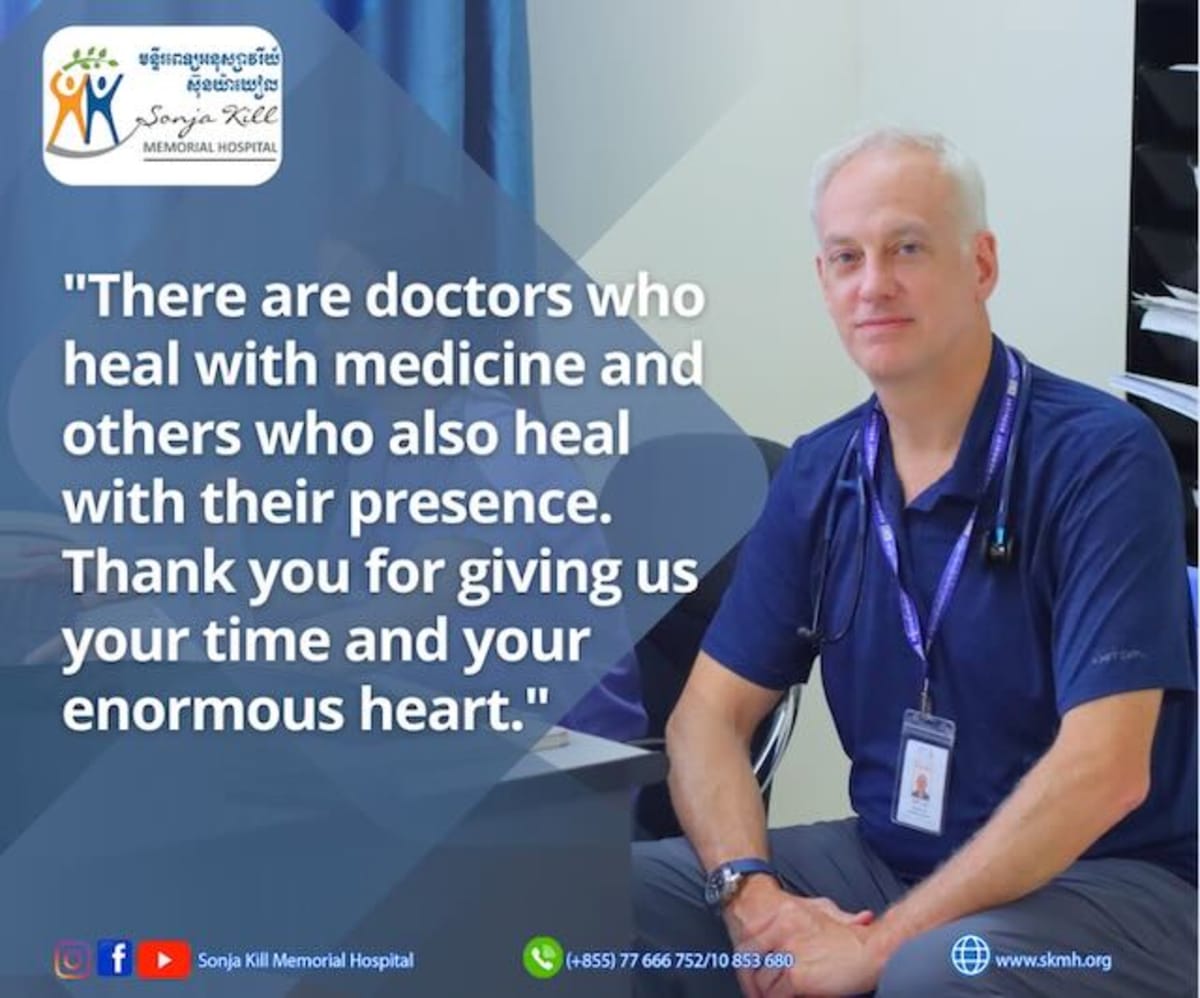
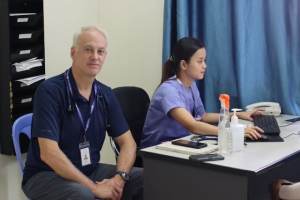
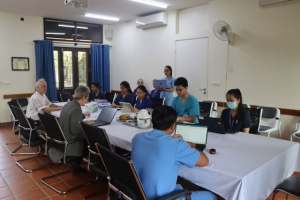
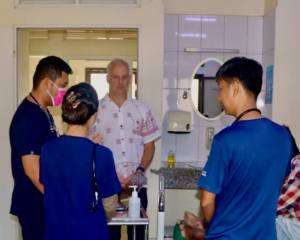
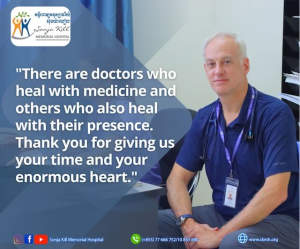
I was privileged to be able to spend 3 weeks working aside a talented group of internal medicine doctors at Sonja Kill Memorial Hospital in southern Cambodia. I provided over a dozen didactic lectures, participated in morning report, and attended on ward rounds and in the Emergency Room. The doctors (who were at various stages of training and experience) reported that they benefitted from in terms of deepening their clinical knowledge and strengthening their clinical reasoning skills. The patients we helped care for were always gracious and appreciative. And as is often the case, I was perhaps the person most deeply impacted by the trip - it sharpened my clinical skills, strengthened my knowledge of neglected tropical diseases, and most importantly, reminded me that those of us in healthcare are part of one global community. It is an endeavor that at has humanity and compassion at its core, and we can all benefit from breaking down barriers and strengthening our connections, both locally and globally. I am deeply appreciative to the Doximity Foundation for helping support my trip, and honored that Sonja Kill Memorial Hospital featured me on their Facebook page!