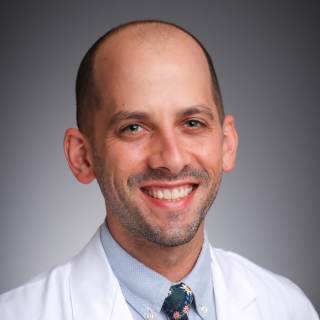
I am a dedicated internal medicine and pediatrics resident at Duke University, passionate about advancing global health equity. Upon completing my residency, I plan to pursue a career in primary care, with a focus on underserved populations. This upcoming two-month trip to Iquitos, Peru, represents a crucial step to expand my clinical skills, enhance my understanding of infectious diseases, and contribute meaningfully to remote communities
During my stay in Iquitos, I will collaborate closely with infectious disease specialists and local healthcare providers. My primary activities will include providing direct medical care to patients in remote villages, many of whom have limited access to healthcare. I'll participate in disease surveillance and public health initiatives aimed at controlling and preventing infectious diseases, such as malaria, dengue, and Zika virus. In addition, I hope to conduct health education sessions tailored to the cultural context to promote hygiene, vaccination, and disease prevention. Finally, I am to assist in in the training of local health workers, thereby strengthening local capacity and ensuring sustainable impact.
The primary beneficiaries of this project are the residents of remote villages in Iquitos, Peru, who face significant barriers to healthcare access due to geographic, economic, and infrastructural challenges. These communities often lack consistent medical resources, health education, and preventive care, making them particularly vulnerable to infectious diseases such as malaria, dengue, and Zika virus, which are prevalent in the region.
Specifically, the children and elderly populations in these villages stand to benefit greatly from direct medical care, disease treatment, and health education initiatives. By addressing acute and chronic health issues, I aim to improve their immediate health outcomes and help prevent future illnesses through community-centered education.
Furthermore, local healthcare providers and community health workers will benefit through capacity-building efforts, including training and knowledge exchange. Strengthening local health infrastructure ensures sustainability, empowering communities to better manage infectious diseases and maintain healthier living conditions even after my departure.
This population exemplifies the profound healthcare disparities faced by many underserved and resource-limited communities globally. Their vulnerabilities are compounded by remote locations, limited health infrastructure, and scarce access to specialized medical care. Investing in their health aligns with global health equity principle. Every individual deserves access to quality healthcare regardless of geographic or socioeconomic status.
By working with this population, my goal is to contribute to reducing health disparities, promote disease prevention, and support the development of resilient local health systems. Ultimately, improving health outcomes in these communities can serve as a model for similar populations worldwide and foster long-term health improvements on a broader scale.
This trip will allow me to gain invaluable firsthand experience managing disease in resource-limited settings, which will inform my future practice in primary care. It will contribute directly to the health and well-being of underserved communities in Iquitos, where healthcare disparities are stark and foster collaborative relationships with local clinicians and organizations, promoting cross-cultural exchange of knowledge and strategies for disease control. I hope to develop a deeper appreciation of the social determinants of health, which will shape my approach to patient-centered care.


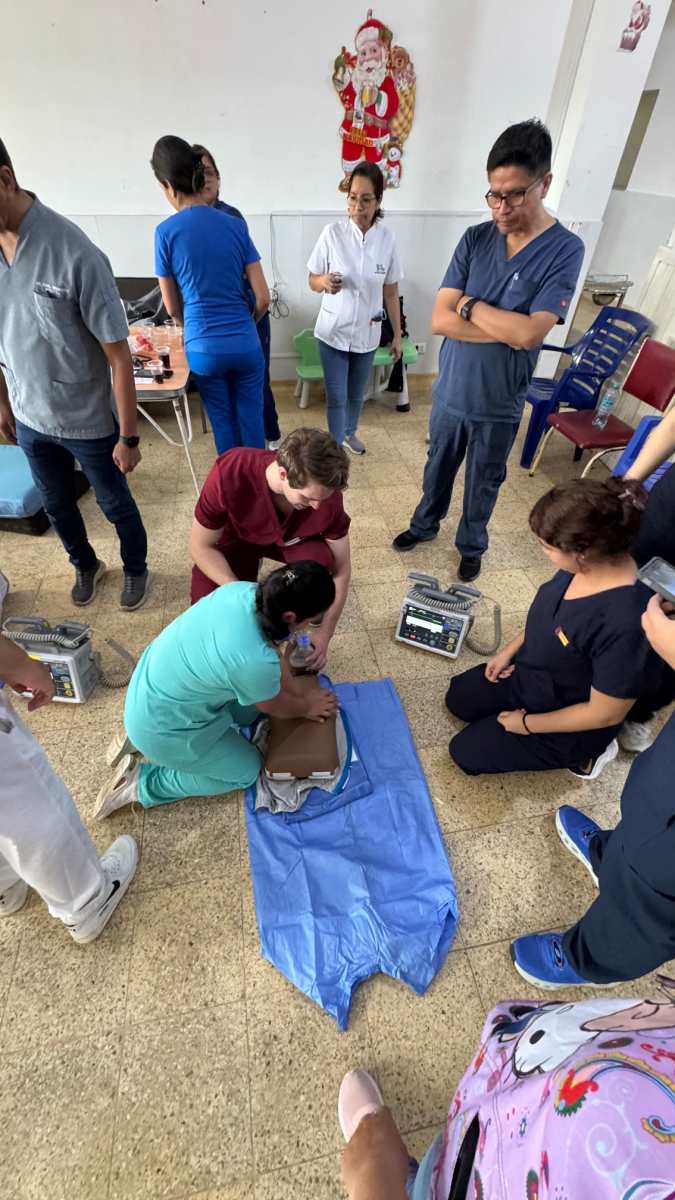

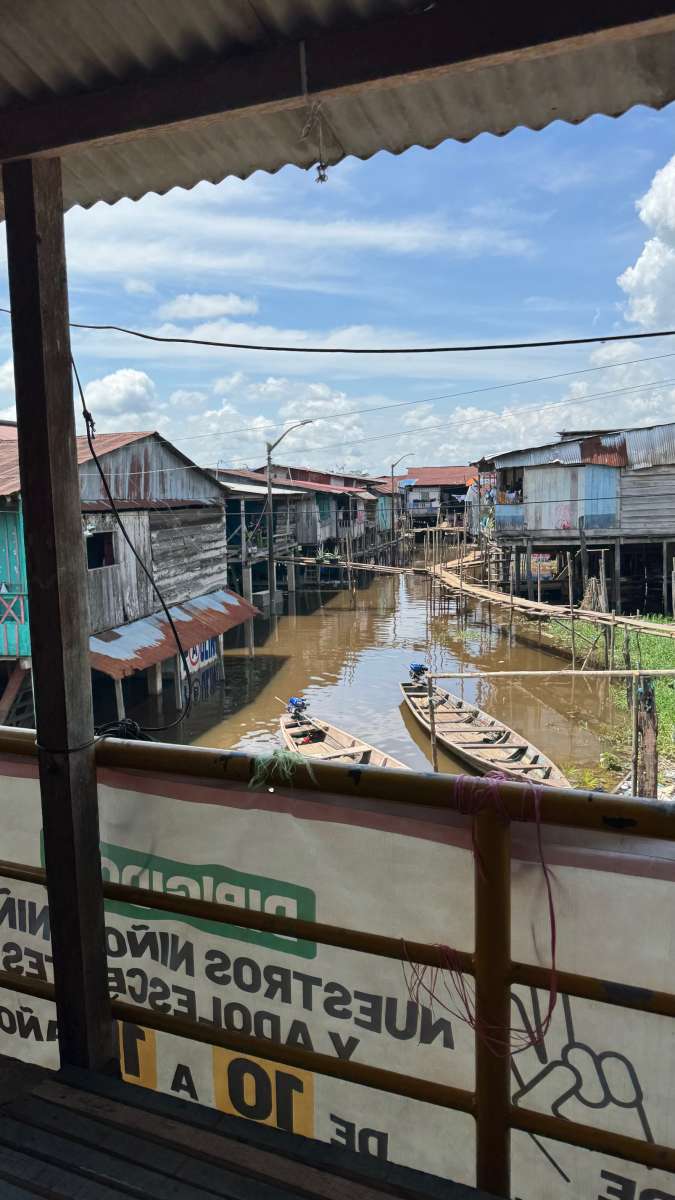



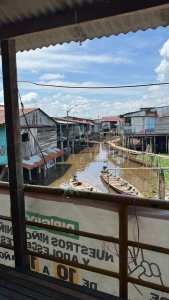
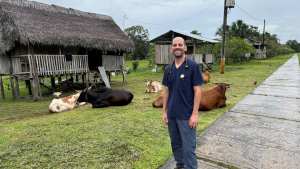
Words can hardly express how grateful I am for the opportunity to participate in the inaugural year of Duke’s Peruvian global health rotation at Hospital Regional de Loreto in Iquitos. It was one of the most formative experiences of my residency. I hope to share a few of the lessons I learned as both a reflection on the experience and an expression of gratitude for the work that went into making it possible.
During the first half of our rotation, we worked primarily on the pediatric services at Hospital Regional de Loreto. We rotated through the pediatric ICU, neonatal ICU, general pediatrics floor, neonatal resuscitation, and the emergency department. On each service we were welcomed by attendings and residents who were eager not only to teach but also to exchange ideas and perspectives about clinical care in our respective settings.
Globally, the two greatest causes of morbidity and mortality among pediatric patients are respiratory illnesses and diarrheal diseases. These are often caused not by exotic tropical pathogens, but by the same organisms we encounter in the United States, such as RSV and E. coli, among others. What I had not previously experienced in my training at Duke was the full spectrum of disease when children present late in the course of illness or in the setting of significant malnutrition. In many Peruvian communities, traditional medicine practices are both more affordable and more trusted than hospital care. As a result, children often arrive at the hospital only after their illness has progressed to a critical stage.
The contrast in available resources was also striking. At my home institution, Duke University Hospital, we benefit from respiratory therapists and a wide array of escalating respiratory support options. In Iquitos you are basically limited to low-flow nasal cannula or intubation. They have an “artisanal” CPAP system using nasal cannula tubing submerged beneath five centimeters of water in a bottle to generate theoretical PEEP. Otherwise, there is no high-flow or BiPAP. Caring for children in this environment strengthened my ability to assess severity of illness and to think creatively about supportive measures that might help bridge the gap between nasal cannula and intubation.
Another invaluable lesson was learning how to deliver excellent care in a resource-limited setting. The ingenuity of our Peruvian colleagues was remarkable. Gloves secured with rubber bands could be fashioned into drainage receptacles. When filled with water, they served as padding to prevent pressure injuries. Diapers were used to secure IV lines in small children to prevent them from being pulled out. When commercial pediatric formulas were unavailable, clinicians improvised nutritionally adequate alternatives using dextrose, olive oil, powdered milk, and electrolyte solutions. Observing this level of resourcefulness reinforced that high-quality medicine does not depend solely on sophisticated technology, but on thoughtful clinical reasoning and adaptability. As someone who hopes to practice in rural India in the future, these lessons were particularly meaningful.
Beyond the lessons in adaptability, the rotation also provided outstanding clinical learning. I gained firsthand experience managing diseases I would rarely encounter at Duke but may very well see later in my career. On the pediatric service alone, we treated children with tuberculous meningitis, severe malaria, snake envenomation, parasitic helminth infections, and pertussis. The infectious disease team at HRL also taught us about how they track and respond to regional outbreaks, an experience that felt particularly timely given the re-emergence of measles in the United States.
A highlight of my time in Iquitos was participating in the LAHPAS Tropical Infectious Disease Course while rotating on the adult services. This intensive two-week course was taught by national infectious disease experts and explored the complex relationships between climate change, politics, human behavior, and the emergence of tropical diseases. The program was both lecture and experience based. We collected skin/plasma samples from a patient with suspected leprosy, prepared our own thick and thin blood smears for malaria diagnosis, joined public health teams conducting vector surveillance in the field, and helped organize a community health project providing primary care to a remote village along the Amazon River. Just as meaningful were the professional connections we formed with physicians from Spain, Italy, Peru, and UCLA who were also participating in the course. I am excited to see how these international collaborations may evolve into future academic partnerships.
Across all these experiences, one lesson consistently proves true: the differences between cultures often appear large on the surface, but the common values beneath them (family, community, dignity, and the desire to care for one another) are remarkably universal. The rotation in Iquitos reinforced that global health experiences are not simply opportunities to observe medicine in another setting. They challenge us to rethink our assumptions, deepen our clinical reasoning, and broaden our understanding of the social, cultural, and environmental forces that shape health. The lessons I learned there will influence the way I practice medicine for the rest of my career. Thank you again for making this opportunity possible.