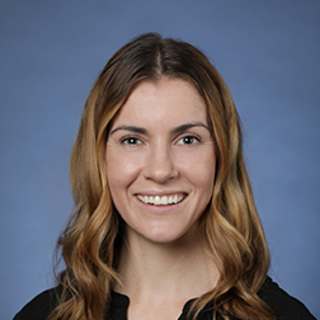
As part of a multidisciplinary initiative led by UC Davis Health, I will be participating in a global health rotation in The Gambia, West Africa, where our team will engage in two weeks of immersive, collaborative work aimed at strengthening local health care systems. This initiative brings together faculty and trainees in radiology, emergency medicine, and other specialties to deliver high-impact, hands-on clinical training to local physicians working in low-resource environments.
The primary focus of this rotation will be capacity-building in point-of-care ultrasound (POCUS). Our curriculum will emphasize diagnostic imaging for key areas where early intervention can significantly improve patient outcomes. The training will be conducted both in classroom settings and in clinical environments, ensuring practical, real-time learning for Gambian providers. As a participant, I will contribute to teaching modules, support bedside instruction, and help adapt educational materials to the local context.
We are partnering with The Edward Francis Small Teaching Hospital (EFSTH) in Banjul and working in close collaboration with the Gambian medical community. The Gambian physicians who will be participating in this course will bring the skills they learned back to their communities and in turn improve the diagnostic and treatment capabilities of their health care systems.
Intended outcomes of this rotation include improved diagnostic accuracy and clinical confidence among participating Gambian providers, the development of context-specific training tools that can be reused or scaled, and a reciprocal exchange of knowledge between our teams.
Ultimately, this project is about building capacity, fostering mutual respect, and creating a framework for sustainable collaboration. I see this rotation not as a single event, but as one piece of an evolving, long-term partnership that empowers local providers to use POCUS to diagnose and treat their patients.
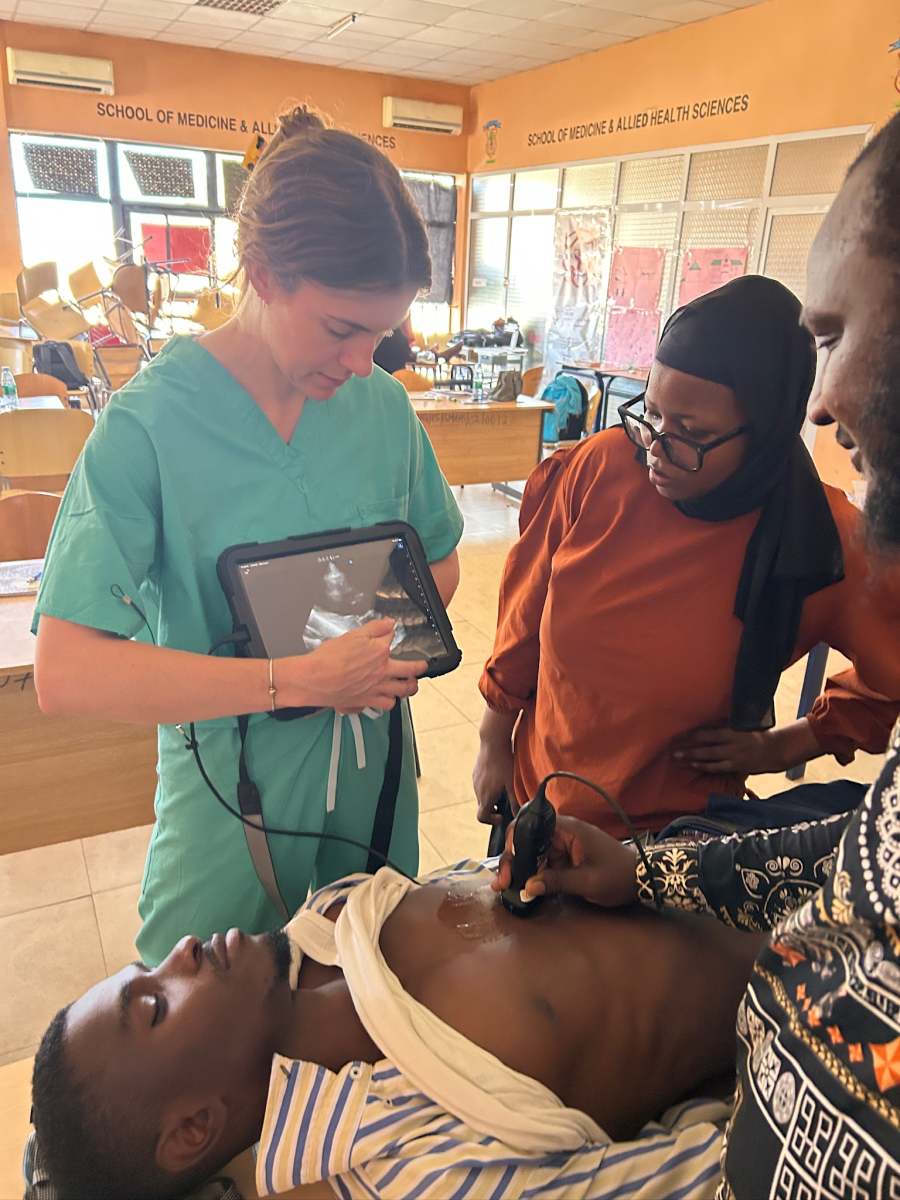

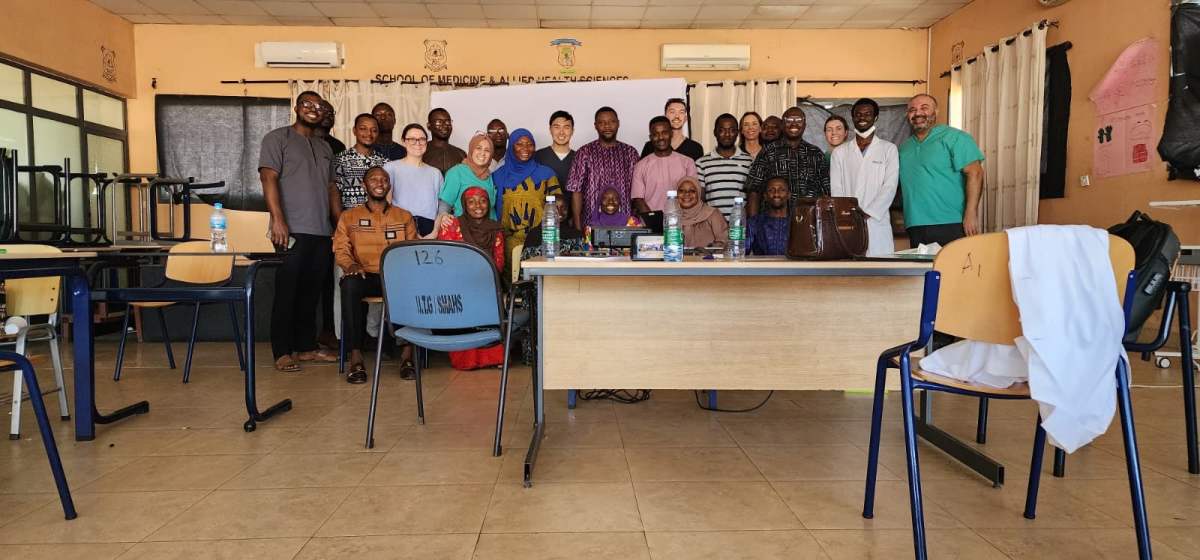


Our capacity-building trip to The Gambia was highly impactful for providers, patients, and our team in Banjul. At the start of the course, most participants had never used ultrasound. In the Gambian healthcare system, patients must pay before services are performed, making imaging financially inaccessible and often leading to delayed diagnosis and treatment. Training providers in point-of-care ultrasound (POCUS) equipped them with a diagnostic tool available at no cost to patients. By the end of the course, participants were actively integrating POCUS into clinical care. One provider diagnosed an ectopic pregnancy overnight and expedited life-saving surgery without waiting for payment for formal imaging. Others used ultrasound to guide a difficult central line placement and to prevent an unnecessary chest tube after identifying pneumonia rather than pleural effusion. Overall, the course empowered Gambian providers to improve diagnostic accuracy, patient safety, and clinical outcomes.