As a medical volunteer for Resurge International NGO, I will lead a Surgical Team Training Trip (ST3) to a partner hospital (Kirtipur Burn Hospital) in the Kathmandu Valley, Nepal in February 2026. I have partnered with this site for almost a decade, where we collaborate through regular online conferences, and bidirectional visitor exchanges. This will be my fourth on-site ST3 visit to this burn hospital over the last 6 years. We have been hosting burn and ICU visitors at the UW Medicine Regional Burn Center in 2024 and 2025. For this trip specifically, we are organizing opportunities to co-treat patients on the acute ward, ICU and operating room with our local partners. We are also organizing a burn care symposium focused on archetypal acute burns and scar scenarios. Local inter professional providers (from surgery, ICU, nursing and therapy) will discuss their solutions to the challenges, while the international visiting team will function as moderators to enhance each scenario. The recorded conference will be enhanced by additional voice-over recordings and visual aids following this trip. The final content will be submitted as burn care training modules for SurgHub, a UN-sponsored training website focused on strengthening surgical care in low- and middle-income countries (LMIC).
-Local interprofessional partners (from surgery, ICU, nursing and therapy disciplines)
-Local patients hospitalized at Kirtipur with acute burn injuries and scar patients with reconstructive needs
-Care providers in LMICs who can access/learn through the UN-hosted SurgHub website
1-Strengthening burn care in Nepal. Kirtipur Burn Hospital is the main referral center for burns in Nepal. This program and its founding leader, Dr. Shankar Rai was recently featured in the NY Times for its role in stabilizing major burn injuries from the recent political turmoil (August/September 2025). The UW Medicine Regional Burn Center has collaborated with this center for many years, with ongoing implementation and research projects. I have worked at this Seattle Center since 2005 and have served as its medical director since 2018. As a Resurge medical volunteer on this trip, I will continue to strengthen our relationship and further all our ongoing projects.
2-Improving clinical outcomes through co-treatment. The winter season in Nepal is associated with the incidence of burn injuries every year. This is primarily caused by unsafe cooking practices and poverty. Our team will strategically augment the care capabilities of our local partners. In prior trips, we have found that our impact has been through improved care coordination, patient triage and optimizing surgical techniques. We hope to contribute in similar ways on this upcoming ST3 trip.
3-Developing burn care modules in SurgHub. Care providers in LMIC desperately need access to free, widely available resources for burn care. Burn is highly neglected condition worldwide, which affects thousands of individuals in the developing world, where trained providers and training resources are few. Our online modules will focus on LMIC-led solutions that should be applicable to many other sites around the world.
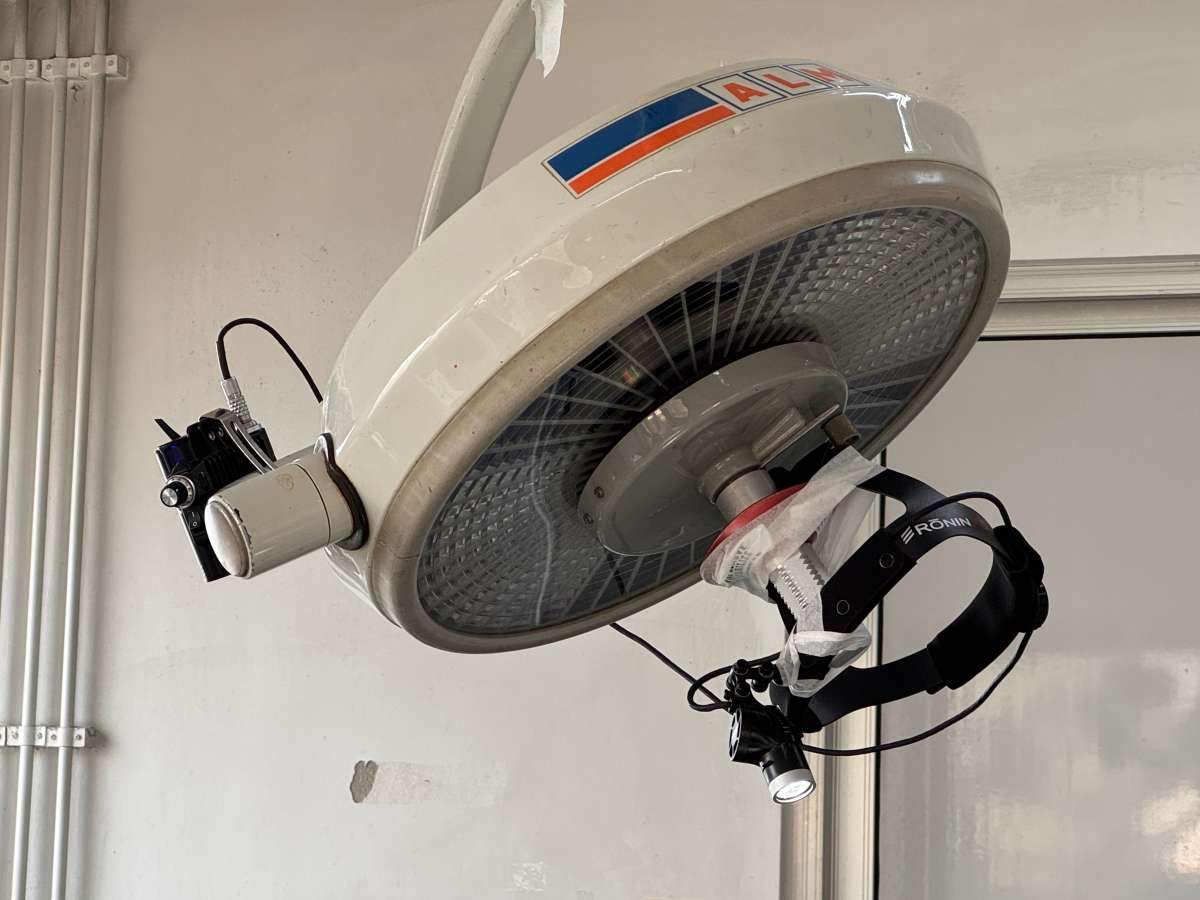
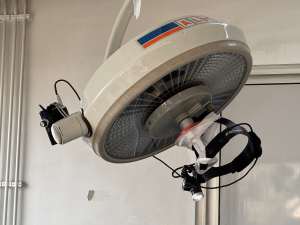

Thank you very much to the Doximity Foundation for sponsoring the flights for my outreach trip to Kirtipur Hospital near Kathmandu, Nepal. The Nepal Cleft and Burn Care Center has been a partner site of ReSurge International for over 30 years. This hospital cares for hundreds of acute burn patients and performs many more secondary reconstructive procedures each year. The hospital functions despite major shortages in equipment and other resources. For instance, headlamps are sometimes tied to non-functioning OR lights as a makeshift solution to allow operations to proceed (image 1). I will highlight below 3 main achievements from this outreach trip:
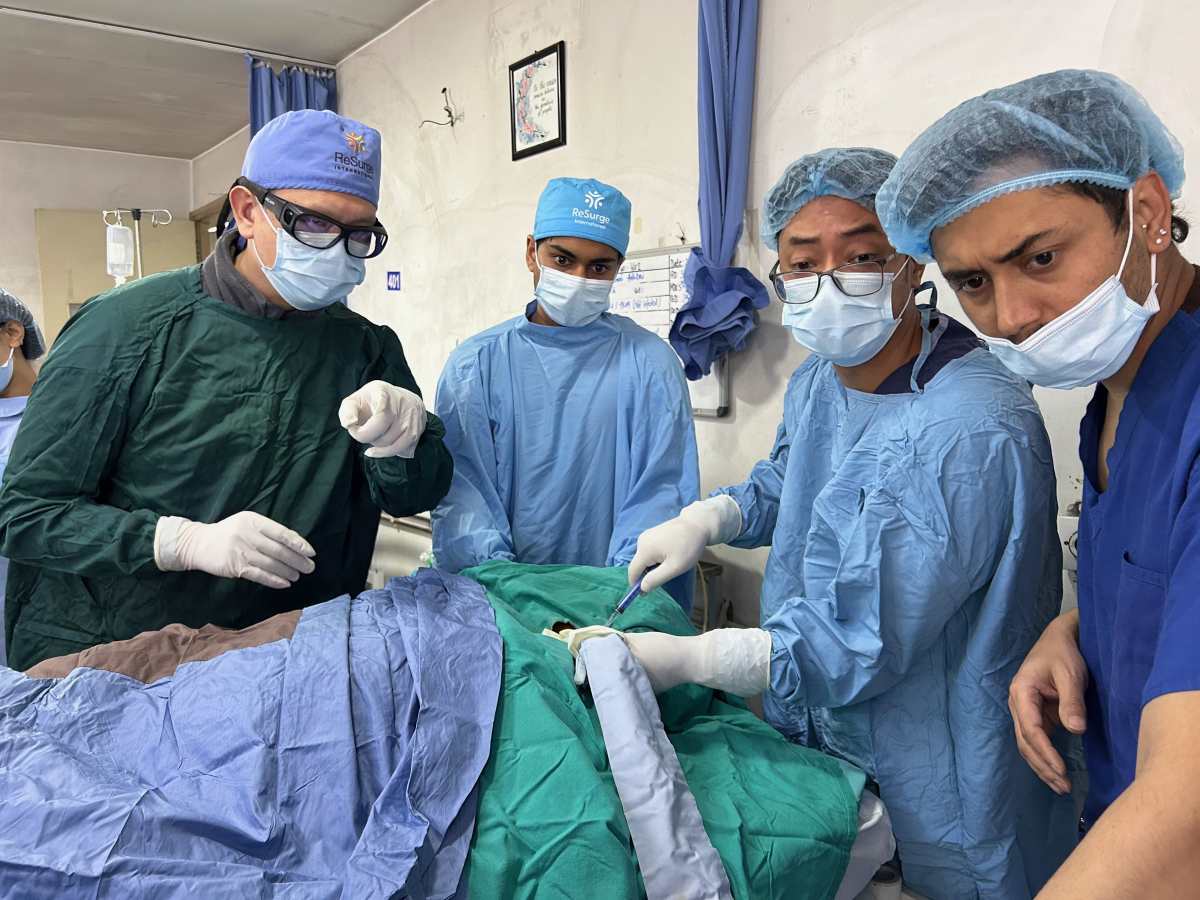
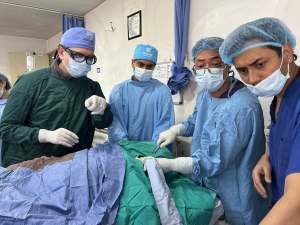
ICU rounding with focus on shock recognition and stabilization: During our trip, a main focus was to co-treat patients with the local partner team, including ICU rounding each day. We identified multiple patients in shock during morning rounds, and the visiting team urged rapid treatment. In all cases, septic shock was the likely cause. Stabilization measures included volume resuscitation in accordance with international sepsis guidelines and the initiation of empiric antibiotics appropriate for recent cultures/wound colonization. Urgent wound takedowns and triage to return to operating theater, in coordination with anesthesia team was encouraged for several patients with invasive wound infection, though this strategy created significant pressure on the already packed surgical volume. There is a high incidence of multidrug-resistant organisms (MDROs) at this site, hence routine use of cephalosporins and fluoroquinolones is insufficient for broad-spectrum coverage. Local providers were encouraged to use data from prior wound swabs to guide therapy. Invasive measures included intubation and transfer to the Medical ICU, central line placement, and ultrasound for point-of-care cardiovascular data. Image 2 depicts an ultrasound-guided central line placement.
Adequate caloric and protein nutrition for larger size burns:
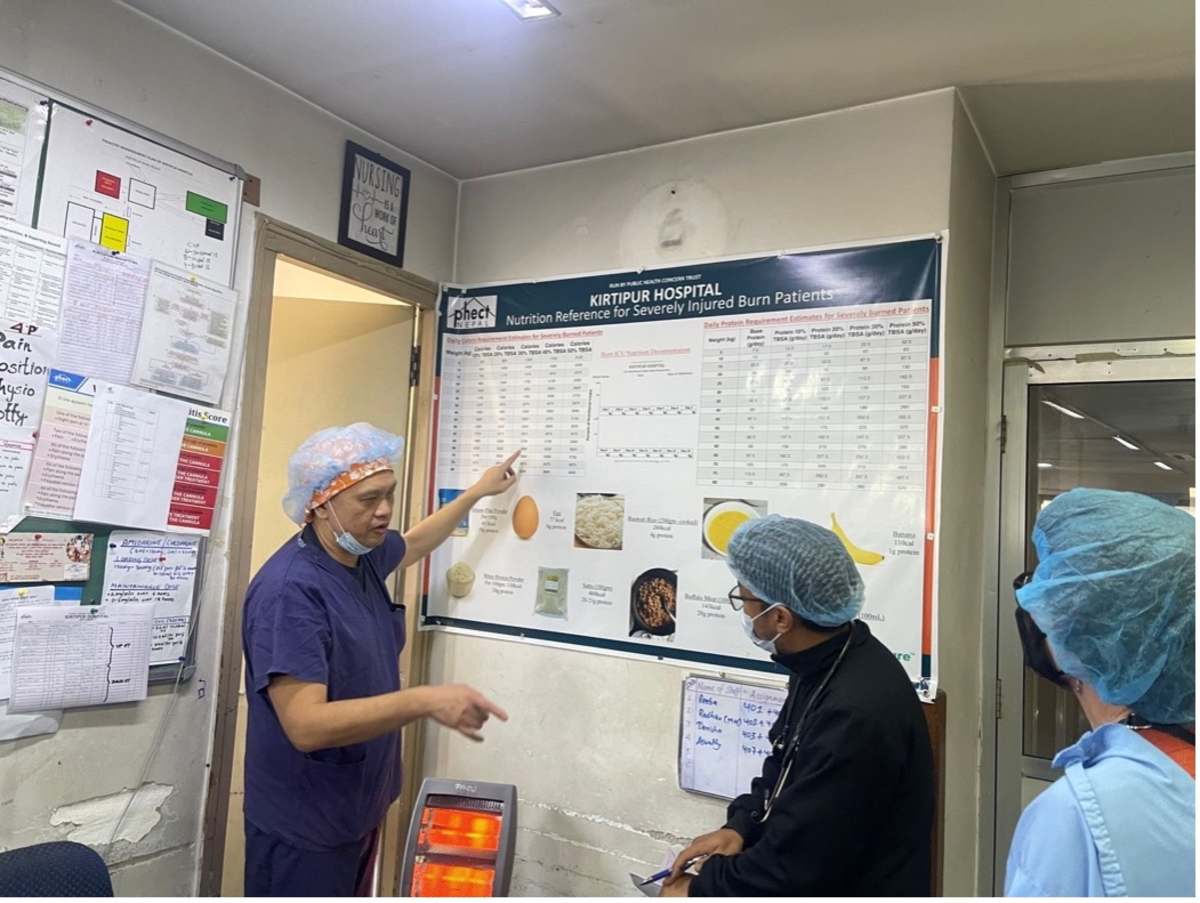
Providing, maintaining, and increasing nutritional intake remain significant challenges. Posters outlining nutritional references for severely burned patients had been placed in all units by a separate NGO that visited just before our team. This grid for the most common weight/burn sizes encountered at this site specifies the increased caloric/protein requirements for the severely burned patient. Our team frequently used this grid while rounding with local hosts to encourage its use. Calorie and protein requirements need to be met more precisely rather than qualitatively described during morning rounds. Following this strategy, several additional patients were supplemented using nasogastric feedings rather than oral feeding encouragement alone. In image 3, we are reviewing with local providers the caloric and protein requirements for an individual patient.
Co-development of SurgHub educational modules for low-resource settings: Our visiting team had been working for 2 months on developing PowerPoint education modules with attached audio for learners in low-resource settings. The strategy is to use case-based learning to highlight important management principles, as well as acknowledge challenges in low-resource settings. There are five modules developed so far: pediatric palm burn, multilevel arm contractures, high voltage electrical burn, burn wound care (part 1), burn wound care and surgery (part 2). We received a very positive review and actionable feedback as we focused on different modules in our daily didactics. The modules are now undergoing a final set of revisions prior to submission to SurgHub, a UN/WHO-sponsored website for global surgery resources.