
We’ve formed a small team of emergency physicians—both senior residents and attendings with a shared interest in global health equity—to design a three-month introductory seminar in Emergency Medicine for senior medical students in Phnom Penh, Cambodia. Since Emergency Medicine is still an emerging specialty in Cambodia, we connected with the Dean of the University of Puthisastra Medical School and proposed offering this course as a senior elective. Working closely with the Dean’s office, we’ve built a curriculum that aligns with their accreditation standards (similar to ACGME) and follows the Clerkship Directors of Emergency Medicine (CDEM) guidelines. The course will run from September 4 to November 19, 2025, with 29 webinar sessions (90 minutes each), scheduled Mondays, Wednesdays, and Fridays at 9 AM Cambodian time.
This grant will support our three-day capstone, where we (two senior residents and one attending) will travel to Phnom Penh to teach in person. We’ll run hands-on clinical skills workshops and facilitate OSCEs, with junior medical students role-playing common Emergency Medicine cases. On the final day, students will be assessed with both a written exam (40%) and OSCE (60%). We’ll also collect data on their learning experience to refine and improve the next iteration of the course.
Although our group is based at Harbor-UCLA, this is an independent project. It’s not institutionally sponsored, and all faculty and residents involved are using their personal vacation time to teach and travel.
Emergency Medicine remains underdeveloped in Cambodia, so this course offers students early, structured exposure to the specialty and helps equip them to care for patients with urgent and life-threatening conditions. Cambodia’s recent history—marked by genocide in the 1970s and prolonged conflict into the 1990s—continues to shape its recovery. The health system is still rebuilding, with limited postgraduate training opportunities in critical care medicine.
Studies have highlighted the need: one observational study in Cambodian public hospitals showed high admission-to-death ratios and limited diagnostic capacity; another survey identified education as a key gap in emergency and critical care. By targeting senior medical students, we’re investing at a pivotal moment in their training—helping build a foundation for the country’s future emergency physicians and strengthening the broader healthcare system.
Our goal is to increase students’ confidence and competence in managing critically ill patients. The curriculum is designed around five core areas:
-Foundations of Emergency Medicine
-Initial approach to the emergency patient
-Diagnostic testing and interpretation
-Emergency stabilization and resuscitation
-Emergency procedures
To make sure the course addresses local needs, we are developing a pre-course needs assessment to identify knowledge gaps, available resources, and priorities from the students’ perspective. The capstone’s hands-on procedural training will be central to bridging those gaps. Partnering with the Dean’s office, we’ll measure outcomes through written exams and OSCEs, comparing results to baseline surveys.
The feedback we gather—from student assessments to their reflections on the course—will guide how we adapt the next version. Long-term, this project is designed as a pilot for a reproducible model that can grow into a locally led program. Our ultimate aim is to support the University of Puthisastra in developing sustainable emergency medicine education, led by Cambodian faculty, that continues to expand well beyond our initial involvement.
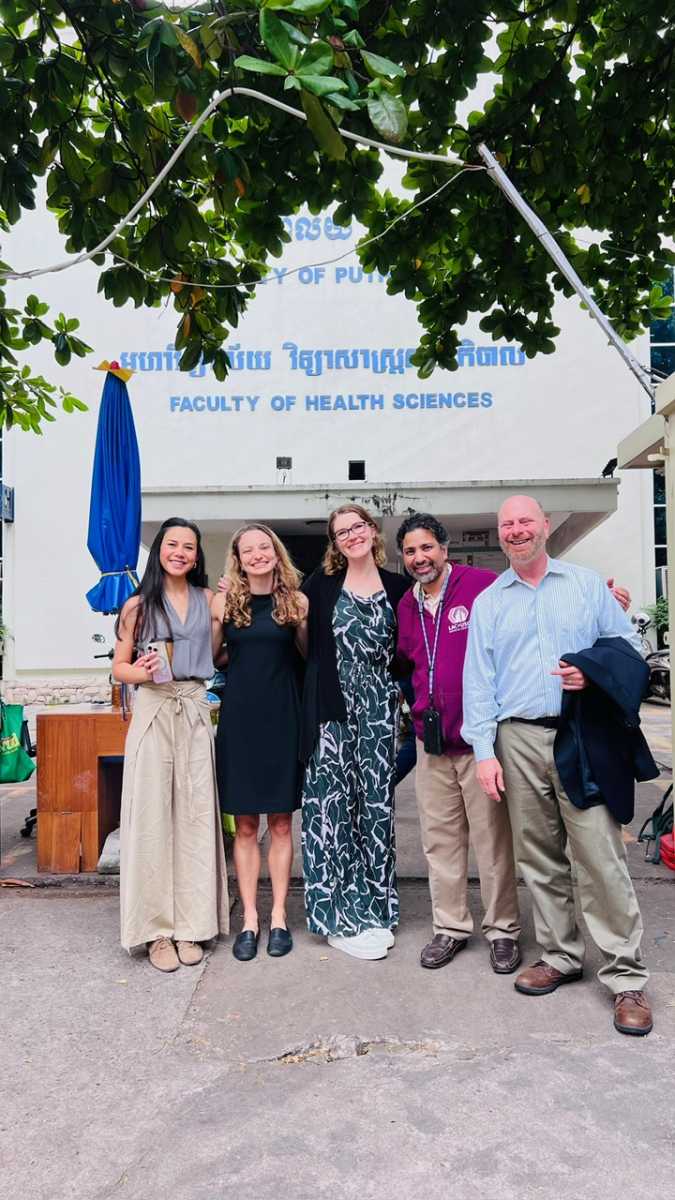
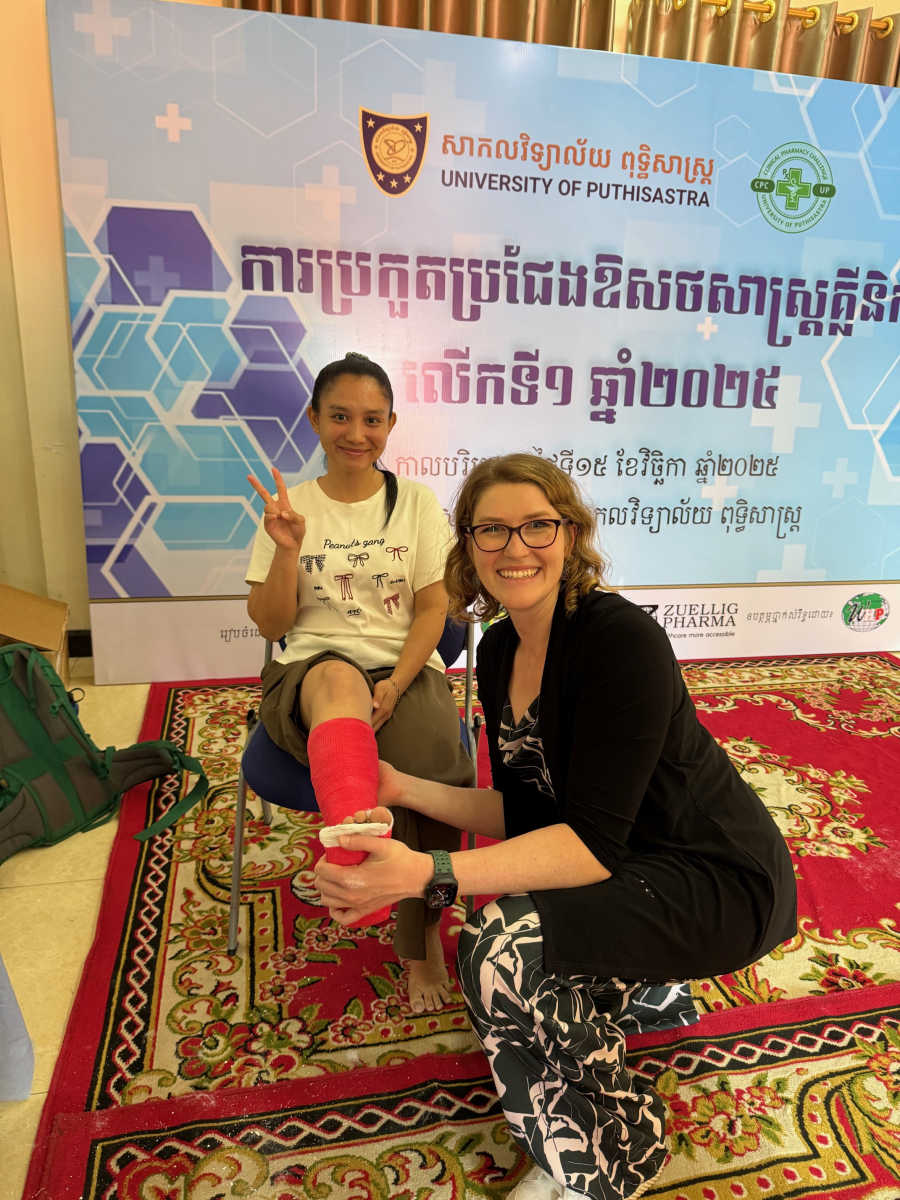
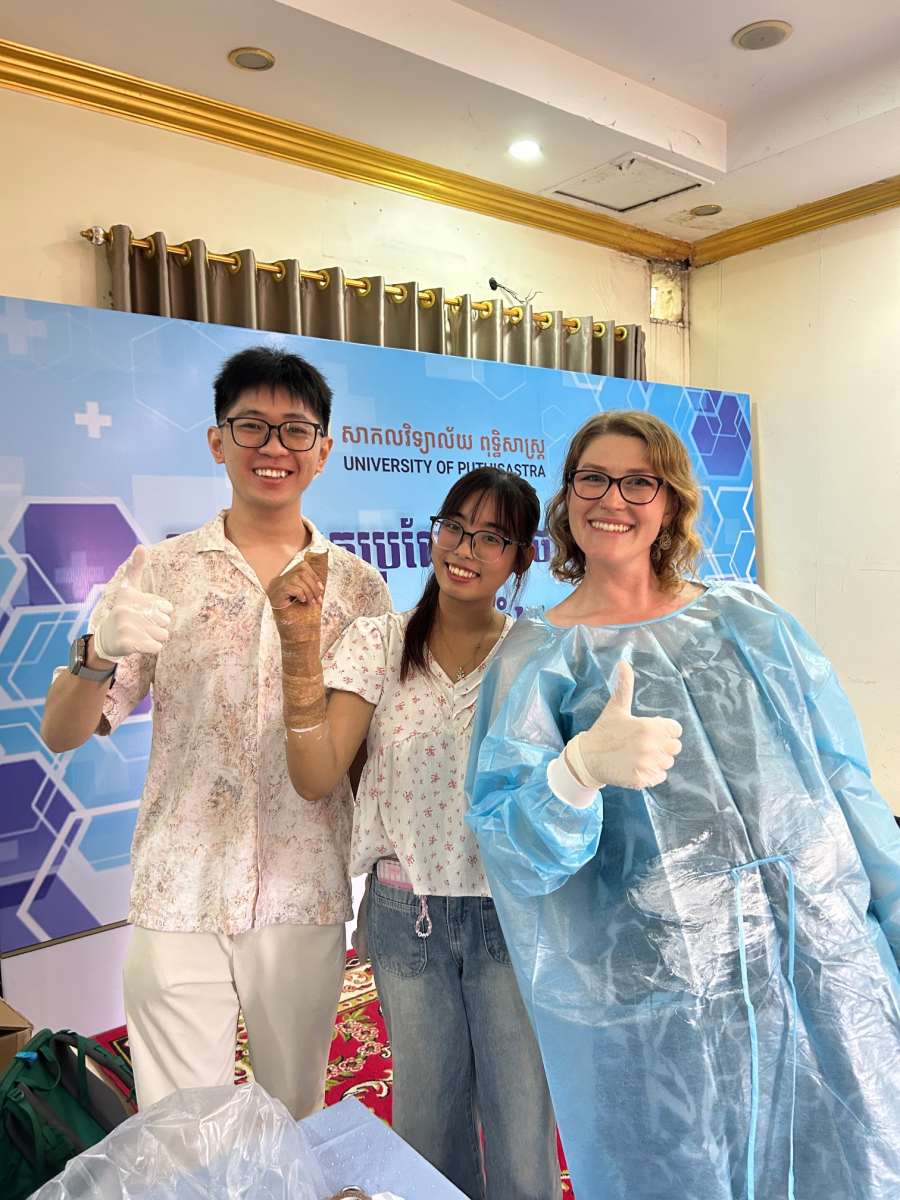
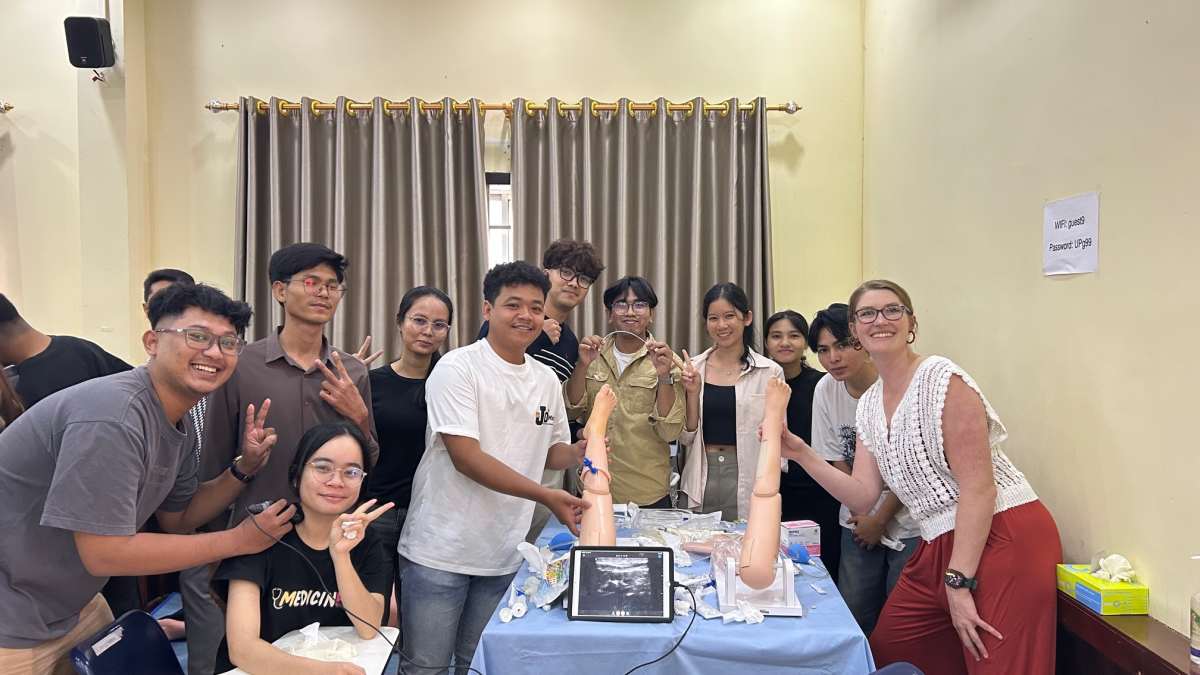
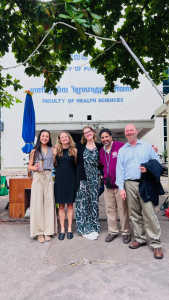
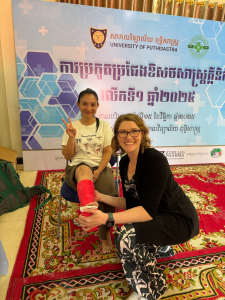
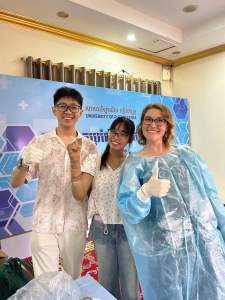
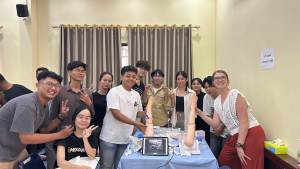
Our team taught an Introduction to Emergency Medicine course to sixth-year medical students at the University of Puthisastra in Phnom Penh, Cambodia. They participated in a focused introduction to the core principles of Emergency Medicine designed to complement and strengthen their existing medical education. Over the course of the curriculum, they learned the key components of acute care, including initial assessment, stabilization, and the fundamentals of critical resuscitation. Through case-based discussions and practical skill sessions, the students built a strong foundation in recognizing and managing time-sensitive emergencies, preparing them for their upcoming clinical responsibilities and future roles as physicians.