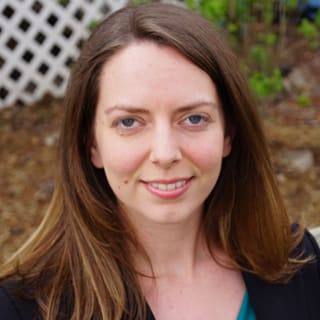
The Health Frontiers Laos Project has been ongoing since 1990 when the single fully trained pediatrician in the country asked the founding medical director (a US pediatrician) to help him establish a residency program. Together they started the Lao pediatric residency program in 1998 with five residents. As of 2025 we have now graduated almost 300 pediatricians, most of whom work throughout the country of 7 million people. We also started an internal medicine residency program in 2003 with around 200 graduates and an emergency medicine residency program that began in 2017.
This year my role will be to return as a visiting internist and pediatrician. I will round in internal medicine and pediatrics through the University of Health Sciences, Lao PDR, at Mahosot Hospital, National Children’s Hospital, Mittaphab Hospital and Setthathirath Hospital with the internal medicine and pediatric residents. The local residents will have the opportunity to practice case presentations in English and we will work together, myself, the Lao teachers, and Lao and Minnesotan residents, on complex case management. The majority of my time will be spent on the wards with the current Lao residents.
I will be bringing an internal medicine resident who speaks a local language and is interested in hematology/oncology. She will be rotating with the Lao internal medicine residents as they provide clinical care on hematology and oncology wards. I helped train several of the Lao hematologists/oncologists when they were residents. I believe that connecting them can lead to a productive longer term relationship that can improve the quality of hematology and oncology in the region.
Lastly, I will work with the University of Health Sciences to improve the digital resources (such as access to UpToDate and HINARI) that the residents and fellows in Laos have access to.
The primary population served will be children and adults in the capital city, Vientiane, in Laos. Vientiane has a population of approximately 1 million people. The doctors trained will also work throughout the provinces and repeat the training for local providers all over the country.
Adults with hematologic and oncologic illnesses will also benefit from increased collaboration between the Lao hematologists and oncologists and the Minnesota resident who speaks a regional language and is interested in hematology and oncology. I hope they will develop a long term relationship that will lead to improved care for many people with cancer in Laos.
Lastly, improving the access to digital resources will help in the training of current medical students and residents, and help practicing doctors in Laos improve their clinical care for all patients in Laos.
I choose to work with this population because I have now been volunteering in Laos for a decade. Initially I spent two years volunteering as the Health Frontier’s coordinator for the internal medicine and pediatric residencies in the country. Through that time I have made connections that have been able to directly help my former residents - now all junior faculty or clinicians in various hospitals and clinics throughout the country. Having spent significant time in the various hospitals when I lived in Laos, and knowing the enthusiastic junior faculty well allows me to be helpful in the medical education of the pediatric and internal medicine residents. The relationships I have developed over the last 9 years give me unique access to medical care and trainees in Vientiane. As an associate professor I try to bring exceptional trainees from the University of Minnesota to foster peer-peer relationships between Minnesota residents and Lao residents who may create life long relationships that have great potential for improving health care in Laos.
My expertise in medical education and the relationships I have cultivated allow me to work with the Lao clinical educators to help to improve clinical care and bedside teaching. As a former country coordinator in Laos with Health Frontiers, I have experience working with the Lao residents and connecting them to additional medical resources to help improve their clinical decision making now and in the future.
By bringing a Minnesota resident who speaks a regional language, she will work as a peer with the current Lao residents. Often having peer-peer relationships can demonstrate opportunities for sharing education between peers, or highlight differences that may be opportunities to teach and improve medical care both in Laos and Minnesota. As the Minnesotan resident will be going into hematology/and oncology, I hope she may form life long relationships that can help bring expertise and resources to hematologic and oncologic care in Laos for years to come.
Last year we were able to get ~10 doctors access to donated UpToDate, this year our goal is to get at least another 10 access to UpToDate and assistance with using this with clinical care. Improving the digital resources available will help improve the quality of medical education for current medical students, residents, and fellows. This will also allow current doctors to check their own medical decisions and learn new methods. We also work on improving use of HINARI (WHO’s donation of most medical journals to low resource countries) and AI such as OpenEvidence for medical doctors and medical educators in the teaching hospitals in Vientiane. I expect this work to continue this year, and to have greater impact as Better Evidence, the program that donates UpToDate is again accepting applications from new clinicians, and the continued evolution of AI has opened more doors for clinicians from low resources settings to access digital clinical support tools.

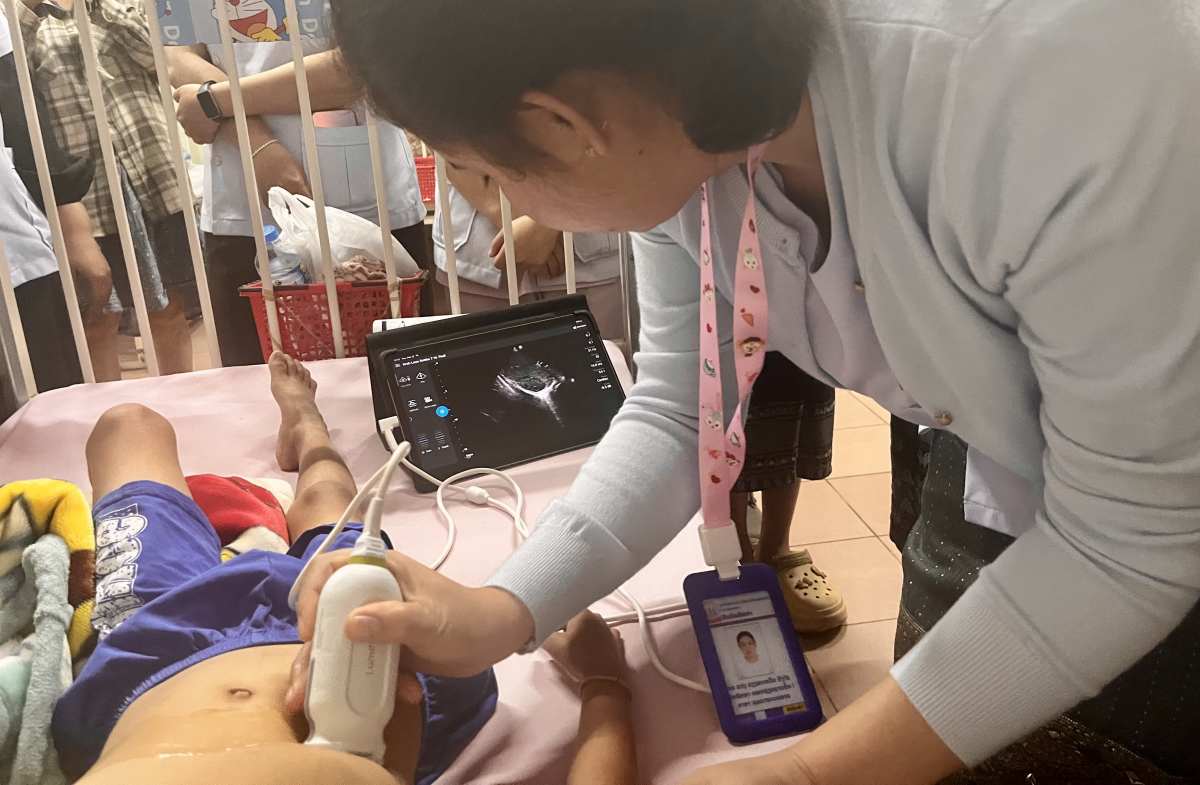
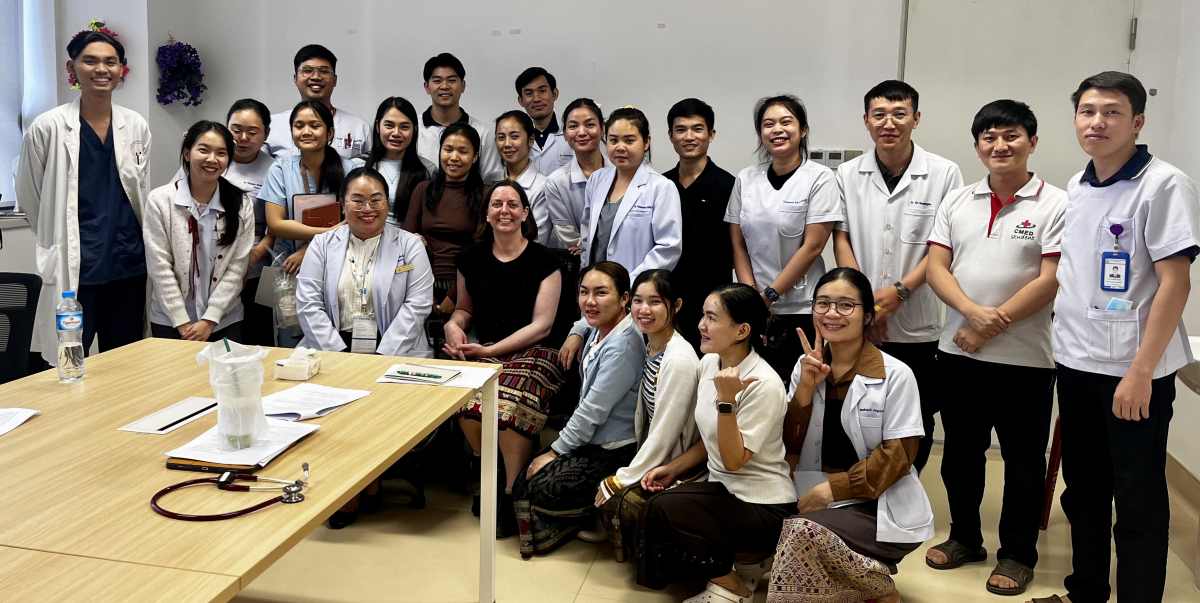
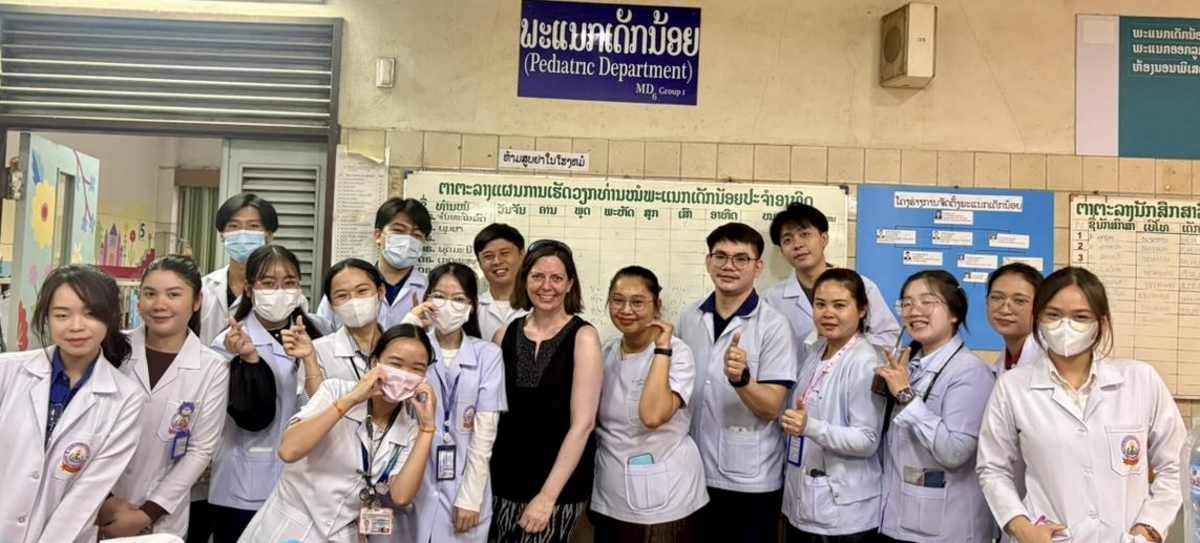

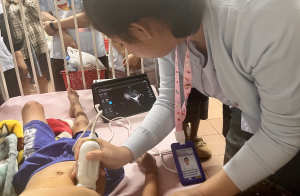
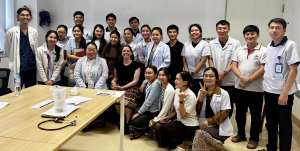
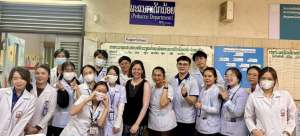
I had a lovely time interacting with many of my prior residents. My prior residents are now junior faculty responsible for teaching the current medical students and residents.
I rounded on the pediatric and medical wards with the current pediatric and internal medicine residents and medical students on these wards. They were able to practice their English presentations, bedside ultrasound skills and discuss difficult and challenging cases. One medical student who I spoke with last year remembered a patient with an MRSA skin wound and pneumonia. With the patient's ongoing fever that was not responding to antibiotics, despite otherwise looking well, I was very concerned. Despite my concerns, after I left she ended up dying, likely from incompletely treated MRSA systemic infection - possibly endocarditis. The student remembered my concerns from the year before. He remembered the patient. He told me that he had never before thought to be so concerned about a patient with such a minor skin infection and small pneumonia. He was struck that I had identified a concern and described the process that then ended up happening after I left. He had previously wanted to become a surgeon. But after that experience he has decided to enroll in Internal Medicine residency, and started his first year in advance internal medicine training, so that he can better understand what is happening with patients and learn to teach others. I think he has great potential to be a very positive impact on medical education, internal medicine, and medical care for the country of Laos in his future.
I could tell similar stories about several of the trainees I interacted with. There are so many curious young minds who are open to learning all they can about medicine. This year I was able to connect many more people with UpToDate and HINARI and other quality online resources. I have been asked to provide a workshop next year to help teachers better teach how to use online resources.
In addition to bedside teaching, I was asked to teach along side my former residents, now junior faculty for two different class sessions. First (see photo in a classroom), Dr. Oulaivanh, the first pediatric nephrologist and my former resident, and I co-taught about electrolyte imbalances. Rather than doing a traditional powerpoint lecture, Dr. Oulaivanh was open to a modified Flipped Classroom idea, where the 1st and 2nd year pediatric residents needed to work through a series of cases to demonstrate their ability to manage electrolyte imbalances. At the end Dr. Oulaivanh was very happy with the residents participation and their ability to grow in their management of electrolyte imbalances and is more likely to use this type of teaching more for didactics, rather than standard lectures.
Additionally, Dr. Sengmany (a Lao pediatric hematology fellow just returning from studying in Thailand and my former resident) and I co-taught on understanding hemoglobin typing. Thalassemia's are very common in Laos with at around 50% of the population having at least one genetic variation. Dr. Sengmany and I met and were able to adapt her lecture to more of a workshop format where the pediatric 1st and 2nd years had to practice their abilities to interpret hemoglobin typing. After prepping together, Dr. Sengmany was more than able to lead this class.
It is wonderful to see the progression in medical education in Laos, and to do my small part in helping get the education up to best current practices. I also highly appreciate being able to round with the current medical students and residents. This allows me to see the current quality of patient care, which is higher than when I first came to Laos, and to identify opportunities for improvement. My longer term relationships allows me to partner with current teachers/faculty in Laos and help them improve medical care and training for the country.