During my time in Nigeria I will be working with Nigerian teams in both clinical and research settings. I plan to spend the first part of the trip working with Nigerian researchers in the hospital’s microbiology lab to assess antibiotic resistance in clinical samples. The impact of this work includes improving the use of antibiotics and understanding antimicrobial resistance pattens in the population, thus improving patient outcomes of patients treated in the hospital. I also plan to work with Nigerian residents at Jos University Teaching Hospital (JUTH) to assess and treat patient s in the Pediatric Emergency Department and children admitted to the Acute Inpatient Unit. Working with and learning from Nigerian residents allows for sharing of information about treating pediatric patients. I hope to pursue a career in Global Health, particularly in Pediatrics and research in the Global Health field. This trip will provide me with additional exposure to research and clinical practices in low resource settings.
Jos University Teaching Hospital (JUTH) is a tertiary referral health institution that serves a large geographic area in the middle of Nigeria, located north of the nation’s capital, Abuja. JUTH has capabilities for research, medical training programs, and broad clinical practices. The University of Minnesota and JUTH have a long-standing research partnership, studying hyperbilirubinemia, G6PD deficiency, sepsis, infection control and more. The long standing partnership between the two universities allows for long term research projects and relationship building that allow for bidirectional sharing of information. JUTH provides emergency care for children and more specialized units and specialties. Despite the resources available at this hospital, it can still be difficult for children to access recourses, contributing to high child mortality. This project can help improve antibiotic use in this population and patient outcomes through improved treatment of infections.
Meaningful or impactful work in global health carries on long after I have departed the country. For me, working in the research field helps to add impact to my time abroad. I hope that the work I help with in the microbiology lab in Nigeria will improve understanding of antibiotic resistance in the population and impact clinical practices to use antibiotics that are more effective and specific to the types of infections most common in the hospital. Additionally, working with the local team to teach basic microbiology techniques and next-generation sequencing techniques will build up the capabilities of the microbiology lab after we leave, hoping they can continue to expand the scope of their work. Working in a clinical setting with Nigeria residents will likely have a longer term impact on me and my future clinical practices. After previous global health experiences I have been struck by how doctors can do so much and provide excellent care without as many resources at their fingertips. Having these experiences reinforces the importance of history taking and physical exams and I hope will continue to make me a better clinician. I aspire to have a career in global health where I can continue to work with and learn from groups across the globe, particularly in low resource settings.


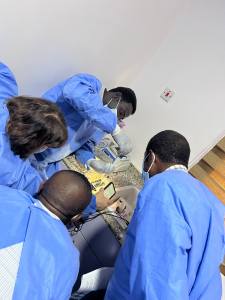
During my trip to Jos University Teaching Hospital, in Jos, Nigeria. I worked with Nigerian residents, physicians and researchers to understand antimicrobial resistance in their population and provide medical care for children in the Emergency Pediatric Unit.