
Through this rotation, I plan to work in partnership with the Botswana Ministry of Health and the Scottish Livingstone Hospital to help train their medical students and residents on internal medicine. This is part of a longstanding partnership between Beth Israel Deaconess Medical Center and the University of Botswana to contribute to Botswana’s medical education and fill teaching roles. During my time, I will work with the Global Health Fellow, who is there for a year, on a quality improvement initiative and provide mentorship to Botswanan medical students on their research projects.
Given the high prevalence of HIV in Botswana, I will be helping to treat patients with HIV in the medical wards and the complications that they may suffer from it, such as co-infetions from TB. My goal through this endeavor is to teach clinical reasoning to medical students and residents. I also hope to teach them how to POCUS and use it for clinical decision making. During the rotation I will be going into the hospital every day during the day shift, contributing to rounds, and spending the time after rounds to help students do procedures and learn important general medicine topics.
The Scottish Livingstone hospital in Molepolole is a 350 bed hospital that serves as a referral center for patients in the Kweneng East District who have limited access to health care. Through my time during this rotation, I will contribute to developing their medical curriculum and help train future Botswanan physicians. There is a dearth of medical educators in this hospital, so I hope to fill this gap.
This project is intended to benefit medical trainees in Botswana with the purpose of building up the country’s healthcare workers to make healthcare more accessible. This partnership between BIDMC, where I am currently an internal medicine resident, and Botswana has existed for nearly 20 years. There are few medical schools in Botswana and their students rotate through the the Scottish Livingstone Hospital, where I will be teaching them clinical reasoning skills and approaches to common clinical vignettes.
About 20% of Botswana’s population is affected by HIV, and 40% of the patients that are admitted to the Scottish Livingstone Hospital have HIV. It is thus a sensitive and complicated patient population that I will be helping to treat. Outside of HIV, heart disease, diabetes, and strokes are most commonly treated at this hospital.
I will thus be caring for an underserved patient population in a more remote part of Botswana that serves 250,000 people. Thus, it’s imperative that through the work I do, I am ensuring the medical students and residents will grow to continue to provide care for this population once I leave.
The goal is to help educate and contribute to building a foundation of frontline workers in Botswana’s healthcare system. By developing curriculum and through teaching native physician trainees, I want to ensure that the skills that I have will be passed forward and continue to benefit this patient population. Through this project, I will help to strengthen Botswana’s own physician workforce. In addition to my project on medical education, I will also be bringing with me hospital supplies and common medications that are otherwise difficult to find in Botswana. Due to the federal budget cuts, U.S. funding that has previously supported Botswana is no longer accessible and as a result, their hospital systems are having issues with pharmaceutical shortages.
Through this experience, I would like to learn how to provide safe and thorough medical care in a low resourced community. So often, as a resident in well-resourced hospitals, I am used to having diagnostic labs and imaging readily available to me. I rarely run into issues with medication shortages and if I am ever unsure, a consultant is never far from reach. In Botswana, I will not be able to take all of these resources for granted and I want to learn how I can rely on my physical exam, a clear history, and imaging such as POCUS to make clinical decisions.
Finally, I would also like to learn more about how to provide HIV care. I have not taken care of many HIV-infected patients in my residency, and in Botswana I will have the opportunity to learn about the complications of HIV and how to treat this patient population in a low resource setting, where lab tests like HIV viral load are not always readily available.


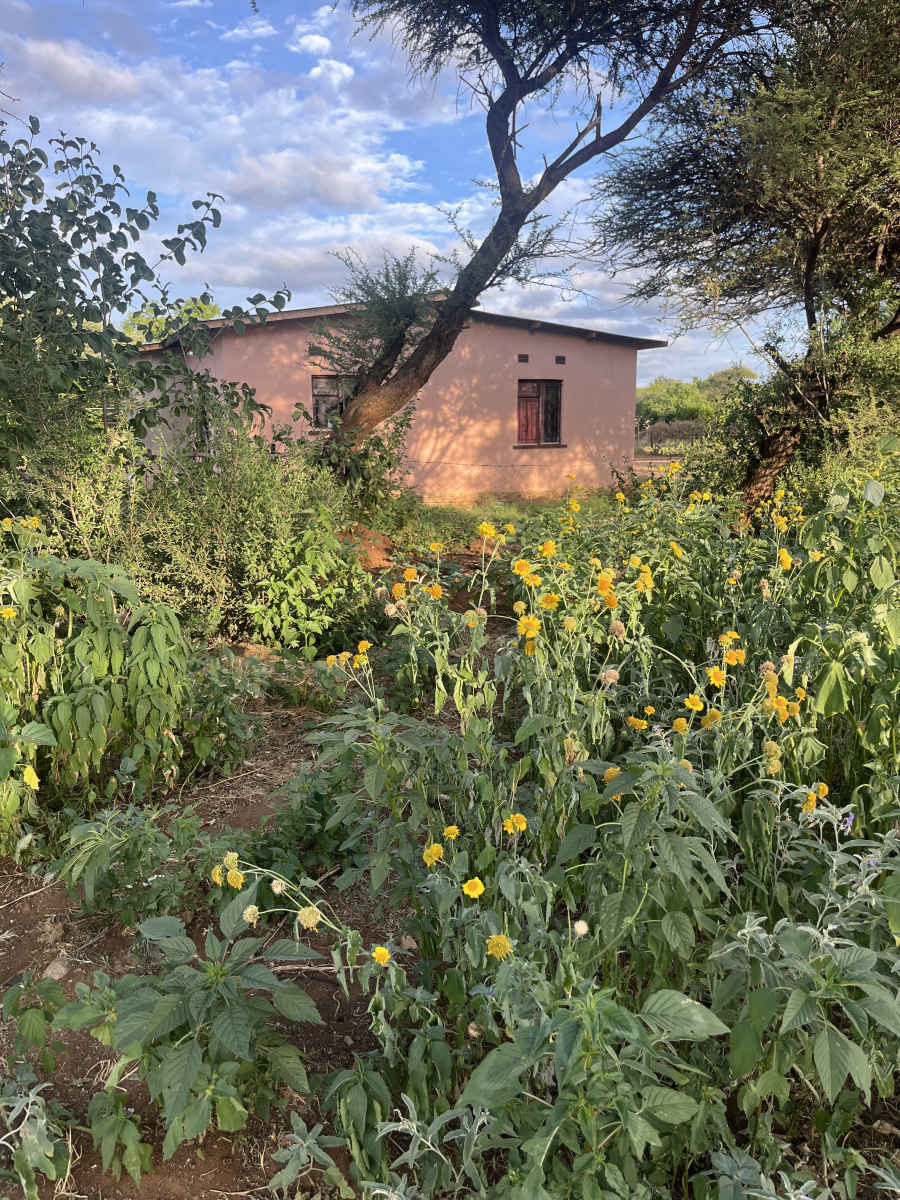


More than anybody else, I perhaps benefited the most from this trip. I went into Scottish Livingstone Hospital feeling burnt out from residency, and it was seeing the necessity for doctors in such a low resourced setting with sick patients, that I realized I had skills and knowledge that could contribute to changing the course of a patient's healthcare. It was also incredibly fulfilling to be able to teach the Botswanan residents and interns--I prepared several chalk talks for them that covered vital sign changes, heart failure, diabetes management. They also taught me how to treat patients with acute TB and HIV--diseases that I have not had as much experience treating while in residency. I learned also a great deal from the Botswanan attending physicians, who helped me feel more confident in reading x rays and depending on my physical exam skills.
There are a few patients that have really stuck with me since my trip--a patient who was unable to get access to hemodialysis for several days and who went into cardiac arrest in front of me, prompting me to initiate ACLS on him. Another patient came in with a very late presentation of a metastatic cancer of unknown etiology with cannonball lesions throughout her lungs who became acutely dyspneic. Without the ability to rely on oncologists and pulmonologists that I am so accustomed to and without an available ICU bed, we managed to stabilize her with pulse dose steroids. Leaving Scottish Livingstone Hospital, I realized that practicing medicine as a provider abroad, especially in low resourced environments, gave me a sense of gratitude and fulfillment that I had been searching for throughout most of residency. It is why I plan to continue devoting my career to global health work, especially as I become trained in gastroenterology and can offer procedural services abroad.