This project will launch a focused community education initiative on hidradenitis suppurativa (HS) in Lagos, Nigeria. Over a two to three-day period, I will partner with local dermatologists and health educators to conduct brief, evidence-based educational sessions at high-traffic community establishments such as markets, salons, and transport hubs. The goal is to increase awareness of HS as a chronic, treatable skin disease rather than “recurrent boils,” and to connect individuals to appropriate medical and surgical care.
Using the validated Global Hidradenitis Suppurativa Atlas (GHiSA) questionnaire, I will adapt a short, low-literacy screening and education tool in English, Yoruba, and Igbo. We will track the number of people reached, referrals generated, and immediate changes in knowledge through single-card “retro-pre” surveys.
The project will also strengthen local capacity by training community health workers and patients to recognize early HS and encourage timely referral. This pilot engagement will serve as the foundation for a larger, sustainable community dermatology partnership model that can be expanded across other Nigerian states and serve as a platform for HS surgical training in the future.
The project targets adults in urban and peri-urban Lagos who are disproportionately affected by undiagnosed HS. These include market traders, transport workers, and salon patrons-groups that have frequent skin trauma, limited access to specialty care, and low health insurance coverage.
Nigeria has an estimated HS prevalence of 2–3% based on recent population studies from Lagos and Abuja, yet most cases remain untreated until late stages. Financial barriers and stigma contribute to diagnostic delay and emotional distress. By meeting people where they are, in trusted community spaces, this project addresses a critical gap in early recognition and education.
The intervention also benefits primary care providers and community health workers who will receive simple, visual HS recognition guides and referral algorithms, ensuring sustainability beyond the trip itself.
Within one week, the project aims to reach at least 1,000 Lagos residents, identify individuals with possible HS, and link them to partner clinics for evaluation. Immediate outcomes include increased awareness, improved knowledge scores, and documented referrals.
The larger impact is the establishment of a replicable model for community-based HS education in resource-limited settings. The materials, translated screening questions, and referral pathways created during this pilot will be shared with local dermatology departments for continued use and adaptation.
Upon return, I will present outcomes at Washington University’s Global Health Forum and develop a brief report for submission to the Global Hidradenitis Suppurativa Atlas (GHiSA) collaborative. These learnings will directly inform my ongoing work in community dermatologic engagement across Africa and among diaspora populations.
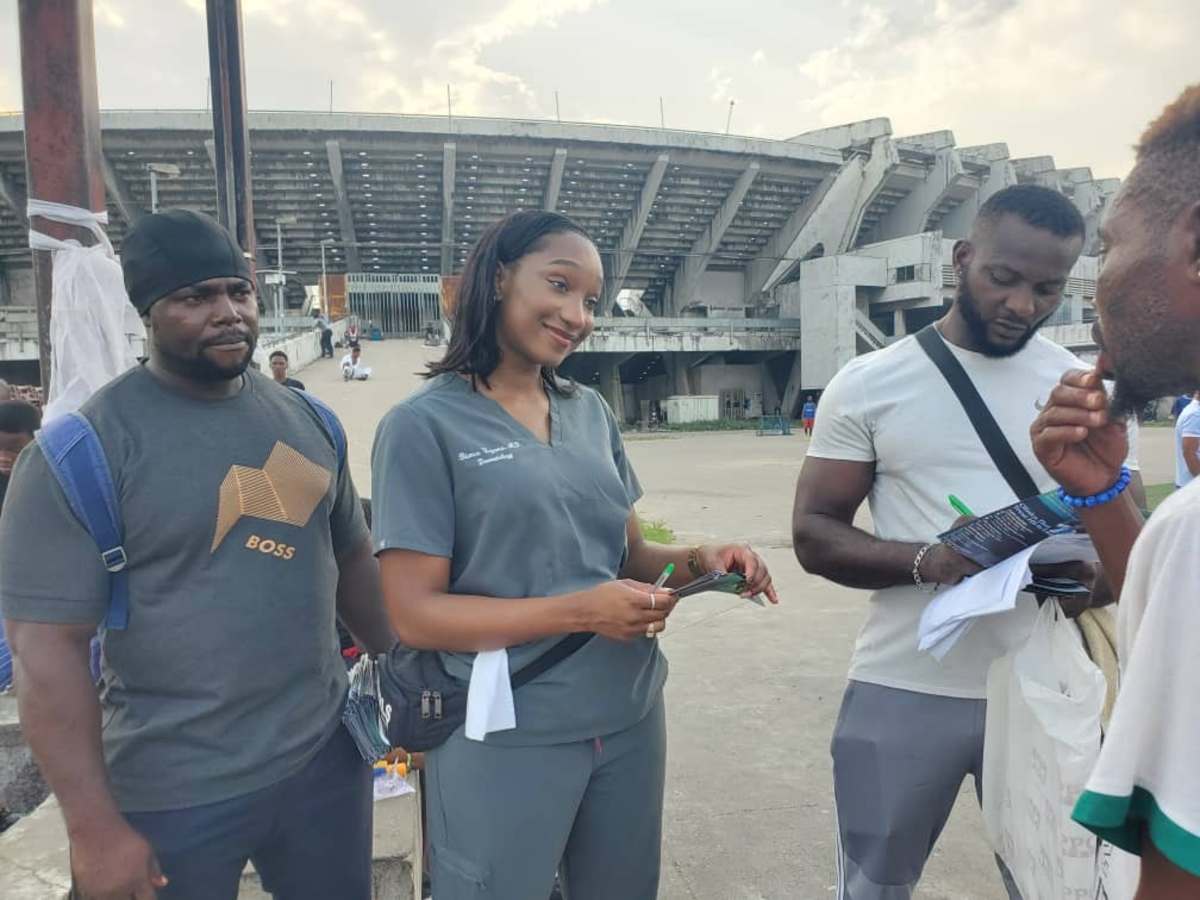

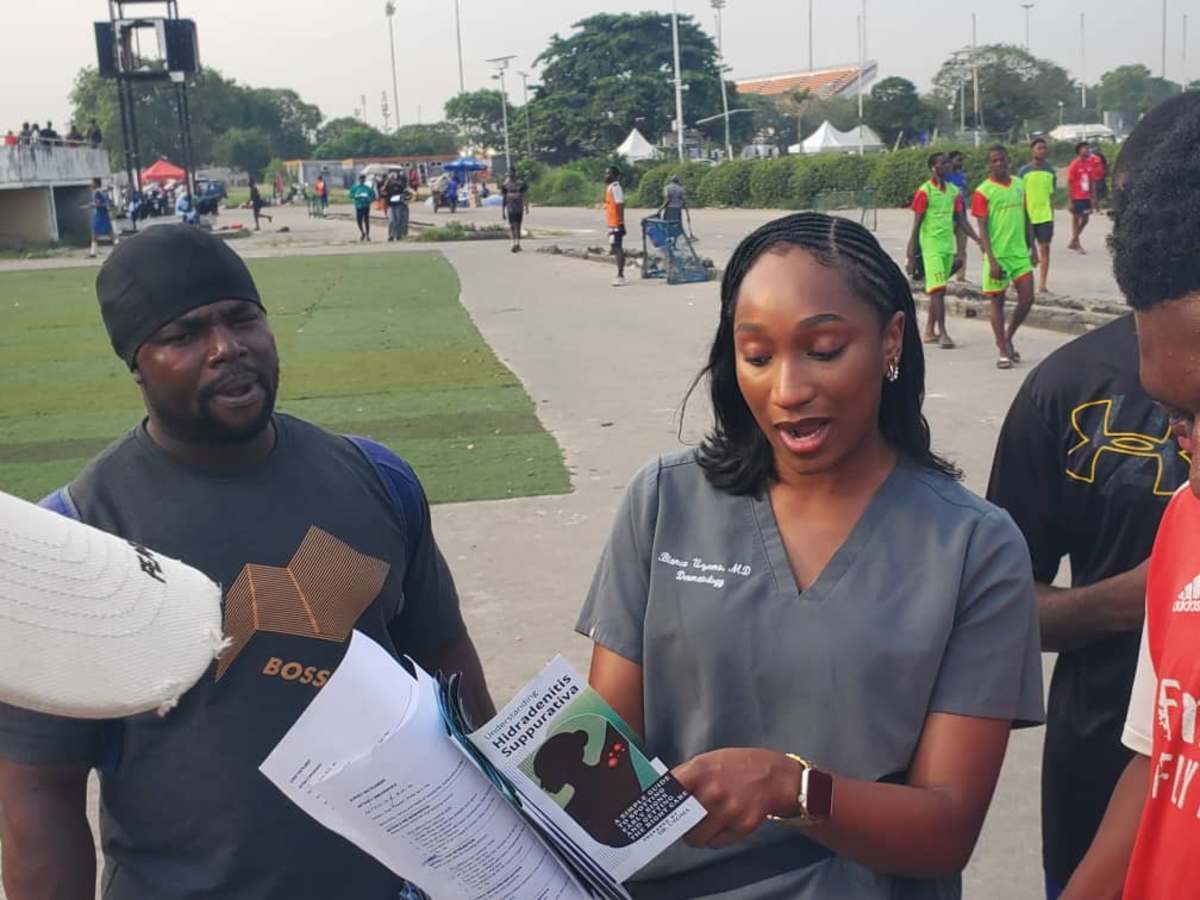


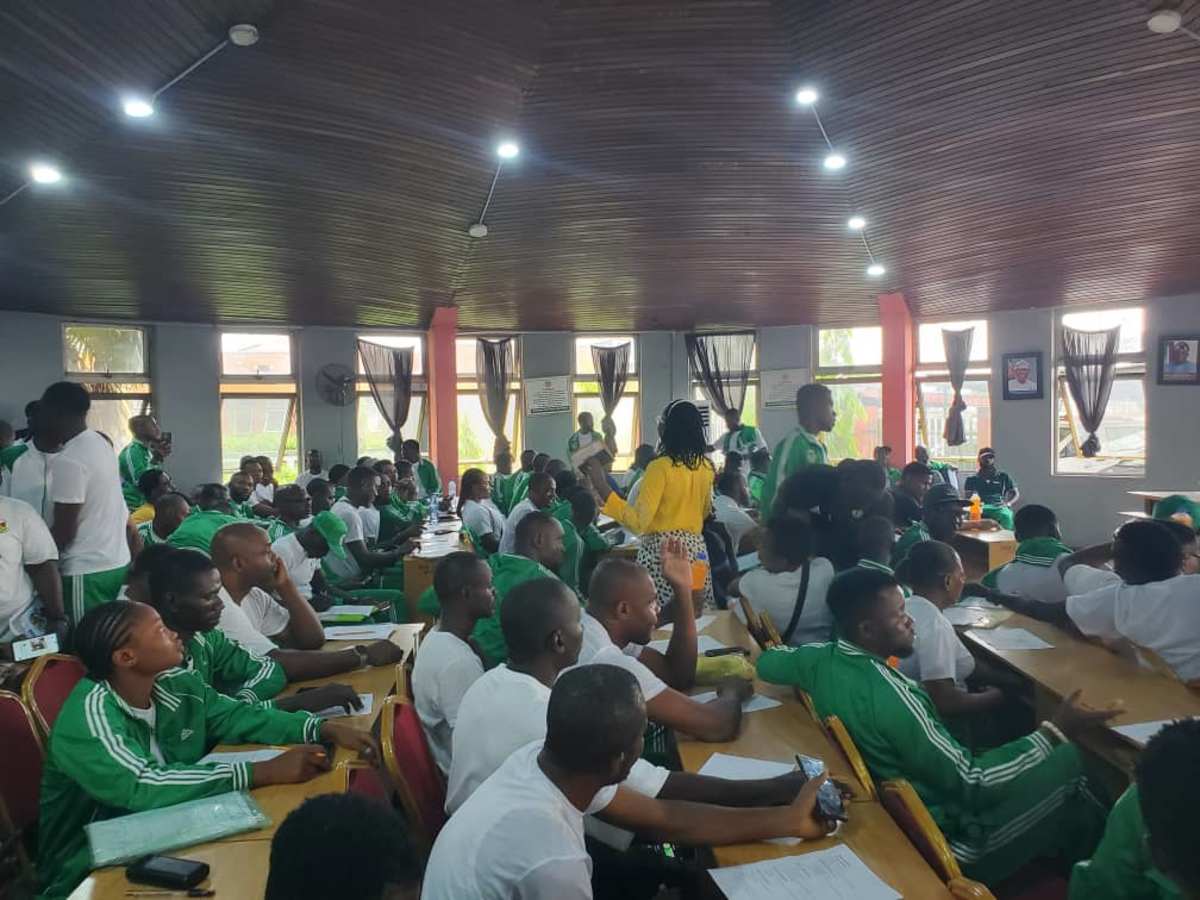




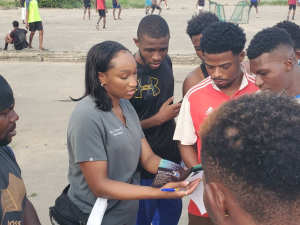


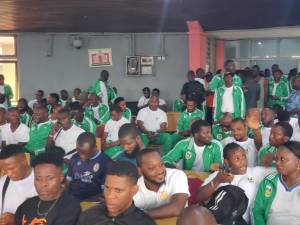
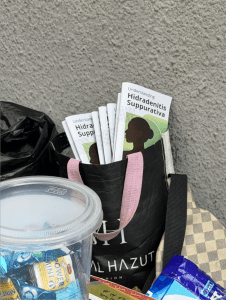
This project centered on engaging everyday community members in Lagos who often live with chronic skin symptoms but lack the language, access, or confidence to seek care. Over three days, we directly engaged over 340 individuals who completed surveys across diverse settings including a local college campus, a national sports facility, and a church community. Many additional individuals participated informally by listening to the educational sessions and group discussions, extending the project’s reach beyond those captured in survey data. Participants frequently described years of recurrent, painful “boils” that they had normalized or attributed to hygiene, stress, or chance, without recognizing these symptoms as potentially treatable.
The conversations were deeply personal and, at times, emotional. For many participants, this was the first time their experiences were validated as a legitimate medical concern rather than something to hide or endure. Participants were highly engaged and vocal, often expressing relief in learning that their symptoms were neither contagious nor a personal failing. Providing clear education, practical next steps, and locally relevant referral information transformed confusion into understanding and hesitation into intent to seek care.
Beyond individual knowledge gain, the project fostered trust and openness around a stigmatized condition, creating space for dialogue that rarely occurs in public settings. Survey results demonstrated measurable improvement in HS recognition and awareness, while the volume and depth of engagement highlighted substantial unmet need. Importantly, the community-based format encouraged informal knowledge dissemination, with many participants expressing intent to share what they learned with family and friends, amplifying impact beyond the immediate encounters.
This initiative was intentionally designed as a pilot to assess baseline awareness, identify care-seeking barriers, and evaluate the feasibility of rapid, community-level HS education. The materials, screening questions, and referral pathways developed through this effort are readily replicable and will be shared with local dermatology partners for continued use and adaptation. These findings will inform future initiatives focused on deeper collaboration with local providers and the development of scalable medical and surgical interventions for populations with significant unmet need in this region.