
I am currently a Complex Family Planning (CFP) fellow in the department of Ob/Gyn at UC Davis in Sacramento, CA. My proposed global health elective is a visiting rotation with the CFP fellowship at St. Paul’s Hospital Millennium Medical College in Addis Ababa, Ethiopia. As a visiting fellow at St. Paul’s, I would participate in didactics and educational activities with the host institution’s fellows as well as treating patients under the supervision of their attending physicians. The St. Paul’s fellowship is the only academic family planning subspecialty training program in sub-Saharan Africa. It was founded in 2017 in partnership with the CFP division at the University of Michigan, and trains Ob/Gyns from across Africa to provide complex abortion and contraception care, as well as hosting visiting learners and trainees from the U.S. The St. Paul’s fellowship is a vibrant example of the power of longitudinal collaboration between U.S. academic institutions and those in low- and middle-income countries (LMICs) to increase medical capacity in host countries in a sustainable, culturally competent way. My hope is both to contribute clinically and to learn firsthand about building and maintaining such a collaboration.
In medical school, I was fortunate enough to participate in several global health rotations in LMIC’s. The one that taught me the most about mutual benefit and sustainable capacity-building was a partnership between the gynecologic oncology division and a teaching hospital in Cape Coast, Ghana. The trip provided lectures and surgical mentorship for Ghanaian Ob/Gyn residents, surgeries free of cost for patients who otherwise could not afford to pay, and important lessons in the humility and self-sufficiency required to provide quality care in a low-resource setting for the visitors. I would love to work with or build a similar partnership in my future career in CFP, but I have no experience with what such a partnership might look like in my subspecialty. This is what I hope to gain from my visiting rotation at St. Paul's.
I'm passionate about working with the CFP patient population - those who need abortion and contraception care, but also those who need early pregnancy evaluation and miscarriage care - because this work embodies the importance of patient autonomy and shared decision-making. Ultimately, nothing is more rewarding than giving someone the information they need to make their own best decision for their own body. Due to limited resources, lack of training for providers, and restrictions on the type of care that can be provided, many patients in LMICs are not able to access high-quality family planning care. My goal is to work toward addressing these disparities by providing that training and resources for providers in LMICs throughout my career in a culturally competent way, but first I need to learn what that looks like in a sustainable way focused on the needs of host country patients and providers.
My goals for the elective are two-fold: first, to see firsthand how a family planning-focused, long-term, capacity-growing partnership is built and maintained; and second, to learn more about the challenges (and benefits!) of providing family planning care, specifically, in a low-resource setting. I hope to gain both the administrative and on-the-ground skills to implement or maintain a similar partnership for growing family planning provider capacity in a LMIC setting. In the long-term, I hope to incorporate such a partnership as part of my future career as a CFP subspecialist at a teaching institution.
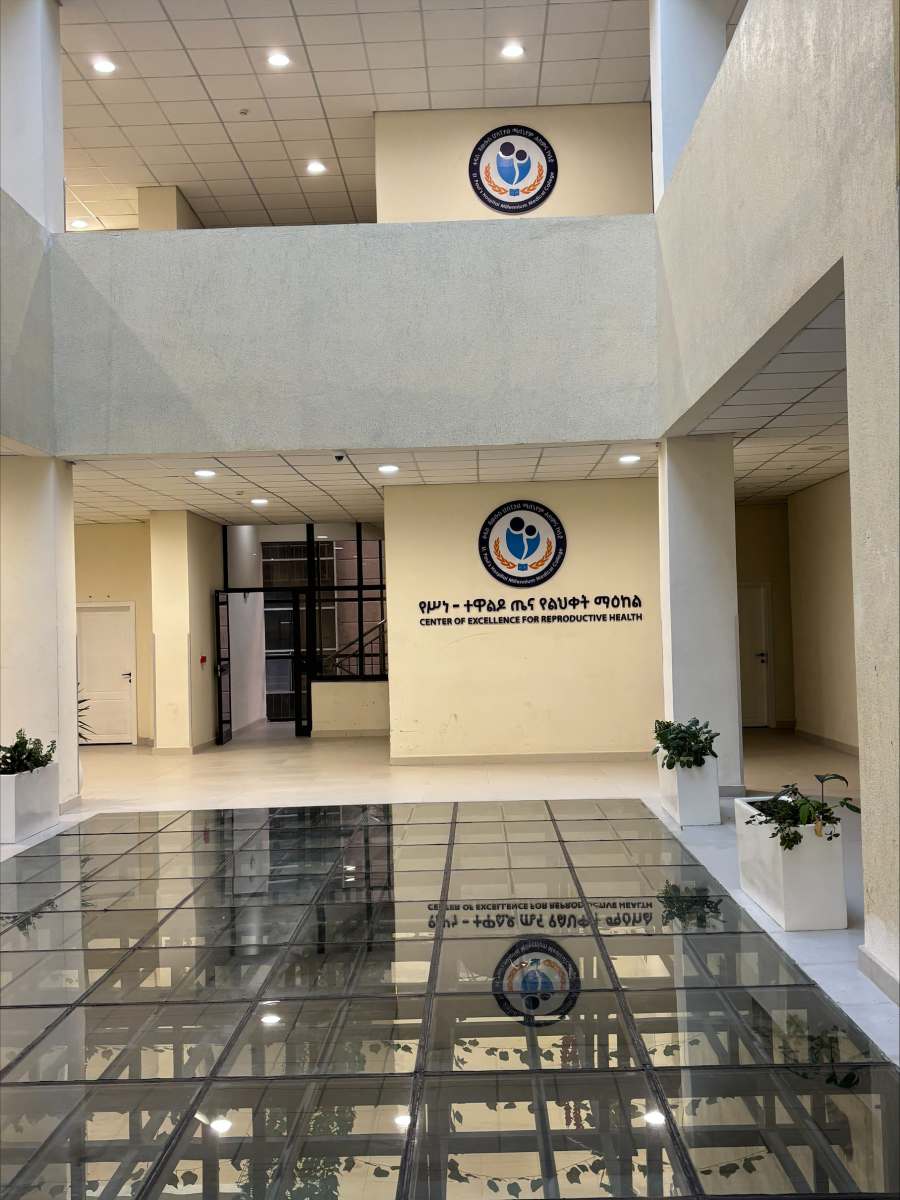


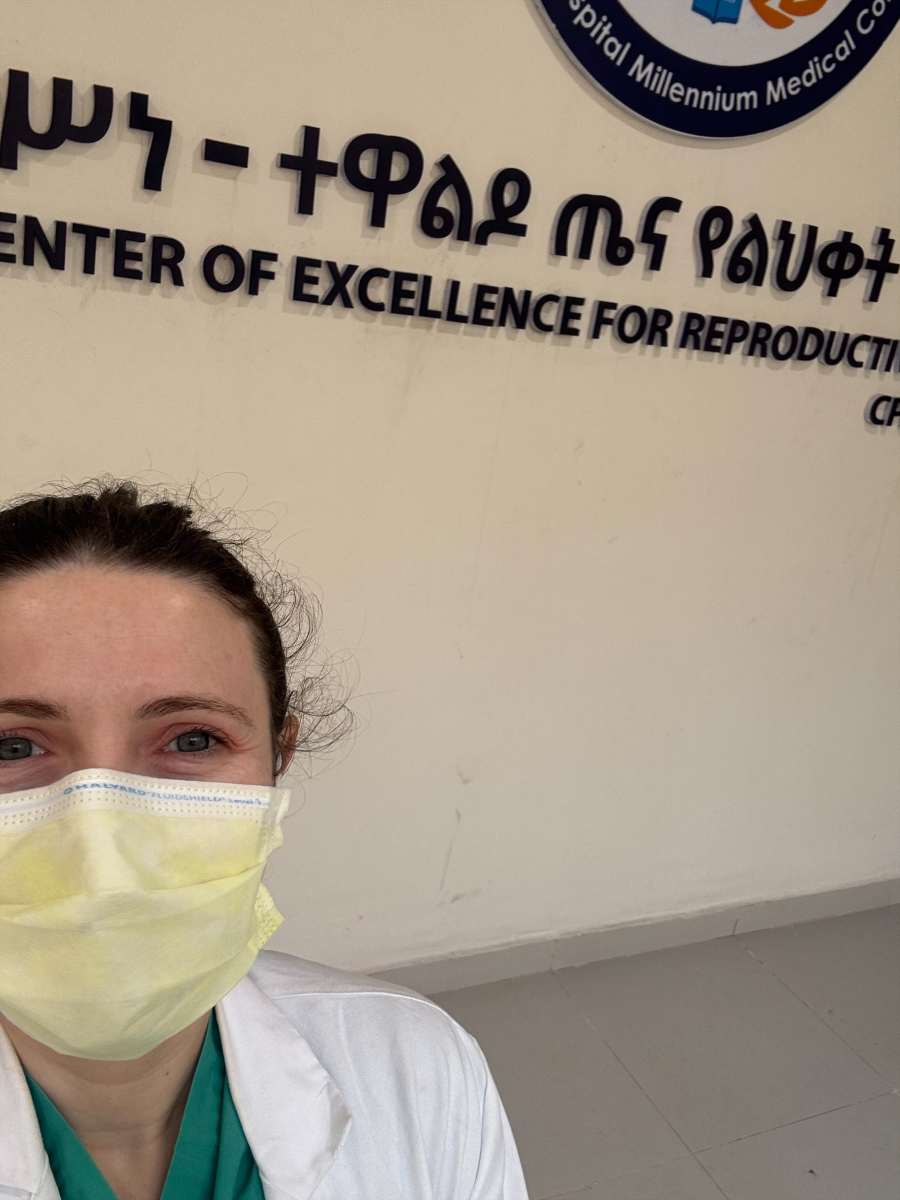






It took me only a few days in Addis Ababa to realize that I'd packed poorly. For my visiting rotation with the Family Planning & Reproductive Health fellowship at St. Paul Millennium Medical College, I’d packed multiple sets of scrubs, compression socks, and uterus-printed scrub caps, and I’d agonized over swapping my beloved glitter Danskos for lighter sneakers when my suitcase was over the weight limit. In other words, I’d packed for long days of dilation and curettage (D&C) and dilation and evacuation (D&E) procedures in a sterile OR – for abortion care as it’s practiced at my home Complex Family Planning fellowship site and other academic medical centers in the U.S.
I’d forgotten – or maybe never truly grasped – that safe abortion care does not require the resources of a U.S. academic medical center, or even of your typical outpatient GYN clinic. It’s nice to have a blood bank, an OR scrubbed from floor to ceiling between every patient, sterile gloves, and electric suction . . . but you don’t need those things. Procedural abortion at St. Paul is done in the clinic or the procedure room on the short-stay Comprehensive Abortion Care (CAC) unit, not an OR. Gloves are non-sterile, and impeccable "no touch” technique keeps the instruments (brought over in peel-packs from the main hospital’s autoclave room) from being contaminated. A manual vacuum aspirator with a large-diameter cannula replaces the electric suction. You might not have everything you would like, but you do have what you need. St. Paul is still providing safe and high quality care; their infection and complication rates are comparable to my own institution.
Provision of safe abortion and contraception care in low- and middle-income countries has consistently been demonstrated to be a highly cost-effective public health intervention.1 The Ethiopian providers I learned from spoke passionately about family planning care as a public health tool to improve perinatal mortality and morbidity, facilitate women’s economic achievement and participation, and bring Ethiopia in line with the UN’s Agenda for Sustainable Development.2 They rightly saw themselves as leaders in the region in reproductive healthcare; abortion law and on-the ground access varies widely across Africa and many countries cannot provide even the same resources as St. Paul.3 A fellow who had recently returned from a visiting rotation in South Sudan bemoaned the “lack of resources” there, describing power blackouts in the hospital and lack of ambulance service due to gasoline shortages. It was a powerful exercise in perspective-setting for me – "low resource” is always relative! The older providers at St. Paul also spoke of the improvements in maternal mortality since the liberalization of Ethiopia’s abortion law in 2005 and corresponding nationwide efforts to increase access.
That focus on public health and perinatal mortality is what drives the providers at St. Paul’s in their quest to expand and protect safe, comprehensive family planning care. It’s not the principle I usually hear cited when leaders in family planning care in the U.S. talk about what drives them; most cite a desire to center patients’ needs and desires and the importance of reproductive autonomy as a fundamental human right. (For what it’s worth, U.S. providers certainly do believe family planning care is a cost-effective public health measure – but many of us would make the argument that reproductive autonomy is important enough to provide this care even if it weren’t!) It's not that Ethiopian providers don’t believe in centering patient autonomy, but the conversations about what motivates them to fight for safe, accessible abortion and contraception were totally different than the conversations I’ve had with U.S. providers about our motivations.
Yet St. Paul has managed to create one of the most patient-centered family planning care models I've ever seen. Respecting local cultural norms around labor and vaginal delivery, the majority of abortion care in both the first and second trimester is provided via medication abortion. Second-trimester medication abortion, sometimes called induction of labor abortion (IOLA), is rare in the U.S.4 and usually occurs on inpatient Labor & Delivery units when it does occur. The experience of undergoing an abortion in a care environment typically dedicated to the safe delivery of healthy live infants can be emotionally distressing for patients, and general-practice obstetricians and L&D nurses may or may not possess the skillset to care for these patients appropriately. At St. Paul however, IOLA occurs in the short-stay CAC unit which is separate from the main hospital’s L&D. All patients admitted to the CAC unit are abortion patients, whether undergoing IOLA, admitted overnight with osmotic dilators in preparation for D&E, or admitted for care in the rare case of an abortion complication. Physicians and nurses are specifically trained to care for this population. Care is provided on a walk-in basis, and all costs are covered by St. Paul apart from outpatient medications such as ibuprofen for post-abortion pain control. Support resources are all on-site, including the family planning clinic and ultrasound room, pharmacy, lab, and procedure room for D&C or D&E. Patients can receive any available contraceptive method apart from tubal sterilization prior to discharge; one patient’s partner even underwent an outpatient vasectomy while she was admitted for IOLA!
I learned so much in Ethiopia – how to say “doctor” in Amharic, how to inject intrafetal digoxin, how to make injera bread, how to survive without my Danskos. But the most important thing was that ultimately, it might not actually matter if we disagree on why safe, accessible, patient-centered family planning care is so important. Especially in a time when reproductive health care is under attack from all sides, those of us fighting for our patients’ autonomy need to band together. As long as we can share a vision of what true reproductive justice might look like, we can learn from each other and work together to make it a reality around the world.
References:
1. Meyer-Rath G, Jamieson L, Mudimu E et al. Who pays and what pays off in sexual and reproductive health? A review of the cost and cost-effectiveness of interventions and implications for future funding and markets. The Lancet, 406, 2152-2167.
2. United Nations General Assembly. Transforming our world: the 2030 Agenda for Sustainable Development. Adopted 25 September 2015. Accessed 29 May 2026. https://sdgs.un.org/2030agenda.
3. Guttmacher Institute. Fact Sheet: Abortion in Africa. March 2018. Accessed 29 May 2026. https://www.guttmacher.org/sites/default/files/factsheet/ib_aww-africa.pdf.
4. Kortsmit K, Mandel MG, Reeves JA, et al. Abortion Surveillance — United States, 2019. MMWR Surveill Summ 2021;70(No. SS-9):1–29.