Our UCLA interventional radiology (IR) department proposes a week-long global health mission trip to Hue City, Vietnam, in collaboration with the IR team at Hue University Hospital (HUH). We will host a two-day IR symposium featuring a series of lectures on advanced IR procedures not yet available at HUH, including transjugular intrahepatic portosystemic shunt placement/liver transplantation interventions, pulmonary artery embolism thrombolysis/thrombectomy, pain management, lymphangiography, prostate artery embolization, thyroid artery embolization, and advanced venous interventions. The symposium attendees will include attendings from across Central Vietnam, as well as trainees. The aim is to enhance local expertise and expand service offerings. We will also present an overview of the UCLA IR residency program and establish interactive stations for medical students and residents to practice ultrasound-guided techniques with the goal of fostering continued training and interest in IR abroad. In addition, we hope to offer away rotation opportunities at UCLA to interested residents in the future. As this is our initial visit, we will also observe the hospital’s workflow within the IR department to identify opportunities for quality improvement and collaborative projects. We propose developing a telemedicine platform to facilitate ongoing case consultations and knowledge sharing, ensuring sustained collaboration and leveraging technology for continuous skill enhancement. Through continued partnership, our efforts will broaden access to life-changing procedures. By empowering local providers, we aim to achieve lasting improvements in patient care and outcomes in Vietnam. Our goal is to strengthen the IR infrastructure, train local providers, and establish a foundation for sustainable partnership and future initiatives that improve patient care in Vietnam.
As a top referral center, Hue University Hospital (HUH) is one of the few hospitals in the nation with the infrastructure to support high-level interventional radiology (IR), including vascular and non-vascular procedures. HUH serves a diverse patient population in Central Vietnam, including residents of Hue City, surrounding provinces, and more remote areas in the region. Currently, HUH offers a limited scope of IR procedures including transarterial chemoembolization for liver cancer, biliary interventions, trauma-related procedures, and peripheral arterial disease interventions. However, access to a broader scope of IR procedures, including end-stage liver disease interventions, pulmonary artery thrombolysis/thrombectomy, lymphangiography for protein-losing enteropathy, pain management (including kyphoplasty and vertebroplasty), and advanced venous interventions will expand treatment options for conditions that currently have limited management capabilities locally and are prevalent in this population due to the tropical diseases in the region and a rapidly aging population. Having access to these procedures can reduce hospital stays, improve recovery times, and enhance overall outcomes. Moreover, HUH is the training hospital for Hue University’s medical school. The medical trainees of Central Vietnam also stand to benefit from this collaboration through education provided during the trip. While the goal is to create a long-standing collaboration between UCLA and HUH with recurring site visits between partners, the integration of telemedicine consultations can further support ongoing case review and skill development long after this first mission. Ultimately, this initiative will help improve the quality, safety, and scope of IR services at HUH, addressing critical healthcare gaps and providing underserved populations with innovative, effective treatment options that can significantly improve their health and quality of life.
The proposed interventional radiology (IR) mission to Hue University Hospital (HUH) aims to catalyze lasting improvements in local healthcare delivery through knowledge sharing, training, and continued collaboration between UCLA and HUH. By introducing advanced IR procedures for the management of end-stage liver disease, pulmonary embolism, venous disease, and pain, we will improve patient outcomes for conditions previously limited to palliative or more invasive options. Specifically, through educational lectures, hands-on workshops, interactive training, and continued site visits, we hope to facilitate the expansion and breadth of IR procedures offered in Central Vietnam. In addition, the development of a telemedicine platform for ongoing case consultations and knowledge transfer will ensure continuous support, allowing local providers to refine techniques, troubleshoot complex cases, and stay updated on emerging advancements. This work is expected to create a ripple effect: increased IR capabilities will lead to expanded treatment options, shorter hospital stays, and better quality of life for patients. In addition, because there is no official IR fellowship offered at HUH (aspiring Vietnamese IRs have to complete fellowships in different countries), this partnership will provide an opportunity for education by offering away rotations at UCLA for interested residents. The establishment of a collaborative relationship will foster ongoing research, quality improvement projects, and future educational exchanges. Ultimately, our collaboration will serve as a model for sustainable global health partnerships, with learnings and innovations that can be adapted to other resource-limited settings. The impact will extend beyond the immediate visit, empowering HUH to continue advancing IR services, improve patient care, and promote long-term health equity in Vietnam.


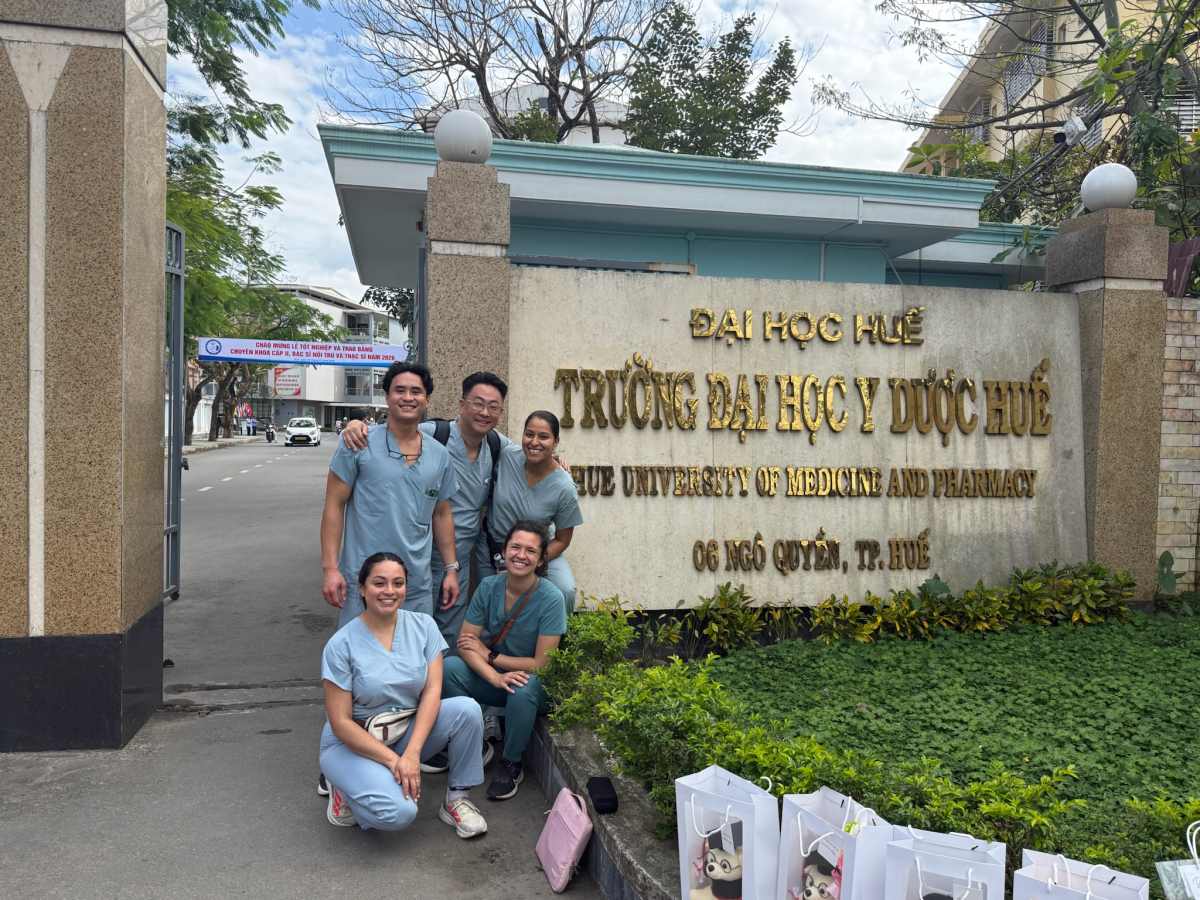


The people most directly impacted by our trip were the patients and physicians at Hue University Hospital, as well as interventional radiologists from hospitals throughout central Vietnam who participated in our educational sessions.
For patients, the impact was immediate and tangible. We worked alongside the local team to perform peripheral arterial disease (PAD) interventions for individuals suffering from limb-threatening ischemia, severe claudication, and nonhealing wounds. Many of these patients had limited access to advanced endovascular therapies. By collaborating on their procedures and emphasizing optimized anticoagulation—particularly increased and more consistent heparin use—we were able to help improve procedural safety, vessel patency, and overall outcomes. The successful IVC filter removal we performed also directly benefited a patient at risk for long-term complications, while simultaneously demonstrating advanced retrieval techniques to the local team.
The physicians were equally impacted, though in a more longitudinal way. Through hands-on case collaboration, we shared practical strategies to improve technical success and reduce complications, including workflow adjustments and anticoagulation protocols that can be sustainably implemented. Beyond the procedural work, we delivered a series of focused lectures on advanced hepatobiliary interventions, genicular artery embolization, thyroid artery embolization, and the development of pulmonary embolism response teams (PERT). These sessions brought together interventional radiologists from multiple institutions across central Vietnam, fostering regional knowledge exchange and professional collaboration.
Ultimately, the impact of the trip extended beyond the individual cases performed during our visit. While several patients directly benefited from life- and limb-improving procedures, the broader and more lasting effect lies in strengthening local expertise. By equipping physicians with additional technical knowledge and evidence-based strategies, the benefits will continue to reach many more patients in the months and years ahead.