
Our group of two attending Interventional Radiologists, one fellow (myself), one resident, and 2-3 IR nurses and IR technologists from UCLA will travel to central Vietnam for one week with the goal of helping to increase the breadth of IR procedures offered throughout Vietnam. Alongside radiologists at Hue University, we will start by running a two-day symposium teaching attending radiologists and trainees from across central Vietnam the technical and clinical details of a variety of procedures to increase the local scope of practice. These procedures were chosen at the request of Vietnamese physicians and will include pulmonary embolism thrombectomy, peripheral arterial disease treatment, TIPS creation and management, interventional pain management, lymphatic embolization, and more. We will also include more basic lessons and hands-on skills workshops for medical students in attendance. In addition, as Vietnam currently has no standardized training system for IR technologists and no official pathway for IR physicians, we will outline the US training pathways for both.
After the symposium, we will spend the rest of the week with the IRs at Hue Central Hospital surveying the current system and discussing potential improvements. Ideally, we will also have the opportunity to demonstrate some of the procedures covered in the symposium. This is the inaugural visit for our collaboration, with the long-term goal of establishing a continued partnership and exchange between UCLA and Hue University. Through increasing local IR expertise, this partnership will ultimately increase access to life-saving procedures for patients in central Vietnam and beyond.
One of the foremost healthcare issues in Vietnam is a rapidly aging population, which brings increased demand for many IR procedures from pain control to cancer treatment. Central Vietnam specifically is a region with large disparities in poverty, further increasing the need for access to the highest possible quality of healthcare.
Hue Central Hospital (HCH), the teaching hospital for Hue University, is the third-largest referral center in all of Vietnam and one of the only to offer advanced IR procedures. This hospital serves patients throughout central Vietnam. Currently, they provide a somewhat modest scope of IR procedures, including embolizations for traumatic hemorrhage, variceal embolization, and transarterial chemoembolization for liver tumors. As they already have the necessary infrastructure (fluoroscopy suites, CT, and ultrasound) in place, HCH is an ideal candidate for partnership with UCLA to help add more advanced procedures and increase their scope of practice. These new procedures will add treatment options for patients in central Vietnam who currently have limited or no treatment available. Patients with problems as common as chronic pain, cirrhosis, and benign prostatic hypertrophy - or as relatively rare as chylothorax – will enjoy reduced morbidity and mortality, reduced hospital stays, and decreased need for more invasive operations. Through training local physicians, we will be addressing important gaps in the heathcare of many underserved patients in a sustainable manner.
We expect that local IRs will feel comfortable with implementing some procedures relatively quickly, providing an immediate benefit to the local patient population in central Vietnam. For other procedures, they will want more continued training and advice, which we will provide via open communication and continued future exchange, with telemedicine for case consults, additional UCLA visits to HCH, and new opportunities for HCH IRs to come to UCLA. In this way, knowledge sharing can continue and can be applied in more complex real-life situations.
Currently, Vietnamese IRs generally complete a diagnostic radiology residency and then travel to other countries for short observerships or other informal training on IR. As IR in the US is a full two years of training, there is a significant discrepancy in the breadth of training between Vietnamese and US IRs. We hope that in the short term, our partnership can begin to address this discrepancy through the symposium lectures. In the long term, our goal is a lasting partnership that helps increase IR training in Vietnam, through longitudinal lectures, individualized telemedicine consults, and perhaps eventually through the creation of a standardized training program.
Ultimately, the establishment of a strong and collaborative partnership between HCH and UCLA will increase local expertise and improve patient care across many types of patients in central Vietnam.
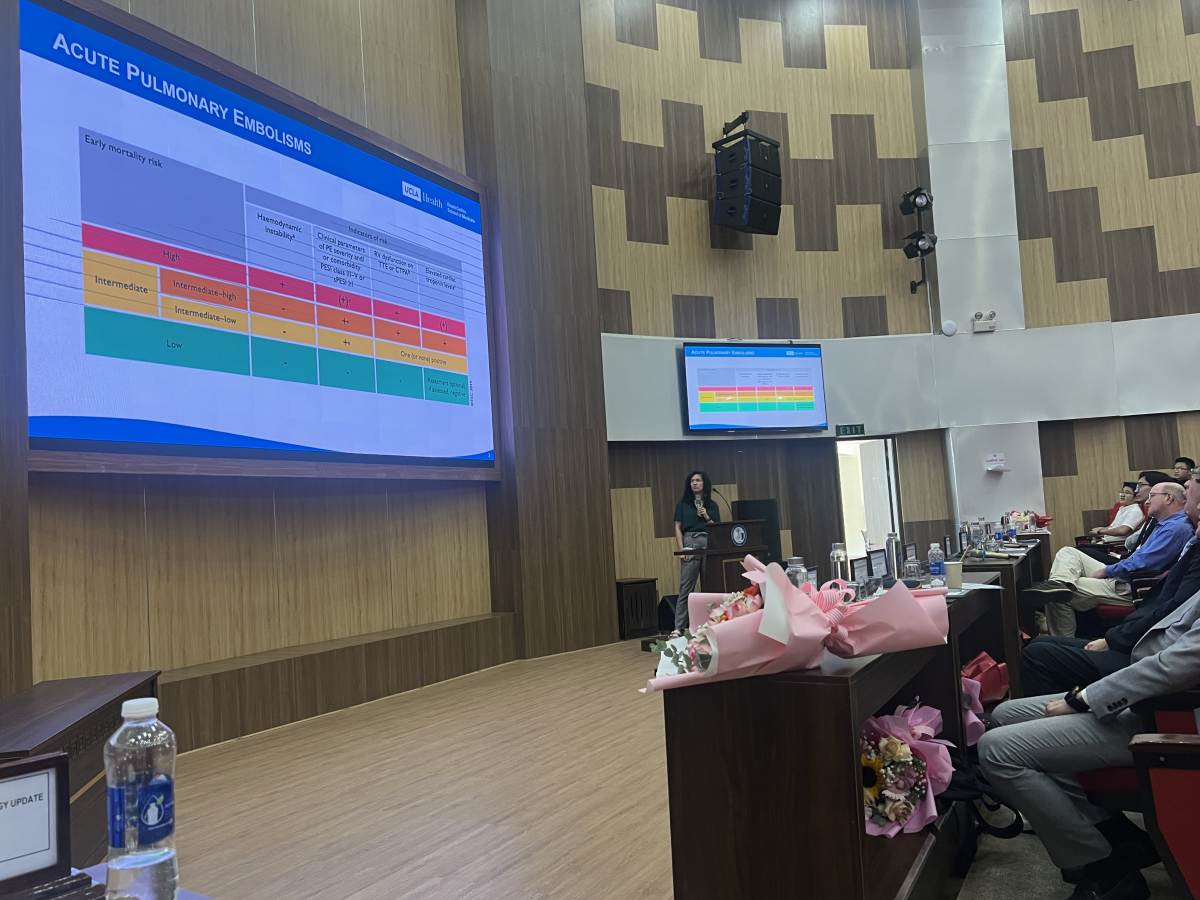
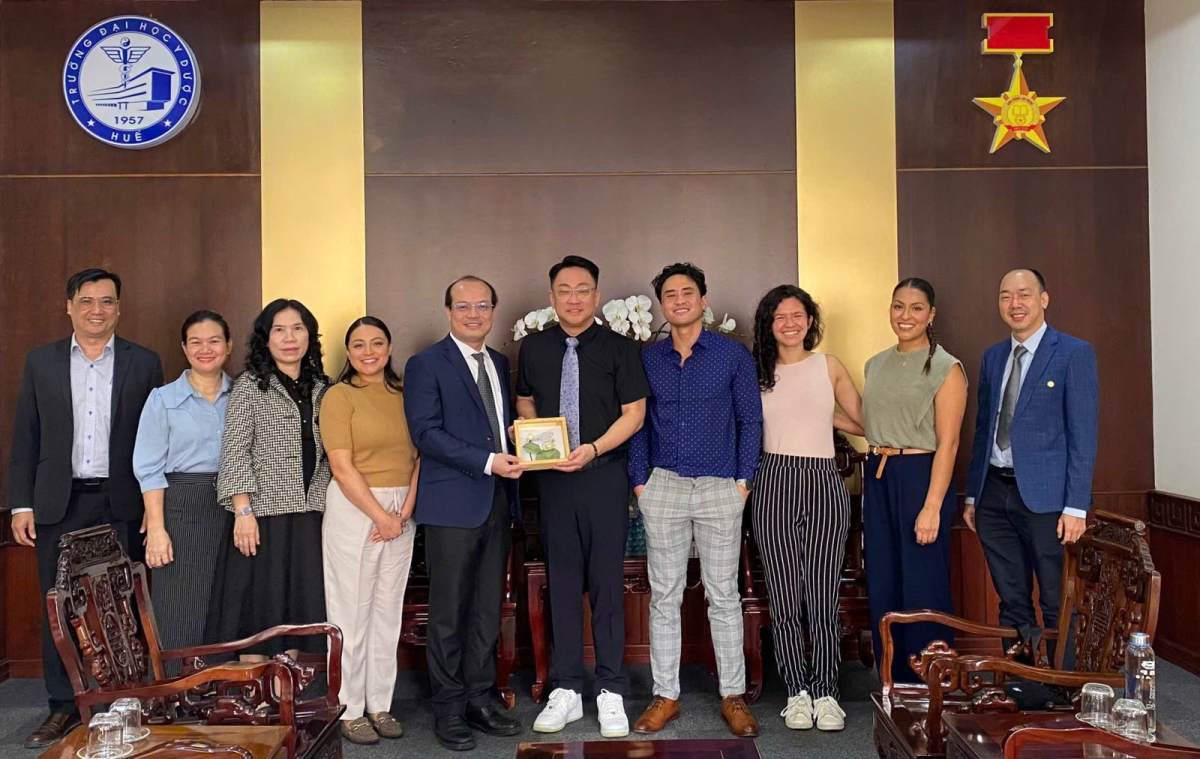
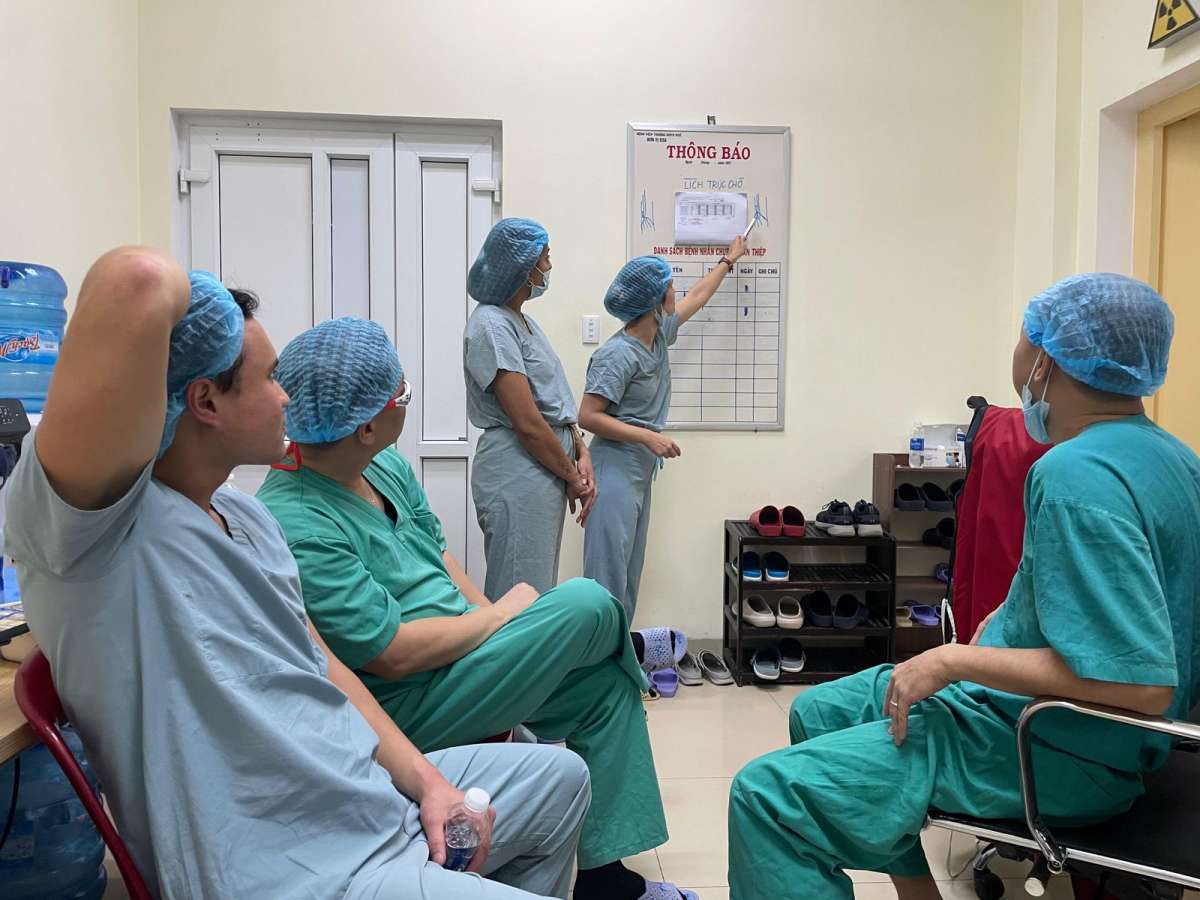

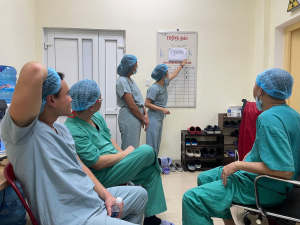
We directly improved patient care at Hue University Hospital in Vietnam by observing and offering advice on local IR practices - for example, after a patient developed intraprocedural arterial thrombosis, we helped update the heparinization protocol to use weight-based dosing along with other measures to decrease thrombosis rates. We also implemented simple new safety measures to help both the hospital staff and patients by decreasing likelihood of sharps injuries. Additionally, we gave lectures in a two-day symposium on a variety of IR topics to IR attendings, residents, technicians, and medical students from across Vietnam, with the goal of increasing IR offerings in the country.