I will be traveling to India from January 22nd – February 20th, 2026 for a month-long rotation focused on palliative care. During this time, I will rotate at three hospitals: the Tata Memorial Centre in Mumbai, the Basavatarakam Indo American Cancer Hospital in Hyderabad, and the MYJ Institute of Oncology in Hyderabad.
At these hospitals, I will work alongside a palliative medicine team in a consultant role, caring for patients with advanced illness. Many will be at the end of life and experiencing uncontrolled symptoms such as pain, nausea, agitation, or delirium. My goal is to help manage these symptoms while learning how end-of-life care is approached within a different cultural and resource environment. I will also spend one week treating pediatric patients facing similar challenges.
I am fortunate to be partnering with two leaders in Indian Palliative Care. Dr. Praneeth Suvvari is recognized internationally for his dedication to education and the advancement of Palliative Care. Dr. Gayatri Palat, a national and global leader in pediatric palliative care, has advanced opioid access regulations and developed a home-based palliative care program. I will also be accompanied by Dr. Frank Ferris, a US-based Palliative physician who has devoted much of his career to building Palliative Care education capacity worldwide.
This rotation will help me make a difference on multiple levels. Firstly, it will help me grow as a palliative fellow passionate about global health. I will directly see how different cultural practices impact the approach to end-of-life care in a system vastly different than my own. Secondly, I hope to make a difference in the lives of the patients I directly see. I will bring the knowledge and expertise on complex symptom management and use it to improve their care. Finally, I hope to make a difference at a systems level by providing education to the Indian colleagues I work with throughout this month.
During my month-long global health rotation in India, I will work in large oncology centers in Mumbai and Hyderabad. Both of these cities are densely populated urban centers with millions of inhabitants. The hospitals (Tata Memorial Centre, Basavatarakam Indo-American Cancer Hospital, and MNJ Institute of Oncology) serve very large catchment areas and are referral centers for both their urban community and surrounding rural areas.
I will see patients from a wide range of socioeconomic, ethnic, and religious backgrounds. A substantial proportion of these patients are low-income and migrant families who travel long distances from neighboring states to seek care. I will also treat children with advanced life-limiting disease who have unique care needs, especially regarding complex communication and psychosocial needs.
This is a population greatly in need of robust palliative care. Many of these patients suffer from diseases that cause uncontrolled pain and symptoms. Though all of these hospitals have access to palliative consultation, the palliative teams are very frequently understaffed and overburdened. My presence will hopefully provide increased capacity to meet the high needs of these vulnerable patients.
I have a deeply held belief that the most sustainable form of global health is achieved through a partnership between the visitor and the host institutions. Global health requires bidirectional exchange of information and ideas. I am grateful to have the guidance and mentorship of Dr. Frank Ferris, who has spent decades building collaborative relationships in India and elsewhere. This existing bond will allow me to integrate more seamlessly with the hosting institutions.
The impact of my experience will be felt on multiple levels. Firstly, I hope to gain insight, experience, and expertise on the practice of palliative care in an international setting. Over this month, I will practice Palliative Medicine in three different hospital systems and for both adults and children. I will learn how vastly different cultural norms change the approach towards end-of-life care. I also hope to form lasting bonds with Indian Palliative Care physicians to pursue a future collaborative relationship.
On a patient level, I hope to help advance the care of the patients I treat. I have expertise in adult medicine, pediatrics, and fellowship training in palliative care. I will use my skillset to help alleviate suffering in patients with complex and difficult-to-control symptoms.
I also aim to help further the education of the medical trainees I interact with. In India, I will work with care teams that include medical students and trainees of various levels. I will provide education on pain management, refractory symptoms, and communication skills.
The lessons learned from this experience will help to inform my career. I aim to practice Palliative Care with a focus on global health. This experience is the first step in understanding how palliative care varies across cultures. I hope to take the lessons I learn forward throughout my career. I also hope to nurture the relationships I build with Indian physicians to allow for years of future collaboration.

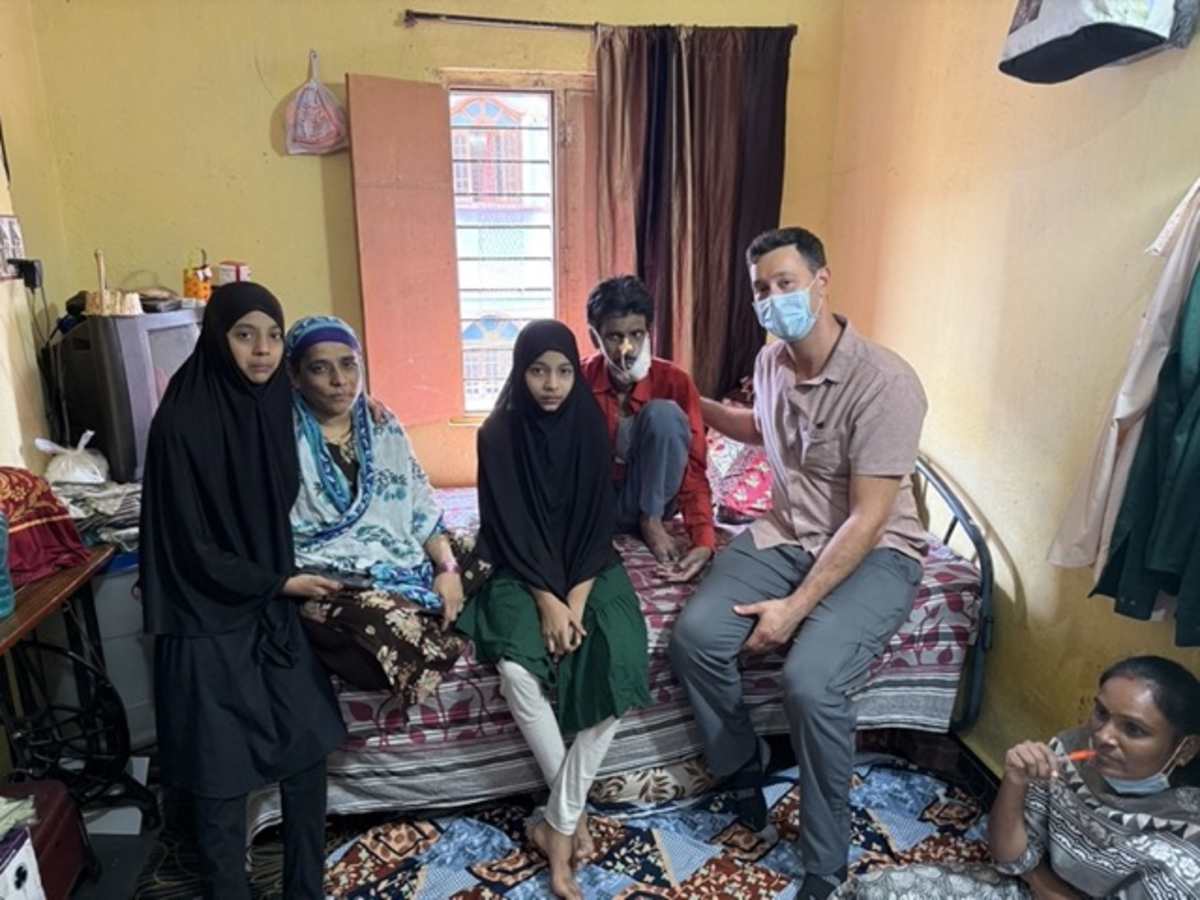


My experience in India was profound. Just as expected, I was able to travel to two different cities in India and experience the different care models within three hospital systems.
Our first week was in Mumbai at the Tata Memorial Hospital, a large 650-bed cancer center serving a huge catchment area. The center is a government hospital and provides care to all patients regardless of socioeconomic class. We worked very closely with the palliative department and saw patients in the ICU, the hospital floors, and the outpatient department. We were able to provide daily didactic and case-based teaching for the palliative residents. One particular highlight was a tea party arranged by the pediatric palliative care consultant for a teenage child with metastatic cancer who had been in very poor spirits. The palliative team provided masala tea and biscuits for about 10 children on the inpatient cancer ward, which quickly turned into a dance party. The radiant smile from the patient who inspired the event will stick with me for years to come.
Following our time in Mumbai, we travelled to Hyderabad to work with the palliative department in the Basavatarakam Cancer Hospital and Research Institute. This hospital operates as a non-profit trust institution providing high-quality cancer care, but with a focus on affordable care for those in need. We joined for rounds daily in the 8-bed palliative care unit, and then assisted with consults and outpatient management. Similarly, we provided frequent teaching sessions for the residents. We were also able to run interactive sessions on conflict management for an interdisciplinary group of hospital employees and an advanced care planning session for the palliative department.
Finally, at the MNJ Hospital in Hyderabad, we joined the pediatric palliative team. They have built a model of care where the palliative group is completely embedded into the hospital’s various units, providing nuanced symptom management and assisting with complex communication needs. I was able to join for two days of home care visits of both adult and pediatric patients, where we provided crucial medication management, wound care, and counselling for patients with advanced illness.
Overall, my time in India was deeply meaningful and informative for my career. The palliative care physicians in India are working tirelessly to improve access to adequate analgesic medications. I learned so much from working alongside these wonderful physicians. I also believe our teaching helped to advance the skillset of the palliative trainees and consultants. I hope to be able to return many times throughout my career!