
Mama Care Africa (MCA), in partnership with UCLA and Africa University, is launching an innovative maternal health initiative in Zimbabwe in March 2026. Our team of doctors and nurses will introduce augmented reality (AR) smart glasses to rural hospitals to support the management of obstetric emergencies, particularly postpartum hemorrhage (PPH)—the leading cause of maternal death. Using Vuzix AR smart glasses, frontline providers in remote facilities will connect in real time with obstetric specialists for live mentorship and decision-making during high-risk deliveries. This technology overcomes barriers of distance, workforce shortages, and limited training opportunities by enabling rural clinicians to “see through the eyes” of mentors during emergencies. Alongside AR deployment, MCA will conduct intensive provider training, distribute emergency PPH kits, and run community education campaigns. This grant will specifically support air travel for the U.S.-based medical team delivering and training on the technology in Zimbabwe, ensuring a successful rollout and capacity-building effort that strengthens the local health system for long-term sustainability.
This project serves mothers, newborns, and healthcare workers in rural Zimbabwe, with an initial focus on Manicaland and Mashonaland Central provinces—regions with some of the country’s highest maternal mortality rates (651 deaths per 100,000 live births). Primary beneficiaries include pregnant women (ages 15–49), especially adolescents and low-income mothers who face barriers to skilled care. Indirectly, newborns benefit from improved outcomes when mothers survive childbirth. Frontline clinicians—including nurses, midwives, and district-level physicians—are also a key beneficiary group, gaining access to training, mentorship, and lifesaving tools otherwise unavailable in their facilities. Over 3 million people live in the targeted provinces, with more than 70% of women residing over 10 km from the nearest health facility. By equipping local providers with AR-supported mentorship and emergency kits, MCA ensures that even the most remote communities have access to timely, high-quality maternal care.
The introduction of AR smart glasses in Zimbabwe will transform maternal care delivery by bridging the gap between rural clinicians and obstetric specialists. Within the first year, we expect: (1) a 15% reduction in PPH-related maternal deaths in participating hospitals, (2) training of 200+ healthcare providers in AR-assisted emergency response and PPH management, and (3) distribution of PPH kits to at least 20 health facilities. Community education will reach over 10,000 women, improving recognition of danger signs and timely care-seeking. Clinicians will gain confidence and skills, reducing professional isolation and strengthening rural health systems. Beyond immediate outcomes, this pilot establishes a scalable model of digital mentorship that can be replicated across Zimbabwe and other low-resource settings globally. Ultimately, this project will save mothers’ lives, protect newborns, and prove that innovative, cost-effective technologies can accelerate progress toward ending preventable maternal deaths.


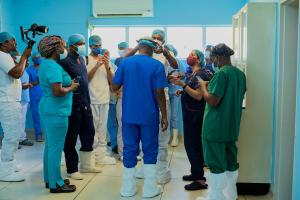
The March 2026 field visit to Zimbabwe demonstrated that the implementation of Augmented Reality (AR) technology primarily benefitted frontline healthcare providers and the vulnerable patient populations they serve in resource-limited settings.
Frontline Government Medical Officers (GMOs)
Our trip addressed the acute professional isolation of GMOs working in rural and district facilities. These providers often manage high-stakes obstetric emergencies, such as postpartum hemorrhage (PPH), which some reported encountering as frequently as once per week. By testing AR smart glasses, these clinicians felt like they gained a platform for real-time, hands-free mentorship that is qualitatively superior to existing methods.
Maternal Patient Populations
The ultimate beneficiaries are the women of Zimbabwe who face significant risks of maternal morbidity and mortality in rural Zimbabwe. The debrief highlighted tragic cases where delays in specialist care or visualization limitations led to patient deaths or irreversible interventions like hysterectomies. Our pilot feasibility trial during this trip gave us hope to expand our horizons to care for vulnerable populations.
Collaborators:
We gained many collaborators who had similar interests and we are thrilled to partner and head back again next year.
We are INCREDIBLY thankful to Doximity Foundation for their support!