I will be part of a week microsurgery mission to Addis Ababa, Ethiopia, in partnership with ReSurge International and local hospitals The project has two integrated components:
Direct patient care and intensive hands on training of local surgeons in Addis Abbaba. We will perform complex reconstructive microsurgery on underserved patients with trauma, burns, cancer-related defects, congenital anomalies. These are conditions rarely treated locally due to lack of microsurgical expertise and equipment.
This dual approach addresses both immediate suffering and the root cause of limited access: absence of local expertise. By combining high-volume surgery with deliberate skill transfer, we create a sustainable model where Ethiopian surgeons can independently perform and teach microsurgery long after our departure, transforming reconstructive care across the country.
The primary beneficiaries are Ethiopia’s most vulnerable patients who currently have no access to microsurgical reconstruction. These populations include
• Rural and low-income trauma victims
• Patients with post-oncology defects
• Children with congenital hand/foot differences or post-burn contractures.
• Patients requiring limb salvage instead of amputation due to sarcoma or chronic wounds.
Ethiopia (population >120 million) has fewer than 30 practicing plastic surgeons and virtually no trained microsurgeons outside Addis Ababa. Patients needing complex microsurgical reconstruction are often left under treated or untreated.
We deliberately target public hospitals and safety-net facilities serving the uninsured and poorest quintiles. By focusing on Addis Ababa-based teaching hospitals that receive referrals from all 11 regions, we ensure nationwide reach: surgeons trained will return to their home regions and disseminate skills further.
This population is chosen because the burden of reconstructive need is among the highest in the world, yet microsurgery — the gold standard — remains almost nonexistent locally. Providing and teaching these techniques addresses health equity at its deepest level.
This surgical mission trip to Addis Ababa will create both immediate and long-term impact. In the short term, our team will help expand access to essential surgical care for patients who have limited treatment options, while supporting local clinicians and contributing to sustainable improvements in surgical capacity.
For me personally, the experience will strengthen my clinical skills, enhance my ability to adapt to resource-limited environments, and deepen my cultural awareness in patient care. Working alongside local surgeons will broaden my perspective on global surgical practices and introduce new approaches to problem-solving, teamwork, and patient management.
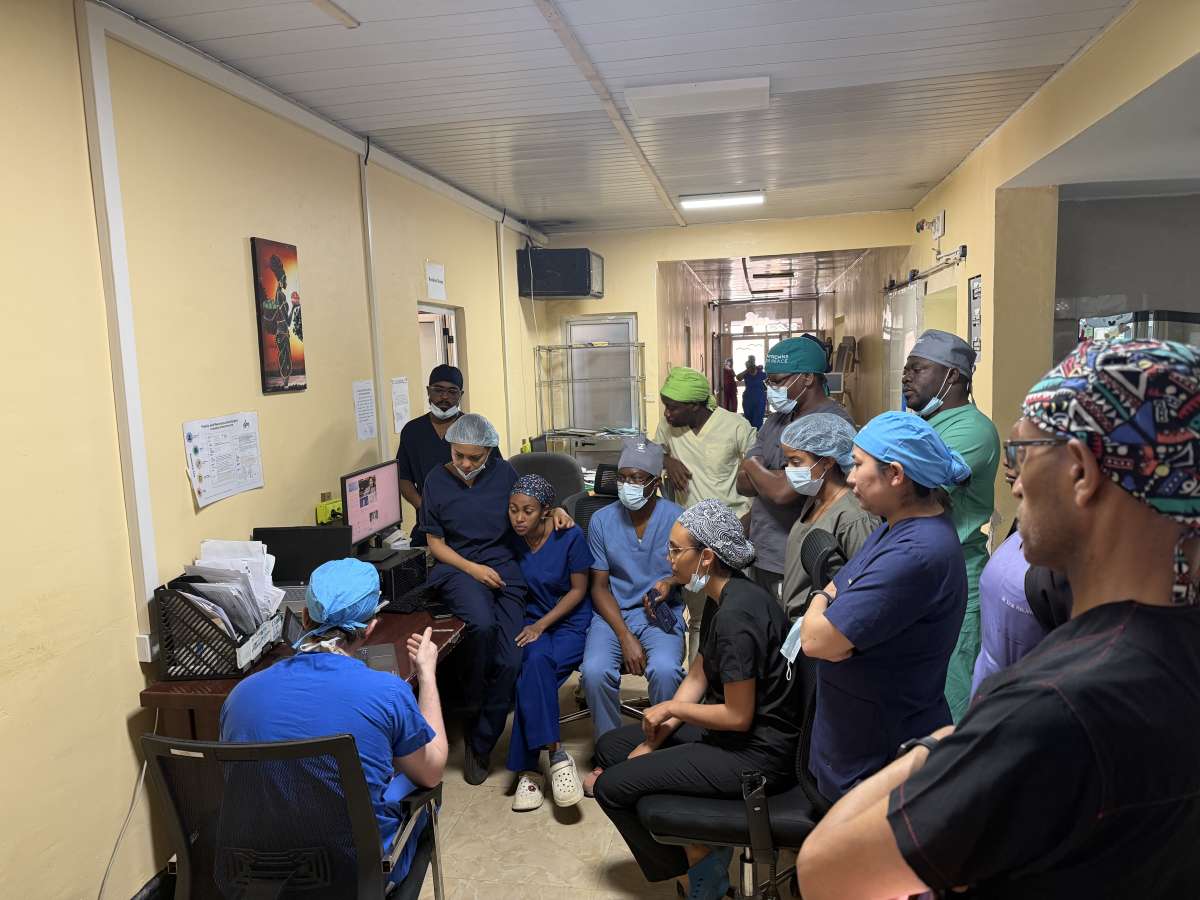
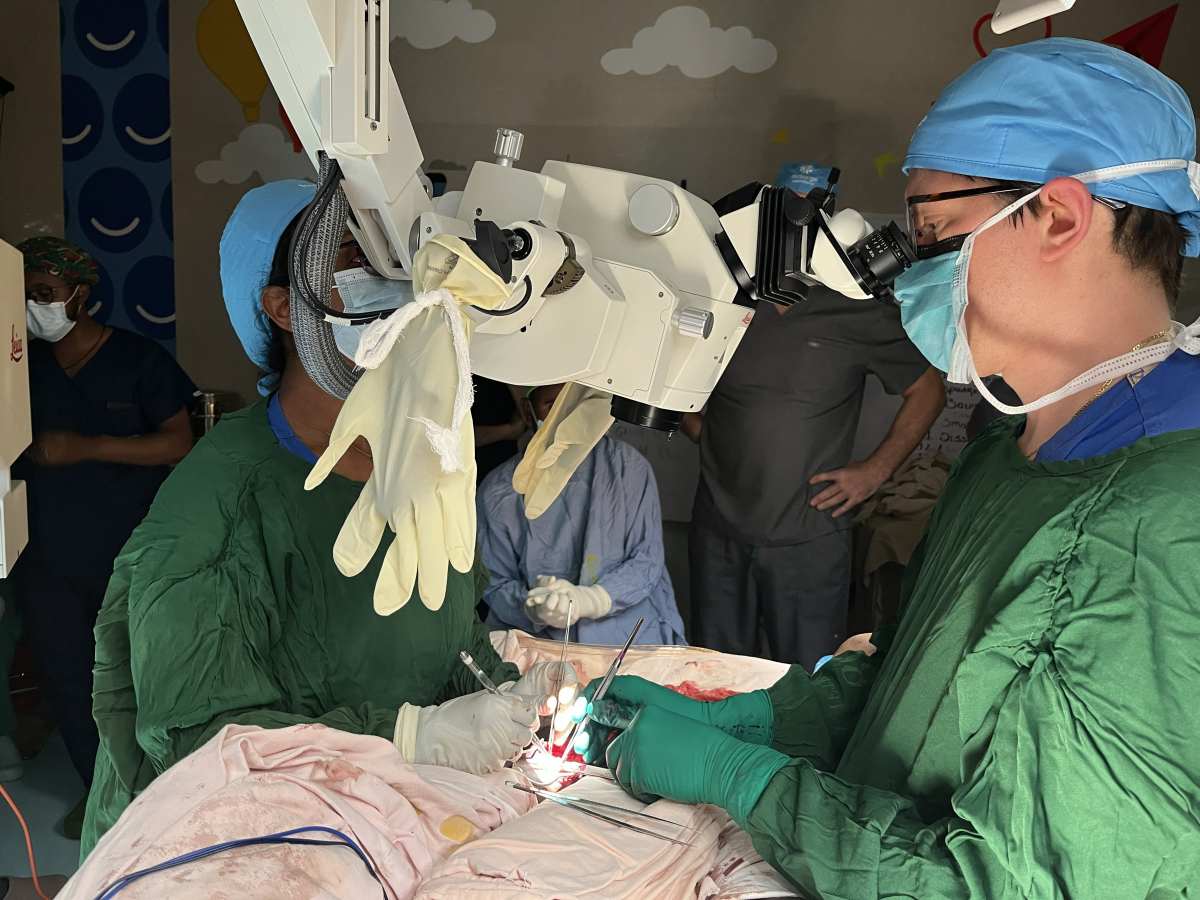

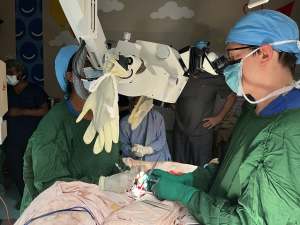
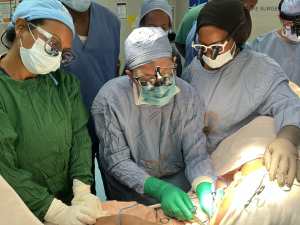
During our recent trip to Addis Ababa, we had the privilege of working alongside our surgical colleagues to care for patients requiring complex microsurgical reconstruction. Over the course of the visit, we performed surgery on five patients with particularly challenging reconstructive needs.
Two patients required heel pad reconstruction using free tissue transfer. Another patient underwent reconstruction of a 15 cm tibial bone defect with an osteocutaneous free flap to address both the bony and soft tissue loss. We also treated a patient with a large midface defect involving both bone and soft tissue following a ballistic injury sustained four months earlier. Our final case involved a patient with a devastating circumferential wound of both lower extremities, including an open tibial fracture and a midfoot fracture-dislocation.
While the surgeons in Addis Ababa are exceptionally skilled and fully capable of performing these complex procedures, they face an extraordinary clinical burden with a very high surgical volume. Our role during this visit was therefore twofold: to help expand the number of complex reconstructions that could be performed during this period, and to share surgical techniques and principles that may benefit future patients. In this way, the goal of the trip was not only to care for the patients in front of us, but also to contribute to the continued growth of reconstructive microsurgery at ALERT Hospital.
Throughout the week, we exchanged ideas and techniques with our colleagues. We introduced the use of venous couplers in microvascular surgery, which can improve operative efficiency while maintaining excellent anastomotic reliability. We also demonstrated techniques such as innervated fasciocutaneous free flaps for heel pad reconstruction, with the goal of restoring protective sensation to weight-bearing surfaces and improving long-term functional outcomes. In addition, we shared approaches such as harvesting the latissimus dorsi flap with the patient in the supine position, eliminating the need for intraoperative repositioning and helping streamline operative workflow.
Perhaps the most meaningful aspect of the trip was the spirit of collaboration. Each case became an opportunity not only to treat complex injuries but also to discuss surgical decision-making, refine operative techniques, and exchange knowledge. While we were fortunate to help care for five patients during our visit, our hope is that the techniques and ideas shared will continue to benefit many more patients undergoing reconstructive microsurgery at ALERT Hospital in the years to come.