
The African Health Sciences University (AHSU) in Kigali, Rwanda developed its Emergency Medicine (EM) residency program in 2024. As a new program, it is continuously looking for ways to progress the education and training of their residents. As such, AHSU has made several long-lasting relationships across the globe for bi-directional learning opportunities.
I am currently an Assistant Professor at the University of Wisconsin Berbee-Walsh Department of Emergency Medicine. I have been a prior Assistant Program Director for the Residency Program and I currently serve as the Director for Resident Coaching. I have always loved teaching and developing new ways to educate the next generation of physicians, particularly residents. I was first able to interact with the AHSU EM residents while delivering a virtual lecture for them during their weekly didactic session; it was titled "CURLS Protocol: Cardiac Ultrasound in Resource-Limited Settings" after an article that was published under the same name outlined a streamlined approach to using ultrasound to target the prevalent pathologies in such clinical settings. The enthusiasm and excitement that I was able to feel even as a virtual speaker really motivated me to want to meet the EM residents and faculty in person and continue the collaborative relationship.
I plan to attend their weekly didactic sessions and participate in didactic-, simulation-, and ultrasound-based education. I hope to learn from them first-hand the environment in which they practice and the common pathologies that they see so that we can jointly tailor their approach and learning.
While the education will primarily be targeted for the EM residents at AHSU, I hope that this will have wider and deeper implications for the care that they provide within their community in Rwanda. I also hope to help invigorate a passion for education, simulation, and ultrasound amongst local champions so that they can continue to innovate and educate their own peers and the next generation of physicians.
We hope to continue to deepen our relationship with AHSU; our department has already built a process to help with quality assurance and continued point-of-care ultrasound education remotely after a similar trip in the past, however the regular touchpoints in person are vital to continue to develop educational opportunities and a steady infrastructure for remote collaboration.
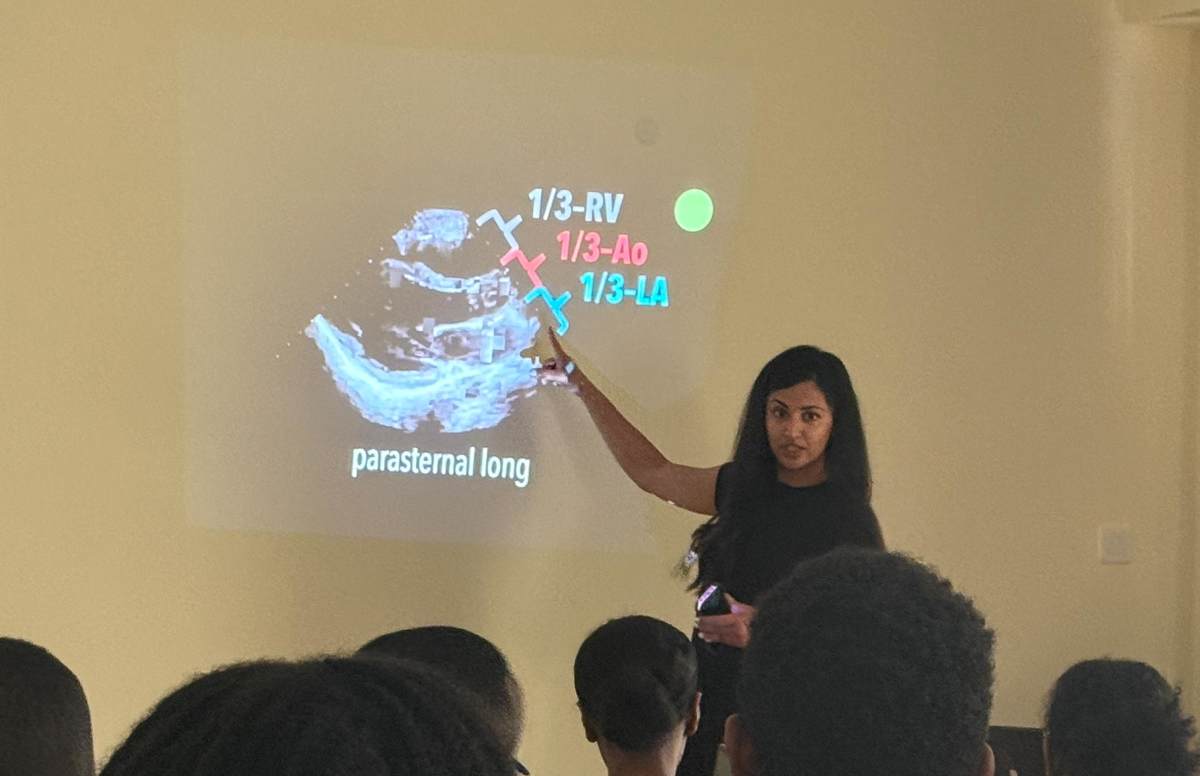

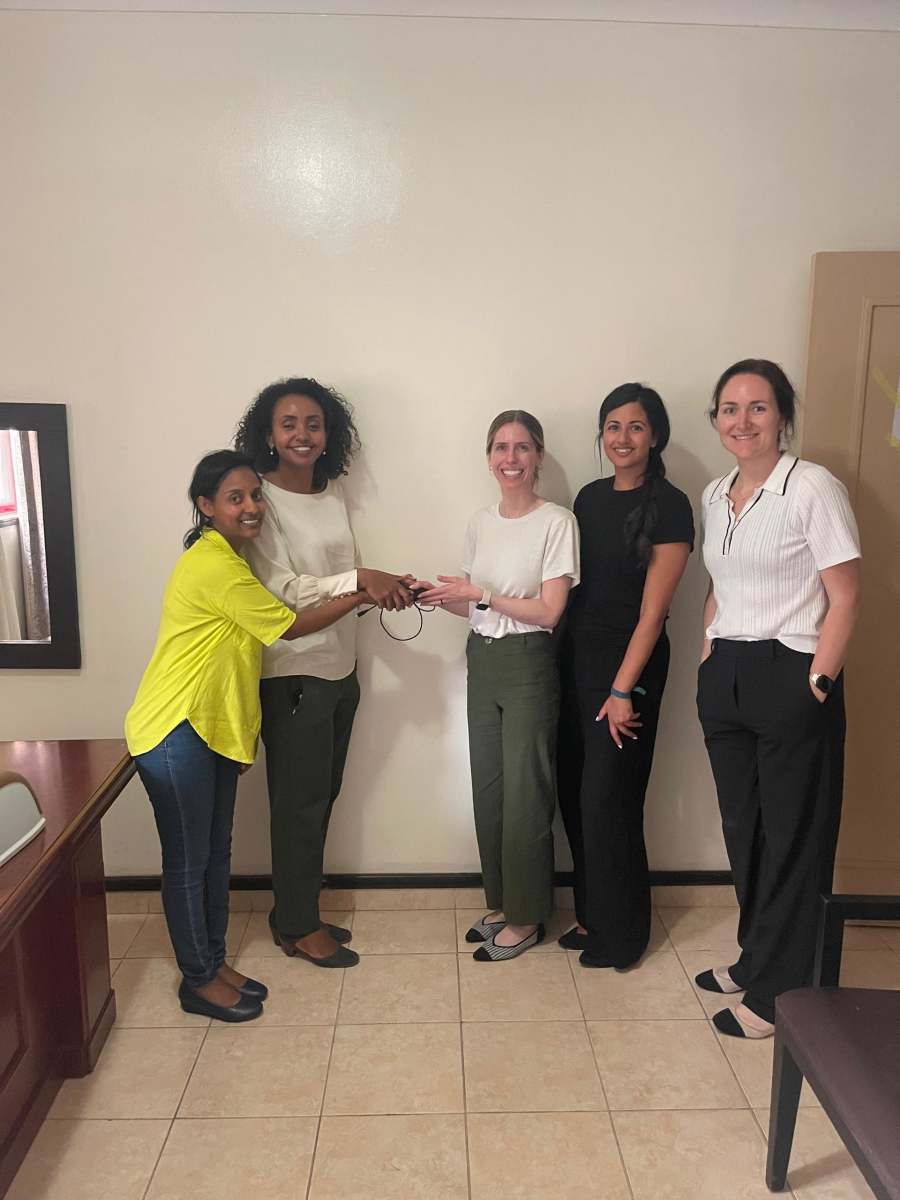


Our departmental partnership with the African Health Sciences University (AHSU) has been an incredible collaborative journey as their Emergency Medicine (EM) residency program continues to grow. I had the privilege of giving a virtual lecture to the residents months prior, and the excitement and investment they demonstrated (even over Zoom!) was inspirational. As such, I knew I had to meet the residents in person and continue to share my love of education and point-of-care ultrasound (POCUS) with them.
During this trip, we were able to participate in bedside POCUS teaching in both the King Faisal Emergency Department and ICU with residents from several different services. Additionally, the AHSU residency leadership was able to gather all of the EM residents (both postgraduate year 1 & 2 residents) from three separate sites to attend a collaborative conference day in Kigali. This was an 8-hour day that consisted of POCUS lectures in the morning and hands-on bedside POCUS scanning, ultrasound-guided procedures, and intranasal atomizer training in the afternoon. This was an incredible opportunity to not only have the residents all congregate together (the first time EVER!) but to also allow them the opportunity to learn from each other and their individual experiences. It was amazing to see the residents so eager to teach each other once they perfected a cardiac view, successfully placed a central line, or had an exciting clinical case where they used ultrasound to make a diagnosis.
Beyond directly teaching the AHSU residents, the goal of our continued collaboration is to have a larger impact - the ability to foster local POCUS interest / champions and to integrate POCUS more routinely to better diagnose and care for the patient population they seen in their EDs each and every day. The wide-reaching impact that POCUS can have in clinical care has been demonstrated all over the world, and we hope to continue to learn from each other in how to best implement POCUS in our respective clinical environments.