Working at University Teaching Hospital of Kigali (CHUK) I will teach physicians and residents the essentials of alcohol and substance use screening and management. Utilizing an integrated behavioral health model in primary care we will focus on marijuana and alcohol. These two drugs have become popular among the Rwandan youth. The integrated behavioral (BH) health model (often referred to as embedded behavioral health in primary care) is an effective approach which mitigates the stigma of substance use.
As a primary care leader and active PCP I have developed integrated BH models and have referred my patients to embedded BH professionals. In addition, I have extensive experience treating patients with addictions. For over 15 years I have prescribed Buprenorphine to individuals with opiate use disorders (OUD) and for 3 years I have worked in a methadone clinic treating OUD patients.
This project will make a difference by improving care of those with addictions
I am confident that Rwandan medical professionals, including attending and resident physicians will increase their subject matter knowledge of addiction. Importantly, the Rwandan population will benefit by having physicians with a better understanding of addiction
I am confident that Rwandan medical professionals, including attending and resident physicians will increase their subject matter knowledge of addiction. Importantly, the Rwandan population will benefit by having physicians with a better understanding of addiction
CHUK is a teaching hospital. I am hopeful that we will be able to have these learnings become part of the medical education curriculum


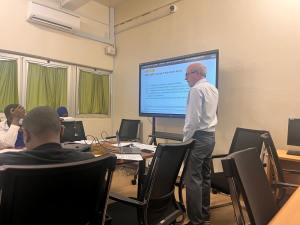

During my visit to Kigali, Rwanda, I delivered a lecture to internal medicine residents at King Faisal Hospital on the screening and treatment of alcohol and marijuana use among Rwandan youth. Drawing on my experience as a primary care physician and clinician at a substance use disorder clinic in Boston, I designed the talk to be grounded in locally relevant data while introducing practical frameworks residents could apply in their own practice. Topics included Rwandan prevalence data, risk and protective factors, brief screening tools (CRAFFT, AUDIT, WHO ASSIST), the SBIRT model, and evidence-based treatment approaches for alcohol and cannabis use disorders.
The residents were highly engaged, and the post-lecture discussion was substantive. Two themes dominated the Q&A. First, many were surprised by how low the clinical threshold is for problematic drinking. This opened a productive conversation about identifying harm early, before dependence develops. Second, residents questioned whether screening and brief intervention belongs in internal medicine or should be deferred to behavioral health. I introduced SBIRT as a framework that empowers generalist clinicians to take a first-line role while preserving a clear referral pathway for more complex cases.
The visit was a rewarding exchange. The residents at King Faisal demonstrated genuine motivation to improve care for young patients with substance use concerns, and I left encouraged by their engagement with these issues. I am grateful for the support that made this trip possible and hope the tools and frameworks introduced will contribute to ongoing efforts to integrate substance use screening into routine medical practice in Rwanda.