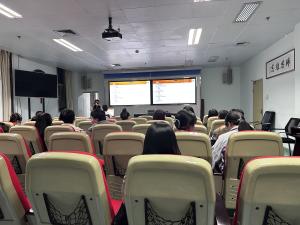
I will be traveling to Fuzhou, China to complete my capstone project as part of the Global Health Track of my diagnostic radiology residency. As a future breast radiologist committed to global health, I want to help advance breast imaging in Fuzhou by working directly with local Chinese radiologists and residents at the Fujian Provincial Hospital, where I previously volunteered at during college and have maintained close connections.
Breast cancer is the leading cause of cancer death among women globally, including in China. To combat the increasing burden of breast cancer mortality, China launched a national breast cancer screening program in 2009. However, implementation of the screening program has been highly inconsistent across the country, with huge disparities between different provinces, particularly among lower tier cities such as Fuzhou. As one of the largest public hospitals in Fujian province with a wide catchment area of low-income patients, Fujian Provincial Hospital does not currently provide breast cancer screening. The hospital’s breast imaging division offers only diagnostic examinations, where challenges remain in ensuring consistent follow-up after abnormal diagnostic findings. Moreover, there is a significant shortage of fellowship trained breast radiologists in the region. Radiology trainees have very limited exposure to breast imaging during residency, and there is a lack of formal breast imaging fellowship program and curriculum. These systemic and educational challenges provide an opportunity to make a tangible difference through targeted collaboration.
My capstone project aims to address these gaps through a collaborative educational initiative designed to eventually strengthen and expand breast imaging training and capacity at the Fujian Provincial Hospital. In addition to providing direct care for patients and teaching junior trainees, I will develop and deliver resident-level lectures covering breast imaging interpretation and procedural techniques, share educational materials to supplement their limited breast imaging curriculum, and collaborate with local faculty mentors to discuss workflow optimization strategies and quality improvement goals. I will also assist in investigating barriers to the adoption of a breast cancer screening program and designing a pilot framework for future implementation of such a program.
Through this project, I hope to promote interest in breast imaging among radiology trainees while improving their confidence and accuracy in breast imaging interpretation and procedures. I will contribute to quality improvement initiatives to optimize clinical workflow and improve diagnostic follow-up. Lastly, I want to help lay the groundwork for establishing future breast cancer screening capacity to improve breast cancer outcomes in Fuzhou.
Through these collaborative initiatives, the project will directly benefit patients served by the Fujian Provincial Hospital and its surrounding communities by improving the quality of care. By empowering local trainees and clinicians, this project seeks to create a multiplier effect, expanding expertise and ultimately strengthening women’s health infrastructure across the region in the long term.
On a personal level, this experience will enrich my medical education. Working within a different healthcare system and learning from a high patient-volume environment will not only deepen my understanding of imaging delivery in high-demand, resource-conscious settings but also strengthen my ability to provide culturally sensitive, adaptable care in any environment. The lessons learned at Fujian Provincial Hospital on education, collaboration, and patient advocacy will inform and shape my future career as a breast radiologist dedicated to reducing disparities in breast cancer care both globally and at home in the U.S.