My colleague and I plan to live and work in Roatan for a full month, in the role of pediatric residents and volunteer clinicians. We will work both at an outpatient clinic and at Roatan Public Hospital.
We plan to continue our work and learning as pediatric residents, as well as provide something that will leave a lasting impact. In the main hospital, where we will spend most of our time, we will rotate through the ED, labor and delivery, and pediatric wards. We will work at two separate clinics, both at the main hospital clinic and Clinic Esperanza, another non-profit clinic in the area.
In April of 2024, there was an electrical fire that destroyed the hospital building, and the renovations are still ongoing. Since that time, the burden on private hospitals has increased, but the lack of a public hospital has made affordability difficult for many local residents. The new hospital is now open and things are quickly changing. We aim to aid with the transition by helping with construction projects, bringing extra medical equipment, and teaching. According to our host attending, many of the national protocols for pediatrics are out of date. We have prepared our hospital's guidelines on treating less-common pediatric conditions (such as Kawasaki disease) to potentially teach the residents and fellows. Once in Roatan, we will evaluate which if any of these protocols could be useful to teach.
We will mainly be serving the lower-income resident of Roatan, as this is the demographic that presents to the public hospital. Additionally we hope to serve the hospital faculty, particularly the residents and medical students, with mutual exchange of educational topics.
We hope to both learn from and teach the resident and medical students at the Roatan Public Hospital. We hope to aid in the work of building up the new hospital and treating the local pediatric patients. By the time we leave Roatan, I aim to have established at least one new or improved clinical pathway based on current pediatric guidelines.


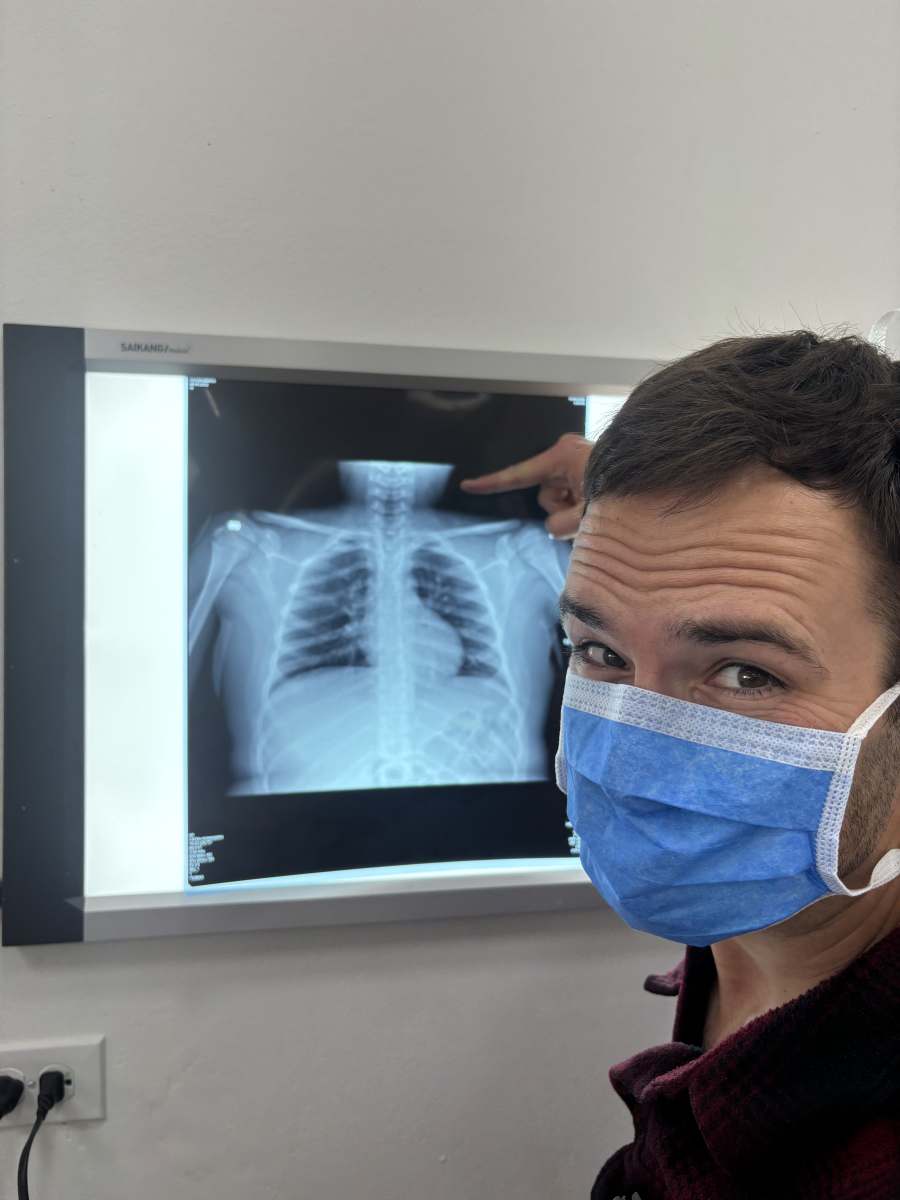
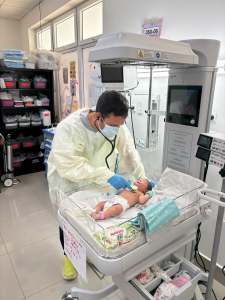


I had an incredible trip to Roatán, Honduras, with my colleague, Dr. Casey Jereb. I have attached three photographs that help illustrate the impact of our experience.
One photograph shows me examining an infant in the NICU. For each patient we evaluated, we provided diagnostic impressions and treatment recommendations. In many cases, our recommendations were incorporated into the patients’ care plans, allowing us to contribute meaningfully to clinical decision-making and patient outcomes.
Another photograph highlights our educational efforts. Alongside our preceptor, a pediatric emergency medicine physician from California, we participated in and helped teach airway management skills, including laryngeal mask airway (LMA) placement and intubation techniques, to local healthcare workers. This provided an opportunity for knowledge sharing and hands-on skills development.
Perhaps the most significant impact of the trip was the growth it fostered in my own development as a physician. Practicing medicine in a resource-limited environment required a different approach to clinical reasoning and patient management. For example, advanced imaging was unavailable on the island, with radiographs serving as the primary imaging modality unless a patient could be transported to the mainland. In one memorable case, a child presenting with respiratory distress underwent a chest radiograph developed on traditional film rather than a digital system. The image demonstrated the classic “ponta de lápis” (“pencil tip”) sign—known in the United States as the steeple sign—supporting a diagnosis of croup. Experiences like this reinforced the importance of strong clinical skills, adaptability, and thoughtful resource utilization when caring for patients in diverse healthcare settings.