The goal of this project is to sustainably build microbiology lab capacity at Chenla Children’s Healthcare (CCH), a rural children’s healthcare network serving Eastern Cambodia. At their main hospital in Kratie, CCH provides inpatient and outpatient pediatric care, including Neonatal and Pediatric ICUs. One of the major gaps in CCH healthcare services, as identified by local physicians, is microbiological diagnostics.
Currently, CCH can obtain rapid malarial testing, urine dipsticks, and cultures of urine, blood and CSF. However these cultures, which are the gold standard for microbiological testing, are not done on site. Instead, cultures are sent by ground transport to a city two hours away. As a result of suboptimal handling en route and delay, these cultures often do not yield clinically actionable results. Additionally, other than rapid malarial tests no other rapid diagnostics are available (such as respiratory panels or PCR/antigen testing). This lack of diagnostic precision forces clinicians to use broader spectrum antibiotics more frequently. This promotes antimicrobial resistance and increases the cost of care.
In order to address this issue, in March of 2026, I along with Dr. Beth Thielen, an infectious disease physician-scientist with expertise in traditional microbiology and genetic sequencing based diagnostics, and Dr. Andrew Wu, a PICU doctor who has been working with CCH for years, will deliver an in-person training program covering sterile sample collection, media preparation, incubation, microbial identification, antimicrobial susceptibility testing, PCR setup and analysis, and result interpretation. Local technicians will also learn to create glycerol stocks to preserve isolates for future studies. Instruction will include hands-on practice, demonstrations, and evaluations.
Additionally we will also support procurement and setup of an on-site infectious disease diagnostic lab using affordable microbiology equipment and supplies.
This project seeks to support the work of CCH by improving their microbiologic diagnostic capacity. CCH was founded in 2017 in collaboration with the government healthcare system, to serve the children of Eastern Cambodia who’s health outcomes were lagging behind other regions of the country. Since then they have made great progress towards that goal, serving well over 100,000 children who would otherwise have had to leave the province to receive high quality pediatric care and contributing to a reduction in regional childhood mortality in from 1 in 24 to 1 in 88.
In 2022 over 3 million child deaths were attributed to antimicrobial resistance (AMR) globally. The rates antimicrobial resistance among children hospitalized in Cambodia are extremely high (82% of Escherichia coli and Klebsiella pneumoniae isolates were multidrug resistant). Another study found 44% of E. coli isolated from Cambodian children with urinary tract infections (UTI) were extended spectrum cephalosporin resistant. Given this prevalence of AMR, accurate identification of resistant infections has the potential to significantly impact both individual sick children and antibiotic stewardship.
Additionally the decision to pursue this capacity building project in Cambodia came out of the preexisting partnership between UMN’s Global Pediatrics Program and CCH. This collaboration helped identify the need and provides the structure and trust required for what will be a long term project to leverage resources and technical expertise at UMN to build capacity and further improve the health of the children in eastern Cambodia that CCH serves.
At the completion of this trip CCH will have the foundation of an on-site infectious disease diagnostic lab capable of performing, at a minimum, gram stains, urine culture, and PCR testing for respiratory syncytial virus (RSV), influenza A and B, parainfluenza, and group A Streptococcus.
In the short term, this will enable accurate on-site testing for infections, reduce dependence on distant laboratories, shorten diagnostic turnaround times, and improve the precision of management approaches and antimicrobial treatments. Faster, more accurate diagnoses will directly benefit children and their families by improving recovery rates, reducing unnecessary antibiotic exposure, and lowering healthcare costs associated with prolonged illness or referral.
Over time, access to reliable diagnostic data could transform clinical practice and strengthen the regional health system. Routine microbiologic testing will generate critical information on local bacterial and viral pathogens, antimicrobial resistance patterns, and infection trends—filling a major gap in rural public health surveillance in this region of Cambodia, which is largely rural and under-resourced. These data could guide local and national treatment guidelines, inform antibiotic stewardship initiatives, and support early outbreak detection and response.
In order to support the continued development of capacity after this trip we will be implementing a protocol developed by Dr. Thielen for a similar project in Nigeria. We will create a secure REDCap database with CCH to record de-identified microbiology data, including sample type, culture and PCR results, and antibiotic susceptibility. Ongoing support and mentorship will be provided remotely, over Zoom and WhatsApp, and in person with future trips planned as part of the ongoing the bilateral exchange between CCH and UMN Global Pediatrics.


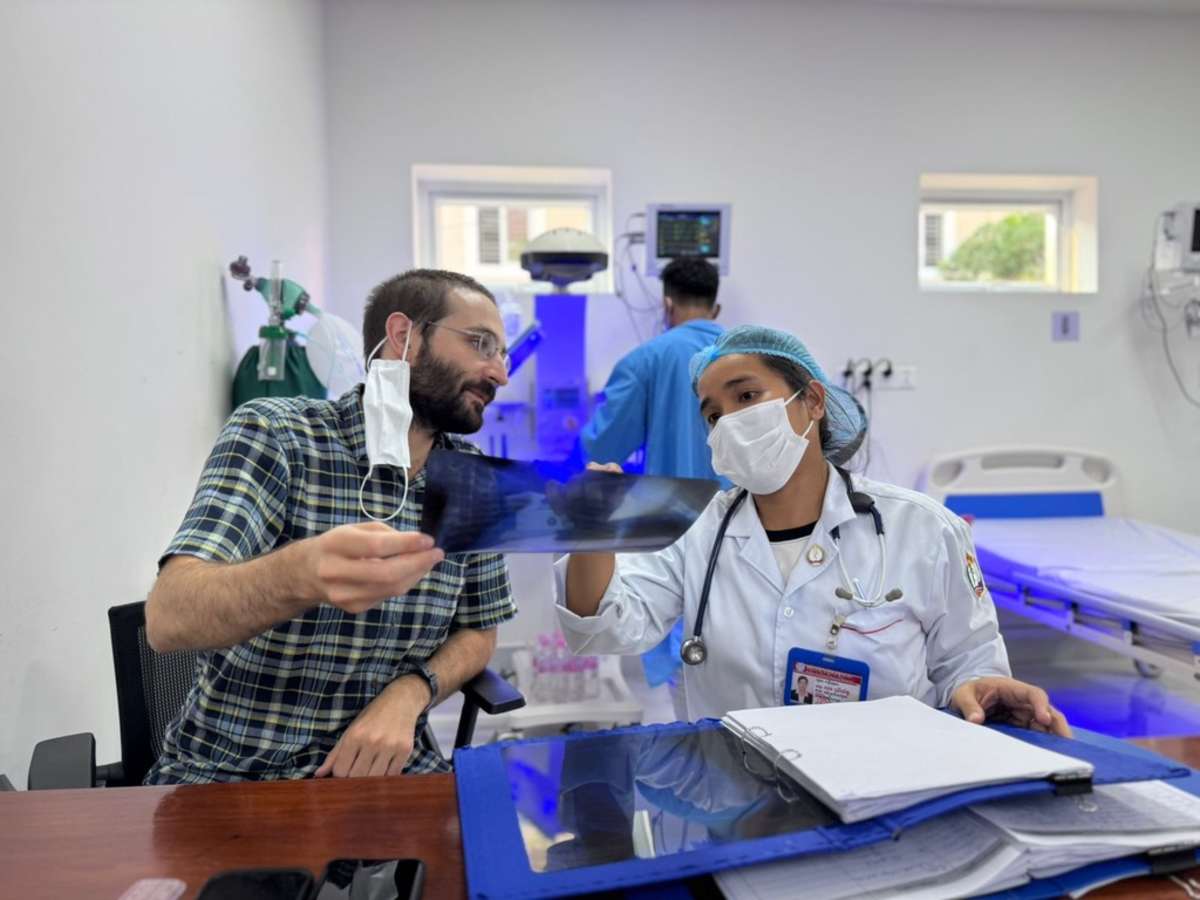


This trip has kickstarted the process to establish a microbiology lab to serve the people of Kratie, Cambodia. This project is in its early stages and has a number of hurdles before it will be operational but I am hopeful. The leadership of the Provincial hospital is supportive, plans for local training have been established and work has begun to renovate the space. Ultimately funding is the biggest challenge which we will attempt to address from multiple angles.