I am traveling to rural Tanzania to work with the Tanzania Rural Health Movement (TRHM), founded by Dr. Marko Hingi to expand access to emergency and primary care in Mwanza. TRHM operates the Beacon emergency response system, locating and assisting individuals involved in motorcycle accidents and other urgent events. Their mission—to close critical gaps in emergency care and provide dignified services for street children and underserved populations—aligns directly with my work at Cahaba Medical Care and my emerging role in street medicine.
I will provide wound care and treatment for common illnesses among unhoused children, assist with transport to dispensaries or clinics for urgent care, and participate in continuity clinic services. I will also train local clinicians and community responders in first aid and emergency response, fostering cross-cultural learning. TRHM has served over 500 unhoused children, more than 17,000 clinic patients, and 3,750 individuals needing pre-hospital urgent care. Working in Alabama, with most of our counties being medically underserved, I feel it is my utmost duty to fulfill my role as a full-spectrum family medicine physician including pre-hospital urgent care, caring for the youth, and aiding any and all communities to the best of my ability. Working at an FQHC like Cahaba Medical Care has strengthened my belief that every life is meaningful. Working with TRHM allows me to honor this principle, serve highly vulnerable populations, and bring lessons home that improve care for marginalized communities both abroad and at home.
This project serves rural communities near Mwanza, Tanzania, where many residents face significant barriers to healthcare access. These communities experience high burdens of preventable illness—including malaria, HIV, typhoid, parasitic infections, and traumatic injuries—and often lack timely access to physicians, emergency care, and diagnostic services.
Motorcyclists (“bodaboda” drivers) represent a particularly vulnerable group. They are essential to the local economy yet face high rates of road traffic injuries, some of which are fatal. Pregnant women, children, and older adults in these communities also face delays in accessing primary and emergency care, contributing to ongoing disparities in health outcomes.
This project is expected to improve access to primary care and emergency response services for rural communities in Mwanza, Tanzania, particularly for populations at high risk, such as motorcyclists, pregnant women, and children. By assisting in clinical care and supporting the Beacon Emergency Response System, I will help reduce delays in treatment for injuries and acute illnesses while contributing to more efficient, organized care delivery.
The project will strengthen local capacity through hands-on training and mentorship of clinicians and community responders, leaving a sustainable impact on clinical skills, emergency preparedness, and community-led health systems. TRHM’s model of mobile medicine and emergency response offers critical lessons for improving care delivery in resource-limited settings.
After returning, I will apply these lessons in the U.S., enhancing my residency practice and work with vulnerable populations. At my FQHC in Birmingham, AL, I provide care through chronic disease management, prenatal and suboxone clinics, walk-in care, and street outreach. Our Street Medicine program, “Care for Our Journey,” partners with local organizations to serve unhoused individuals. Learning from Dr. Hingi’s TRHM model will inform protocols, educational partnerships, and culturally competent practices, promoting dignity and equity in care for marginalized communities.
This population is the focus because the need is substantial, the healthcare system is overstretched, and targeted primary care and emergency response interventions have immediate, measurable impact. Partnering with TRHM ensures that our work aligns with community priorities and strengthens care where it is most needed.


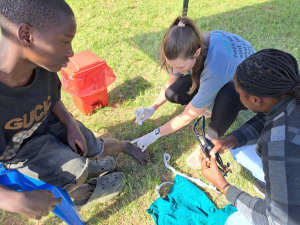


In May/June 2026, Sarah Bertrand, Taylor Hale, Lauren Wilson and I traveled to Mwanza, Tanzania to volunteer at a rural health clinic there. Sarah found the clinic because of their involvement in Street Medicine. Tanzania Rural Health Movement is one of the only clinics in East Africa that provides medical care for unhoused children. While visiting, we would go out on Saturdays and provide medical care, food, clothes, and personal hygiene supplies to unhoused children in different communities in Mwanza. During the weekdays, we would help in the health clinic by observing and providing extra hands caring for patients with clinical consults, performing lab tests in house, dispensing medications at the pharmacy, and providing vaccines for children. The clinic also provides a place for primiparous and multiparous women with uncomplicated pregnancies to deliver their babies. While visiting, we were able to be a part of a delivery. It was such a great experience to see how the labor and delivery practices are different in Tanzania compared to the U.S.. Women are encouraged to ambulate during labor to encourage cervical dilation. They also do not receive pain medication or epidurals during labor, and after delivery. Women frequently bring friends and their mothers or sisters as their support system during labor instead of their husbands or fathers of the baby. Seeing the connection between women while undergoing this process was so beautiful to be a part of.
I thoroughly enjoyed this experience volunteering at Tanzania Rural Health Movement, and it was so interesting to learn different ways to practice medicine. We are very lucky with the knowledge and resources we have in the United States in how we practice medicine, and our experience in Tanzania helped me realize this even more.