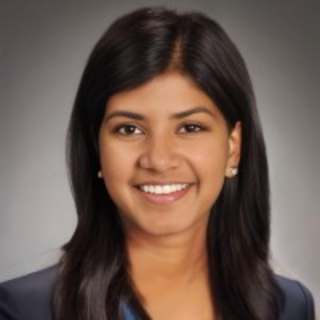
I will be working as a Pediatric Emergency Medicine-Global Health fellow in Rwanda and tentatively Laos (pending institutional approval) as part of my international fieldwork rotation. Through this rotation I hope to grow my fund of medical knowledge, particularly with regards to the care of children in LMICs and low resource settings. I also hope to participate in both direct patient care as well as teaching of local medical students, interns and residents. In addition, during my rotation, I hope to start working towards developing a scholarly project in partnership with local trainees and consultants that I can continue to pursue throughout fellowship and onwards.
I will specifically be working with underserved pediatric patients in Rwanda and Laos. This is the population I hope to continue to serve during and after fellowship through my global health career. I believe that by first understanding a community and its healthcare system, you can then work towards understanding gaps in patient care. This can then help guide quality improvement projects and capacity building within these healthcare systems.
These will be new partnerships for the Baylor College of Medicine, and I hope to assist in developing these partnerships so that future fellows and residents may also have the opportunity to work in and learn from medical providers at these sites. In doing so, I also hope to lay the groundwork for future scholarship and collaboration with medical providers and learners at these sites.


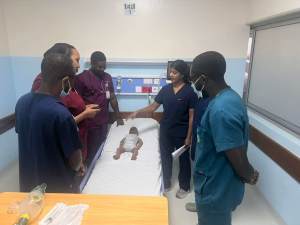

During my two-month rotation at the University Teaching Hospital of Kigali (CHUK) and King Faisal Hospital, I worked alongside pediatric residents, medical students, nurses, and attending physicians caring for children with a wide range of illnesses, including pneumonia, bronchiolitis, congenital heart disease, hematologic and oncologic conditions, and other complex medical emergencies.
One of the greatest opportunities was contributing to medical education. CHUK has more than 100 residents and numerous medical students, yet only a small number of clinicians currently provide point-of-care ultrasound (POCUS) training. Through bedside teaching, case discussions, in situ simulations, and formal educational sessions, I helped introduce and reinforce both clinical and ultrasound skills that can assist providers in making faster diagnoses and treatment decisions in a resource-limited environment where formal imaging studies may take up to 24 hours to obtain and interpret. The knowledge shared with trainees has the potential to influence the care of thousands of future patients as these learners continue their training and become independent physicians.
The trip also strengthened an emerging partnership between Baylor College of Medicine and the University of Rwanda. By collaborating with local faculty and trainees, identifying educational needs, and exploring future projects, we laid groundwork for sustainable, bidirectional educational initiatives that will hopefully continue after my departure. These efforts support the growth of pediatric emergency medicine and ultrasound education in Rwanda and may contribute to the development of the country's new Pediatric Emergency Medicine–Critical Care fellowship program.
Most importantly, the children and families receiving care benefited from collaborative clinical decision-making and shared expertise. While my individual contribution was small compared with the dedication of local healthcare teams, the experience reinforced the value of capacity building and partnership. By investing in local training and education, the impact of this trip will continue to extend to future patients as well as future fellows long after the rotation has ended.