I will be participating in a 10-day medical mission trip to Bangladesh with the Smile Mission Bangladesh Foundation, providing anesthesia care for pediatric patients undergoing cleft lip and cleft palate repair surgeries. This will be my third mission trip with this organization. The work has been immensely gratifying, as it allows us to care for underserved children and provide families the life-changing gift of a healthy smile.
This project will primarily benefit children born with cleft lip and cleft palate in Bangladesh who otherwise have limited or no access to surgical care. In addition to improving the child’s physical health, the project will also benefit their families and communities, as successful repair can significantly improve a child’s quality of life, social integration, and long-term educational and economic opportunities. This work also supports the local healthcare system by fostering collaboration and strengthening capacity through shared clinical experience and training.
Children with unrepaired cleft lip and palate face significant challenges beyond the physical defect. These conditions can lead to feeding difficulties, speech problems, recurrent infections, malnutrition, and poor growth, as well as profound psychosocial consequences. In many communities, children with visible facial differences are subjected to social stigma, bullying, and isolation, which can affect their confidence and emotional development for life.
In developed countries such as the United States, cleft lip and palate repairs are typically performed early in life and are considered standard of care. However, in many developing countries, including Bangladesh, access to specialized surgical care is limited, and many families cannot afford these procedures. As a result, children may grow up without treatment, carrying both medical complications and lifelong social barriers.
This mission addresses an important health disparity by providing life-changing surgical care to a vulnerable pediatric population that is often overlooked and underserved.
The expected impact of this mission trip is both immediate and long-term. In the short term, the project will provide safe anesthesia support for children undergoing cleft lip and cleft palate repair, allowing these life-changing surgeries to take place. These repairs can dramatically improve a child’s ability to eat, speak, breathe, and thrive, while also reducing the risk of recurrent infections and long-term complications.
Beyond the medical benefits, the psychosocial impact is profound. Correcting visible facial differences can help children reintegrate into school and community life, reducing stigma, improving self-esteem, and giving families renewed hope. In many cases, this surgery truly changes the trajectory of a child’s future.
After returning, I will bring back valuable experience in delivering safe care in resource-limited settings, strengthen my adaptability and teamwork skills, and share key lessons with colleagues and trainees to promote ongoing global health engagement and improved patient-centered care.


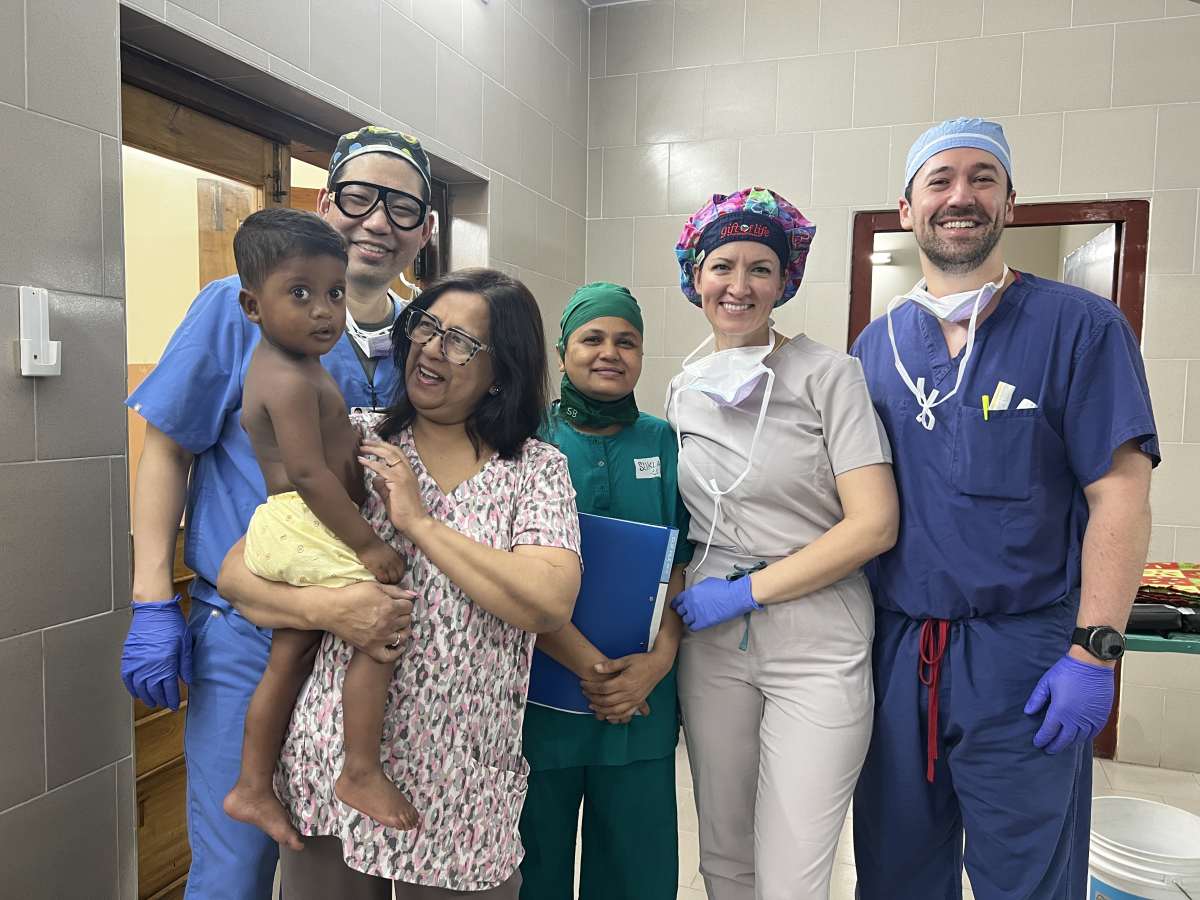


This 10-day medical mission trip to Bangladesh with the Smile Bangladesh team had a profound impact on many individuals and communities. We worked alongside a talented group of surgeons and healthcare professionals caring for children born with cleft lips and palates, providing life-changing surgical care that restored not only function and appearance, but also confidence, dignity, and hope for a brighter future. These children came from underserved communities where access to specialized surgical and anesthesia care is extremely limited, and in many areas, almost nonexistent. We were incredibly fortunate to care for 54 children and help gift them with beautiful smiles and an improved quality of life.
The families were deeply impacted as well. Parents who had struggled emotionally, socially, and financially while caring for children with untreated cleft conditions experienced overwhelming gratitude and relief seeing their children smile, eat, speak, and interact more comfortably after surgery.
The trip also strengthened collaboration between local healthcare teams and visiting physicians through education, mentorship, and shared clinical experiences. Working alongside local surgeons, nurses, and trainees created meaningful opportunities for knowledge exchange and sustainable growth in pediatric perioperative care.
On a personal and professional level, this experience was incredibly humbling and transformative. Providing anesthesia care for pediatric patients in a resource-limited setting reinforced the importance of compassion, teamwork, adaptability, and global outreach. The support from Doximity helped make it possible to serve vulnerable children and contribute to care that will have a lasting impact far beyond the operating room. My deepest gratitude to Doximity for providing support to this global outreach mission opportunity for my team.