During this mission, I will perform cataract surgeries and deliver general eye care to patients who might otherwise remain untreated. Cataract surgery offers immediate, life-changing impact—restoring independence, enabling patients to return to work, and improving overall quality of life. In resource-limited communities, restoring sight also restores economic stability for families.
A central goal of this project is sustainability through capacity building. I will work alongside local surgeons and trainees at a growing regional vision institute to refine surgical techniques, strengthen perioperative management, and reinforce infection control practices. By sharing evidence-based approaches, we aim to improve long-term surgical outcomes and elevate standards of care beyond the duration of the mission.
Additionally, I plan to introduce and teach minimally invasive glaucoma surgery (MIGS), a safer, less invasive option for lowering intraocular pressure that is not widely available in rural settings. Incorporating MIGS—particularly in combination with cataract surgery—can reduce medication burden, slow disease progression, and prevent irreversible blindness.
By combining direct surgical care with hands-on training, this mission will address the immediate burden of vision loss while expanding sustainable access to advanced ophthalmic care for the community.
This project will serve patients in Montemorelos, a small city in northern Mexico with a population of approximately 60,000, as well as individuals from surrounding rural villages. Because Montemorelos is located outside major urban centers, access to specialty ophthalmologic care is limited. Many patients must travel long distances for advanced eye care, creating financial and logistical barriers that delay treatment and worsen preventable vision loss.
The population includes working-age adults and older individuals affected by cataracts, glaucoma, and other eye pathology. Many rely on agriculture or manual labor for income, making functional vision essential for maintaining employment and supporting their families. In this setting, untreated vision impairment often results not only in reduced quality of life, but also in loss of livelihood and increased dependence on others.
Over the past two decades, the Medical Ministry has established a growing vision institute in Montemorelos, including a surgical training program designed to expand local expertise. While this has significantly improved access to care, there remains an opportunity to further advance surgical techniques, broaden procedural offerings, and strengthen long-term patient outcomes.
I am particularly drawn to serving this community because sustainable impact is already being built through local training and infrastructure. By contributing both direct surgical care and hands-on mentorship, I hope to support a population where relatively small advances in access and technique can prevent lifelong blindness and create benefits for families and the broader community.
This mission will restore and preserve vision for an underserved population through cataract and glaucoma surgery, immediately improving patients’ independence, ability to work, and quality of life. In parallel, I will train local surgeons in advanced surgical techniques and reinforce best practices in sterile technique. These trainees will go on to teach others at the vision institute and serve the wider region, multiplying the impact of our work far beyond the patients we treat directly.
For my own practice, this experience will expose me to a broader range of pathology and more severe cases than typically seen in the United States. Performing complex surgeries will strengthen my technical skills, enhance my surgical judgment, and increase my comfort managing challenging cases. These lessons will translate to improved care for my patients in the U.S.
By combining direct surgical intervention with sustainable mentorship and skills transfer, this mission will create both immediate and long-term improvements in vision health. Patients gain sight, local surgeons gain expertise, and I gain perspective and surgical experience that will shape my career.
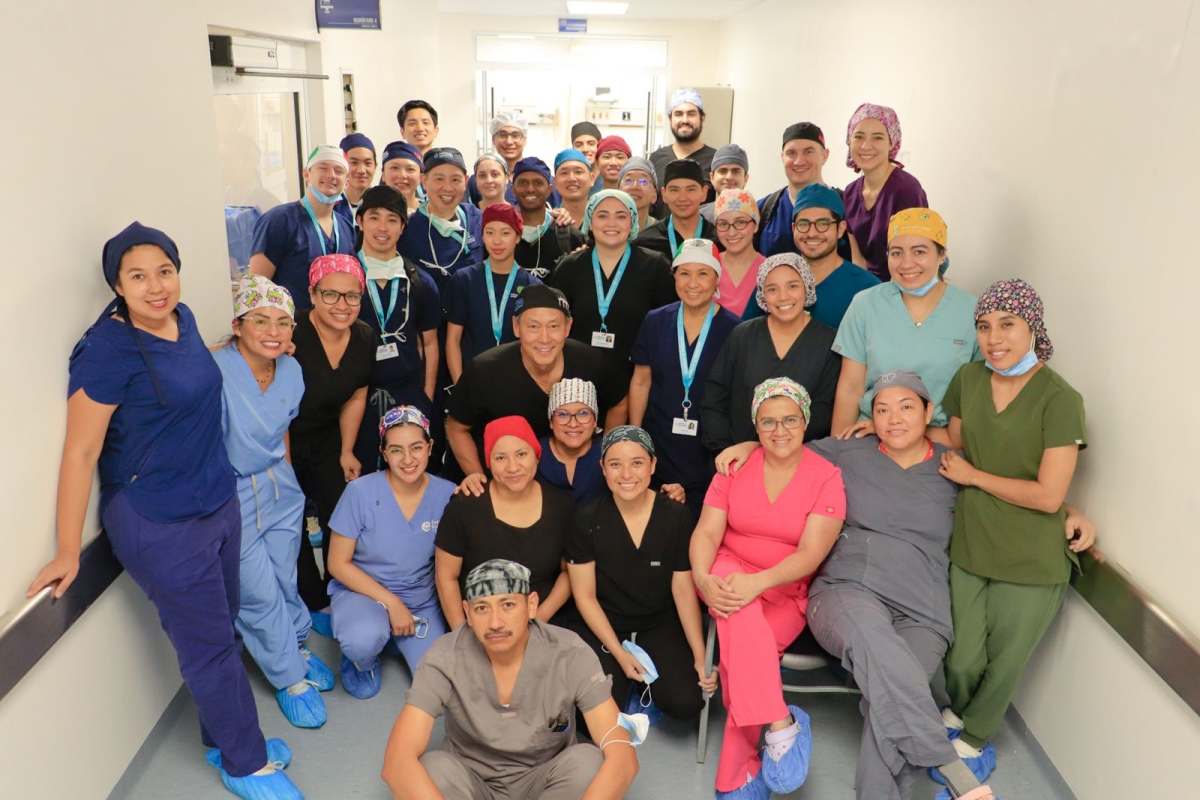


Our medical mission trip to Montemorelos, Mexico was an incredibly rewarding experience that had a meaningful impact on both the local community and everyone who participated. Over five surgical days, our team of nine ophthalmic surgeons cared for nearly 250 patients, performing approximately 50 surgeries each day. These patients were primarily referred from rural and underserved regions of Mexico, where access to specialized ophthalmic care is extremely limited. For many, the cost of surgery or the distance required to obtain care would have made treatment impossible without this mission.
The procedures performed included cataract and glaucoma surgery, both of which can profoundly improve a patient's quality of life. For many of these individuals, surgery represented an opportunity to restore not only their vision but also their independence, allowing them to return to work, care for their families, and remain active within their communities.
An equally important goal of the trip was education. I had the opportunity to teach ophthalmology residents cataract surgery techniques and glaucoma fellows minimally invasive glaucoma surgery (MIGS) procedures that are not routinely incorporated into their training. Rather than simply performing surgeries, we focused on transferring knowledge and developing skills that local physicians can continue applying long after our team returned home.
To support these educational efforts, we brought additional MIGS implants and surgical supplies that remained with the local physicians after our departure. These devices will allow the residents and fellows to continue offering advanced glaucoma procedures to appropriate patients. For many individuals living in remote areas, successful MIGS surgery may reduce or even eliminate the need for daily glaucoma medications while providing better long-term control of their disease. By combining education with donated surgical supplies, we hope our impact will extend well beyond the duration of the mission.
This mission was my first international medical mission trip, and I quickly realized that practicing medicine in a resource-limited environment requires a high degree of flexibility and adaptability.
The operating environment differed substantially from what I am accustomed to in my own practice. Surgical equipment, instrumentation, and supplies were often different from those I use routinely, and some resources I normally rely upon were either limited or unavailable. Rather than viewing these differences as obstacles, I learned to adapt my surgical approach while maintaining the same commitment to safe, high-quality patient care. Surgery is inherently unpredictable, and unforeseen challenges can arise from both the operative environment and the patient's anatomy or underlying condition. Working in this setting strengthened my confidence in my ability to think critically, adapt to changing circumstances, and perform safely even in less-than-ideal situations.
One of the most rewarding aspects of the trip was collaborating with the local physicians, residents, fellows, nurses, and medical students. Through these interactions, I gained a deeper appreciation for both the healthcare system and the broader community they serve. They shared valuable insights into the barriers their patients face in accessing care, the educational pathways they navigate, and the innovative ways they deliver high-quality treatment despite limited resources. Their dedication, resourcefulness, and perseverance in the face of financial, geographic, and systemic challenges were truly inspiring. These experiences broadened my understanding of global medical education and reinforced that the commitment to compassionate, high-quality patient care transcends national borders.
Looking back, this mission exceeded my expectations in every respect. It challenged me professionally, broadened my perspective personally, and allowed me to contribute meaningfully to patient care, physician education, and international collaboration. I returned home with greater confidence as a surgeon, new professional relationships and friendships, a deeper appreciation for global healthcare, and a renewed commitment to participating in future medical mission work.
I am grateful for the support that made this opportunity possible.