
In May 2026, I will be travelling with Vanderbilt International Anesthesia to Kijabe, Kenya for a one-month rotation focused on providing anesthetic care and strengthening anesthesia education in the local community. I will be serving at AIC Kijabe Hospital, a major referral and teaching hospital located in Kijabe. The hospital provides surgical care to patients from across the region, many of whom have limited access to specialized medical services. The primary goal of this rotation is not only to deliver direct patient care, but also to invest in sustainable anesthesia training in the local community. I will be working alongside local anesthesia providers and trainees to provide hands-on teaching in safe anesthetic techniques, airway management, and regional procedures. In addition, as neurosurgery cases become common at AIC Kijabe Hospital, there exists a need to strengthen neuroanesthesia education for local providers and trainees. I’m excited to be partnering with leaders in the Vanderbilt neuroanesthesia division to help develop lectures and case presentations to strengthen the anesthetic care provided during these complex cases. Ultimately, this rotation will allow me to play a part in contributing to the sustainable partnership between the Vanderbilt Anesthesia program and providers at AIC Kijabe Hospital.
AIC Kijabe Hospital is a tertiary referral hospital that serves a large and diverse population from rural regions of Kenya and surrounding areas in East Africa. Many patients travel to AIC Kijabe Hospital to access surgical care that may not be available in their local communities. As a result, the hospital performs over 8000 surgeries per year on patients with a wide range of pathologies, including trauma, obstetric emergencies, congenital conditions, and untreated surgical disease that has progressed due to delayed access to care. As a teaching hospital, AIC Kijabe Hospital also plays a critical role in training physicians and Kenyan Registered Nurse Anesthetists (KRNAs) who will go on to practice in hospitals across Africa, where the anesthesia workforce remains limited. Investing in the education of these trainees creates a multiplier effect: clinicians trained at Kijabe will continue providing safe anesthesia care to thousands of patients in their communities long after my rotation ends, promoting sustainable improvements in surgical and perioperative care.
The partnership between the Vanderbilt Anesthesia department and AIC Kijabe Hospital addresses a critical need for more anesthesia providers in East Africa. Rather than adopting a short-term model where clinicians complete a brief “mobile clinic” and leave, this sustainable model of global aid focuses on capacity building in local communities. By investing in education and partnership with KRNAs, we hope to provide them with the tools necessary to continue providing safe anesthesia care to underserved areas throughout Africa.
This rotation will also help develop my own skills as an anesthesiologist and educator. Exposure to anesthesia practice in a low-resource environment will strengthen my ability to deliver safe, high-value care and adapt clinical decision-making to different settings. After returning from Kijabe, I hope to share lessons learned with colleagues and trainees at my home institution. Beyond residency, I hope to apply the lessons I learn during this rotation to my career as an attending, remaining engaged in global health education and partnerships that prioritize sustainable collaboration.


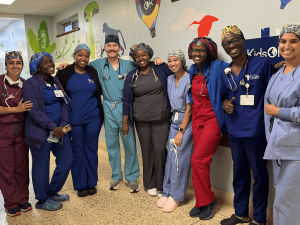


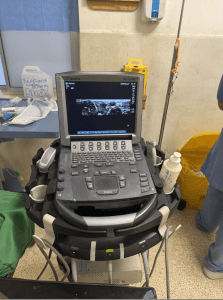
I am so grateful to have been able to rotate in Kijabe, Kenya thanks to the Doximity Foundation scholarship. My trip provided me the unique opportunity to care for patients in a resource-limited setting while gaining a deeper appreciation for the challenges and innovations that shape global perioperative care.
Many of the patients in Kijabe presented with advanced disease that might have been treated earlier in a higher-resource setting, making their perioperative care especially complex. Through direct involvement in their care, I contributed to providing safe anesthesia and perioperative care while learning how resource limitations shape clinical decision-making.
I was also impacted by (and hope I positively impacted) the KRNAs and residents who worked alongside me every day. The experience was highly collaborative: we exchanged knowledge about anesthesia techniques, nerve blocks, patient safety, and problem-solving in a low-resource environment. I shared perspectives from my training at home while learning from their expertise in delivering high-quality care with limited equipment, medications, and monitoring resources. These interactions reinforced the importance of adaptability, teamwork, and mutual respect in global health partnerships.
Ultimately, my trip strengthened my understanding that meaningful impact is not only measured through direct patient care, but also through the bidirectional exchange of knowledge and skills that continuously helps improve care for future patients. The lessons I learned from my Kenyan colleagues and patients will continue to influence how I practice anesthesia throughout my career.