
I plan to conduct cataract surgery and provide comprehensive ophthalmic care to a region of northern Mexico where access to eye care remains limited. Due to the lack of reliable care, many patients in this underserved area struggle with vision loss due to cataracts and other preventable eye diseases.
During this mission I plan to conduct primarily cataract surgery to provide rapid vision improvement to allow patients to resume their activities of daily living and work with their restored vision.
One of the key aspects to providing care for underserved regions is being able to help build up the local care providers to continue ophthalmic serves beyond our mission trip. I plan to work closely with local surgeons and trainees at the local vision institute to further refine surgical techniques and provide guidance for up to date, evidence-based approaches.
With this combination of providing direct surgical care and hands-on guidance, I hope to assist with both immediate and future ophthalmic needs in this community.
This mission will serve the citizens of Montemorelos, a small city in Northern Mexico with a population of about 60,000, as well as those from the surrounding area. Given the location and distance from major urban centers, it can be extremely challenging for patients to access the care they need. This can often result in a delay of care for potentially preventable vision loss such as cataracts and other ocular pathologies.
The Medical Ministry has been working to grow a local vision institute in Montemorelos for the last two decades. While this has helped improve access to care - there still remains opportunities to further r efine surgical techniques and improve long-term outcomes for patients.
What draws me to this community specifically is that the foundation is already there. I hope I can further utilize what has already been established here to provide both immediate and lasting care for the local population.
I believe mission addresses a need that the local population struggles with. Patients with cataracts who lack access to care that could restore their sight and their ability to function independently. Beyond direct surgical intervention, training local surgeons in advanced techniques means the impact compounds over time. Those surgeons will teach others and serve the wider region long after the mission ends.
The experience also fills a gap in my own training. Operating in a resource-limited setting means encountering more advanced pathology and fewer safety nets. These conditions that sharpen surgical judgment that can be brought home to my own practice and applied to my own patients.
The value here is in how the pieces fit together: immediate care for patients who need it, lasting infrastructure for the local system, and technical growth that makes me a better surgeon in any setting.
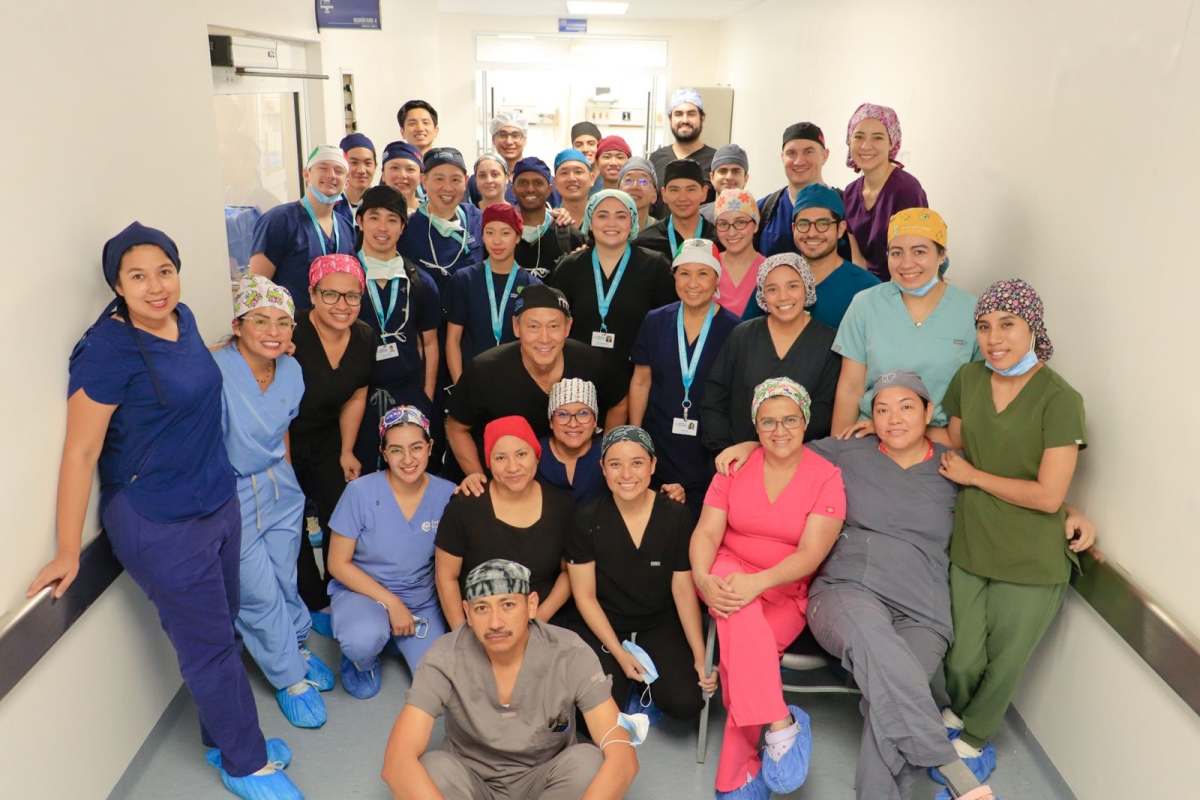


Montemorelos is a mid-sized city in Nuevo León, better known for citrus farming than ophthalmology. I went there to perform cataract surgery in a resource-limited environment, and it was one of the more useful experiences of my surgical career.
The operating conditions were real. Equipment was sometimes outdated or not functioning optimally — microscopes with poor illumination, unfamiliar phaco machines, limited viscoelastic availability, and operating in various positions based on space limitations.. None of this was insurmountable, but it required genuine adaptation rather than the kind of autopilot that can develop in a well-resourced setting.
That adaptation was the point. Operating without the defaults I rely on at home forced a return to fundamentals.
The patient population was different from what I see in the U.S. Many had been living with advanced, visually debilitating cataracts for years — brunescent nuclei, hypermature lenses, significant visual impairment. Many had diabetic retinopathy, or floppy irises, that added a further layer of unpredictability. The surgical complexity was higher, but so was the impact. That direct ratio of effort to outcome is harder to find in routine practice at home, where most cataracts are caught earlier and the baseline visual compromise is less severe.
Working with the local ophthalmology residency program was the other major component. The residents were technically sound and engaged. Teaching in a resource-limited environment is different from teaching in a U.S. program — you have to be deliberate about what you emphasize when certain tools may not be available to them in practice. Intraoperative discussions tended to focus on decision-making under constraint: when to modify a surgical approach, what to do in unique situations, how to think through risk in real time. Those are useful conversations regardless of setting, and the residents were always eager to learn.
The teaching went both directions. Surgeons who operate at high volume with limited resources develop efficiencies and judgment that are genuinely instructive. I came back with a better understanding of MSICS, a recalibrated appreciation for manual technique, and more flexibility in how I approach difficult cases.
Cataract surgery is one of the few areas in medicine where the intervention is almost entirely reversible in terms of its cause — you remove the obstruction, vision returns. Doing that for patients who had been waiting years for it, in a setting where every case counted, was a straightforward reminder of what the work is actually for.