
The Virtue Foundation's team of ophthalmologists will work with our long-standing Mongolian ophthalmologist and resident colleagues on providing cataract and strabismus surgery care in Khuvsghul, Mongolia. Blindness due to cataracts is the number one cause of preventable blindness in the world, and accounts for 40% of blindness in Mongolia. With only 130 ophthalmologists to cover a population of over 3,000,000 people, there is a huge backlog of cataracts, especially outside of the capital city of Ulaanbaatar. Furthermore, subspecialty care like pediatric ophthalmology care is severely lacking in rural Mongolia.
Working alongside the ophthalmology residents, we will screen hundreds of patients and provide much needed eye surgery to the remote area of Khuvsghul. One of the key missions of this trip is to work with the ophthalmology residents and provide surgical mentorship for them. In addition to seeing patients together, we will provide workshops and lectures for the trainees. Postoperative care will be carefully conducted by our team on site, as well as with close collaboration and telehealth following completion of the surgical mission.
With Mongolia being one of the least population dense countries in the world, almost all of its ophthalmologists are concentrated in the capital Ulaabaatar, leaving significant access barriers for patients in remote areas. Khuvsghul is one of Mongolia's most remote Northern regions that lacks definitive surgical care, so we plan to provide care to this underserved patient population. During our time there, we will screen all patient demographics including pediatric patients and the elderly.
In previous years we screened over 1000 patients and perform approximately 350 surgeries. This year's mission is expected to have the same if not a larger impact. Some supplies will be donated to our Mongolian colleagues for future use by the local doctors and an emphasis is placed during the mission to teach local doctors so they can continue to perform similar surgeries.


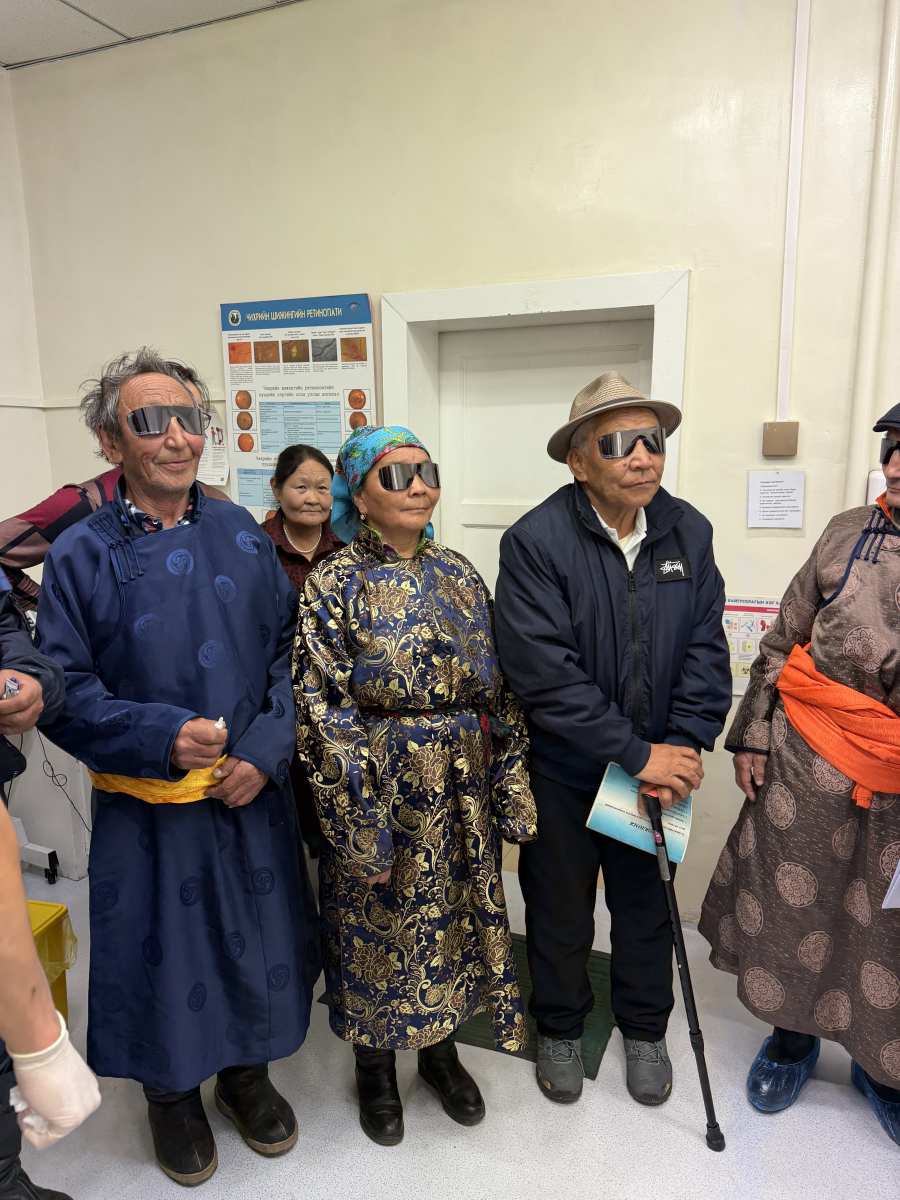


We traveled to Khuvsgul Province, the northernmost province of Mongolia, to provide much-needed ophthalmic care to underserved communities. During our visit, we partnered with Khuvsgul General Hospital, where local ophthalmologists provide essential eye care services but have a limited surgical scope, restricting the number and complexity of procedures they can perform. As a result, there is a significant backlog of patients suffering from preventable blindness due to cataracts.
Over the course of one week, our team screened nearly 100 adults for cataracts and glaucoma, as well as an additional 30 children for strabismus. We worked alongside local ophthalmologists and Mongolian ophthalmology residents, creating valuable opportunities for education and skills transfer.
The team transported surgical equipment and instrument packs, established a fully functioning operating room, and performed approximately 70 surgical procedures over three days. Beyond restoring sight to patients in need, these surgeries provided Mongolian residents with hands-on learning opportunities and exposure to world-class surgical techniques, helping to strengthen local ophthalmic capacity for the future.
My primary role on the trip included preoperative patient screening and assisting with surgical flow as a scrub technician. I also had the opportunity to perform several cataract surgeries independently. This experience was especially meaningful because it marked my second trip to Mongolia—this time as a fellow, having previously participated as a resident several years earlier. Returning in a more advanced stage of my training allowed me to appreciate how much I had grown as a surgeon. Performing cataract surgeries independently and achieving excellent outcomes was both professionally rewarding and personally fulfilling.
I leave Mongolia deeply grateful for the kindness, generosity, and resilience of the Mongolian people. More importantly, I leave with a renewed sense of purpose. No one should lose their sight from a condition as treatable as cataracts. This experience reinforced my commitment to dedicating my career to expanding access to eye care and helping eliminate preventable blindness around the world.
I am sincerely grateful to the Doximity Foundation for helping sponsor this trip and for supporting the development of my career in global ophthalmology. The foundation's generosity made it possible for me to contribute to meaningful patient care, continue my surgical growth, and further pursue my passion for restoring sight to underserved populations.