This summer, Ohana One International will conduct a pediatric and adult surgical mission to two critically underserved sites in Kenya. At Kakuma Refugee Camp—one of the world's largest, hosting over 200,000 displaced individuals from South Sudan, Somalia, DRC, Ethiopia, and beyond—and at PCEA Chogoria Hospital, the primary referral center for five counties in Kenya's Eastern region, our team of plastic surgeons and anesthesiologists will deliver life-changing reconstructive surgical care while simultaneously building lasting local capacity. Reconstructive surgery restores function, not just form. For a child with a burn contracture or an adult with a post-traumatic deformity, surgery can mean the difference between dependence and productivity, isolation and inclusion. By partnering with local surgical and anesthesia providers at each site, we will not only treat complex cases that have long gone unaddressed, but actively transfer skills that remain in these communities after we leave.
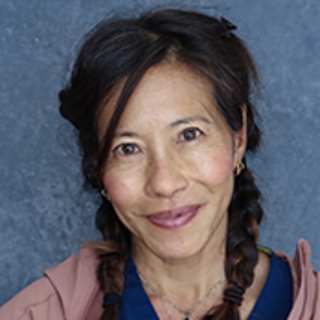
As a pediatric anesthesiologist and co-founder of Ohana One, I will lead hands-on training for local anesthesia providers in two high-impact areas: advanced regional anesthesia techniques and point-of-care ultrasound (POCUS) for perioperative patient assessment. These tools dramatically improve safety and patient outcomes—and are teachable, sustainable, and immediately applicable in resource-limited settings. Our plastic surgery colleagues will work alongside Kenyan surgeons on complex reconstructive cases, providing real-time mentorship designed to elevate local technical proficiency. Ohana One's model is explicitly long-term: we return to the same sites, track our trainees, and build relationships that compound over years. The skills and confidence we leave behind will serve thousands of patients long after our team departs—multiplying the impact of every dollar invested in this mission.
Ohana One was founded on a simple conviction: a single surgical mission, however skilled, cannot fix a broken system. Lasting change requires investment in people—not just patients, but the providers who will care for them for decades to come. Our engagement begins weeks before we arrive. Leading up to the mission, our team holds weekly virtual meetings with local physicians to collaboratively select cases, conduct didactic teaching, and run a shared journal club tailored to the pathology we will encounter together. Providers arrive at the operating table already prepared—not as observers, but as partners. After we return home, these teaching sessions continue: same group, same relationships, now building on shared operating room experience. On the ground, we will deliver surgical care to patients whose conditions have gone untreated for years, restoring function and dignity that ripples through families and communities. The deeper impact is what remains after we leave: anesthesia providers performing regional blocks and deploying POCUS independently; surgeons approaching complex reconstructive cases with hard-won confidence. Ohana One returns to the same sites year after year, tracking trainees and compounding prior work. The providers we mentor will go on to teach others—and that is exactly the outcome we are working toward.
Ohana One International Surgical Aid and Education
Trip Summary: Kenya — Nairobi and Chogoria
Overview
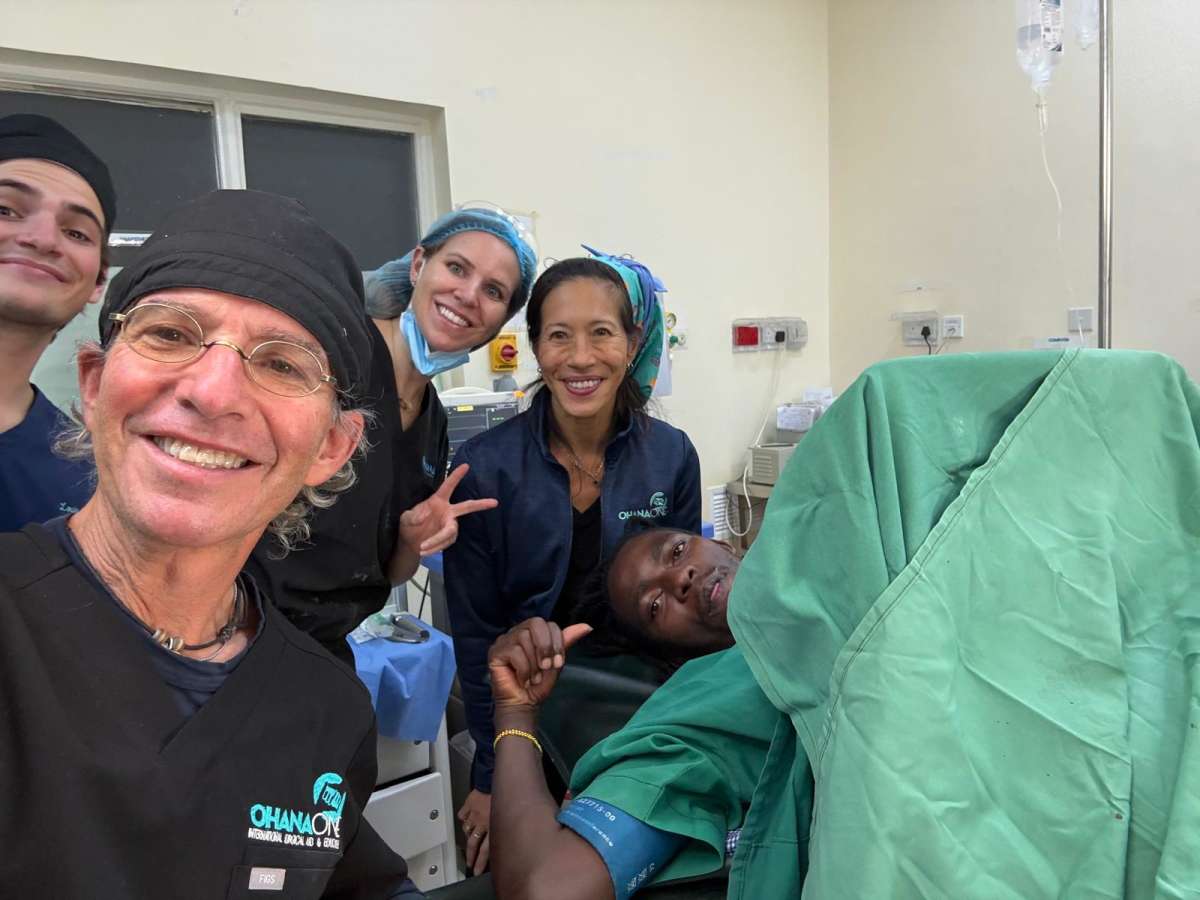
Our team traveled to Kenya to operate, teach, and build lasting mentorship at two very different sites: Kenyatta National Hospital in Nairobi, the country's largest public referral hospital, and PCEA Chogoria Hospital, a COSECSA-recognized (College of Surgeons of East, Central and Southern Africa) training hospital in Chogoria, roughly four hours outside Nairobi by bus. Across both sites we completed approximately 44 surgical cases alongside local surgeons, residents, nurses, and anesthetists.
The trip reflected what Ohana One was built to do. We came to work shoulder to shoulder with local clinicians rather than around them, and to leave behind relationships and capability rather than a completed case list.
Our surgical partners
Two recently board-certified plastic surgeons joined us for the Chogoria portion of the trip: Dr. Imran Sherman of Mombasa, Kenya and Dr. Oscar Nyamunyamu of Kakamega, Kenya. Each traveled twelve hours by bus to reach Nairobi, then boarded the bus with our team for the ride out to Chogoria. That they made the journey at all says something about how scarce these opportunities are, and about how much they wanted them.
We operated with both surgeons and with local residents at every case, sharing the table rather than demonstrating from it.
Surgical work
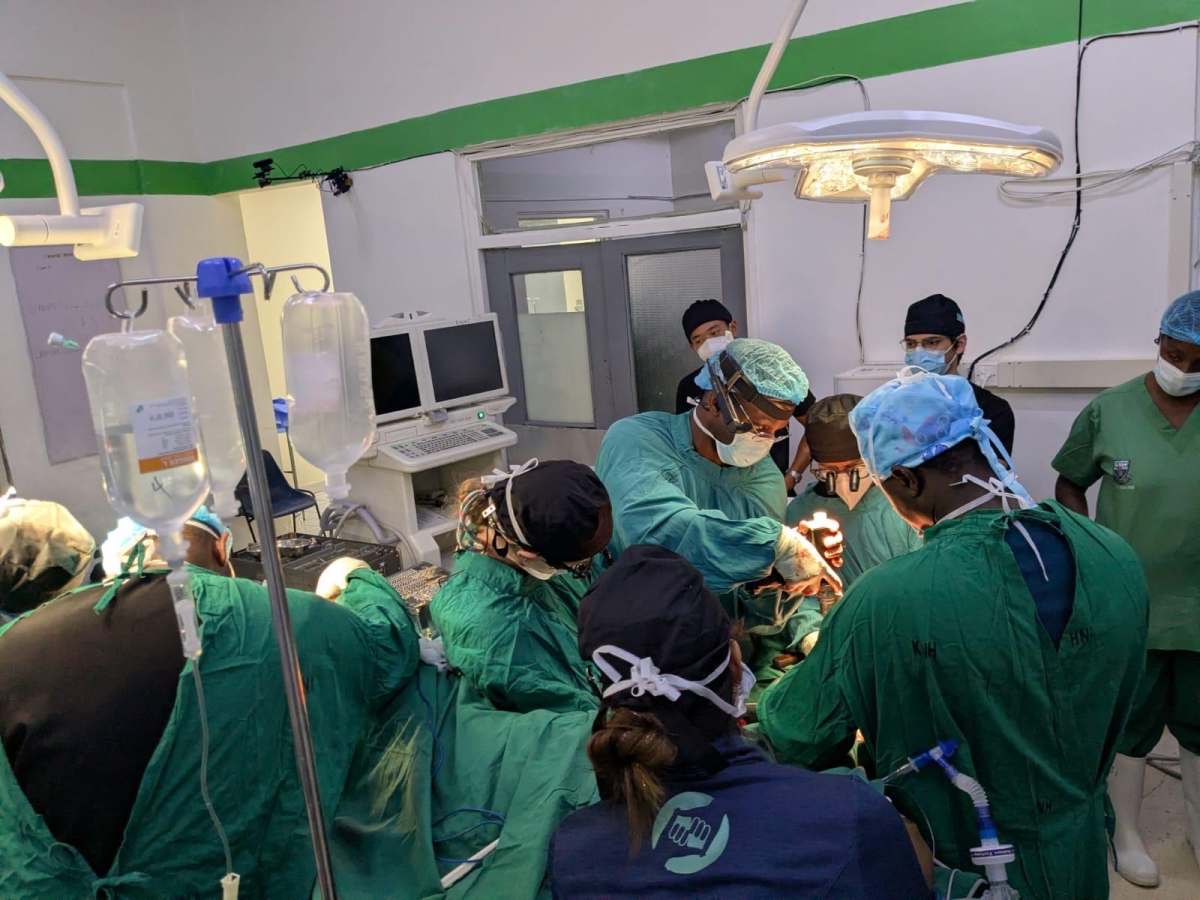
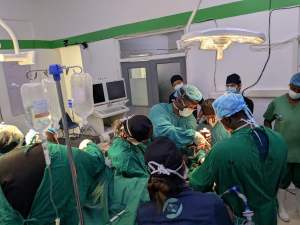
The case mix ranged from routine reconstructive procedures to complex microsurgery rarely performed in these settings. Highlights included:
• A free fibula flap for reconstruction of a radial defect
• Omental vascularized lymph node transfers for lymphedema
• A latissimus dorsi flap for a mastectomy defect
Complex free tissue transfer requires a coordinated team, sustained operative time, and post-operative monitoring. Completing these cases with local teams demonstrates that the capability exists here and can be grown.
At Chogoria, the local staff operated with us through the weekend, finishing at 11:00 p.m. on Friday and 9:30 p.m. on Saturday. Not once did anyone complain.
Education beyond the operating theater
Surgical volume was only part of the work.
Anesthesia and perioperative care. I oversaw all cases in the operating theater and taught local anesthetists ultrasound-guided peripheral nerve blocks and point-of-care cardiac ultrasound examination. Both skills extend well past our visit: better regional anesthesia means safer cases and less reliance on scarce opioids, and point-of-care cardiac ultrasound sharpens preoperative assessment in patients who arrive with little workup.
Nursing education. Our nurse educators led seminars daily, working with the perioperative and ward nursing staff at both hospitals.
Occupational therapy and splinting. An occupational therapist from Abu Dhabi joined our team, fabricating custom splints for our post-operative patients and leading didactic sessions for local staff. Hand and burn reconstruction outcomes depend heavily on therapy and splinting, and this is often the least resourced part of the pathway.
Ward and burn care
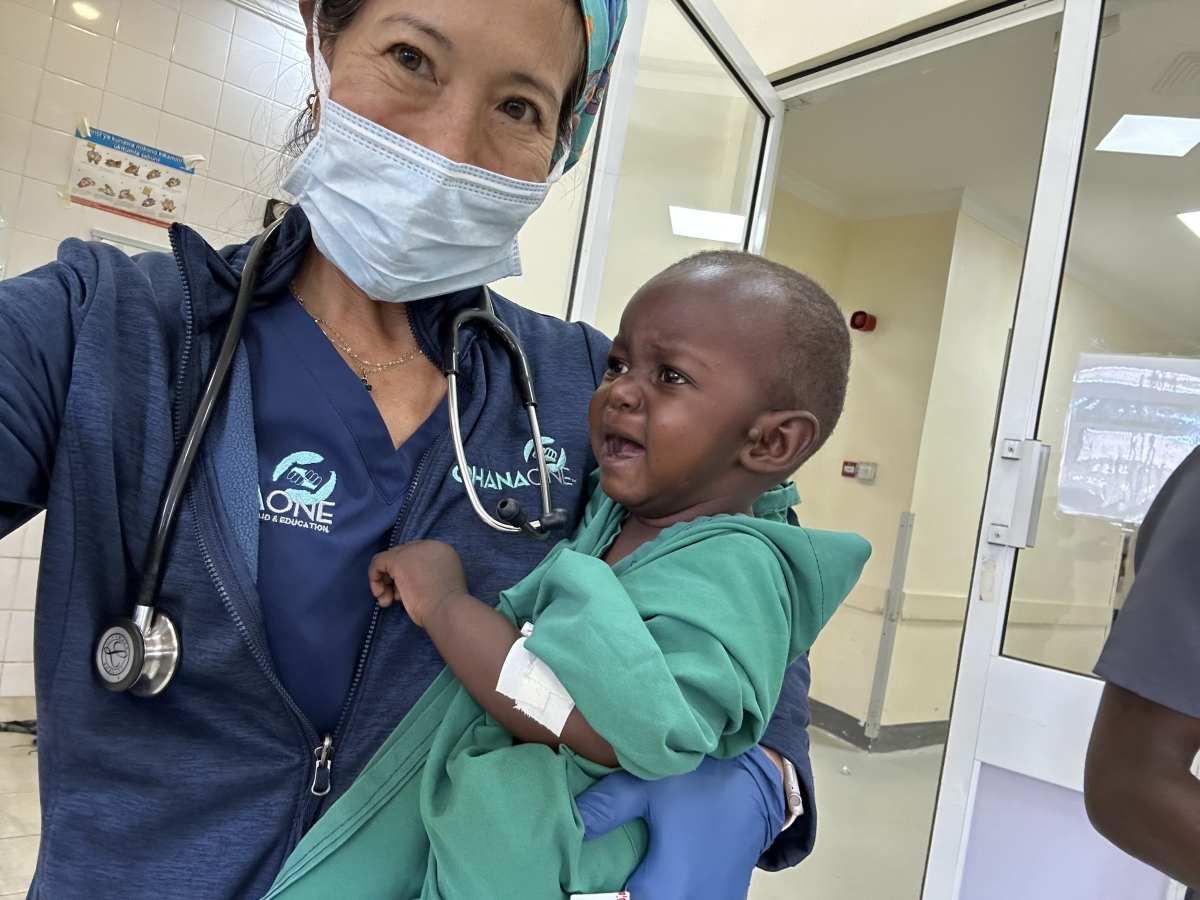
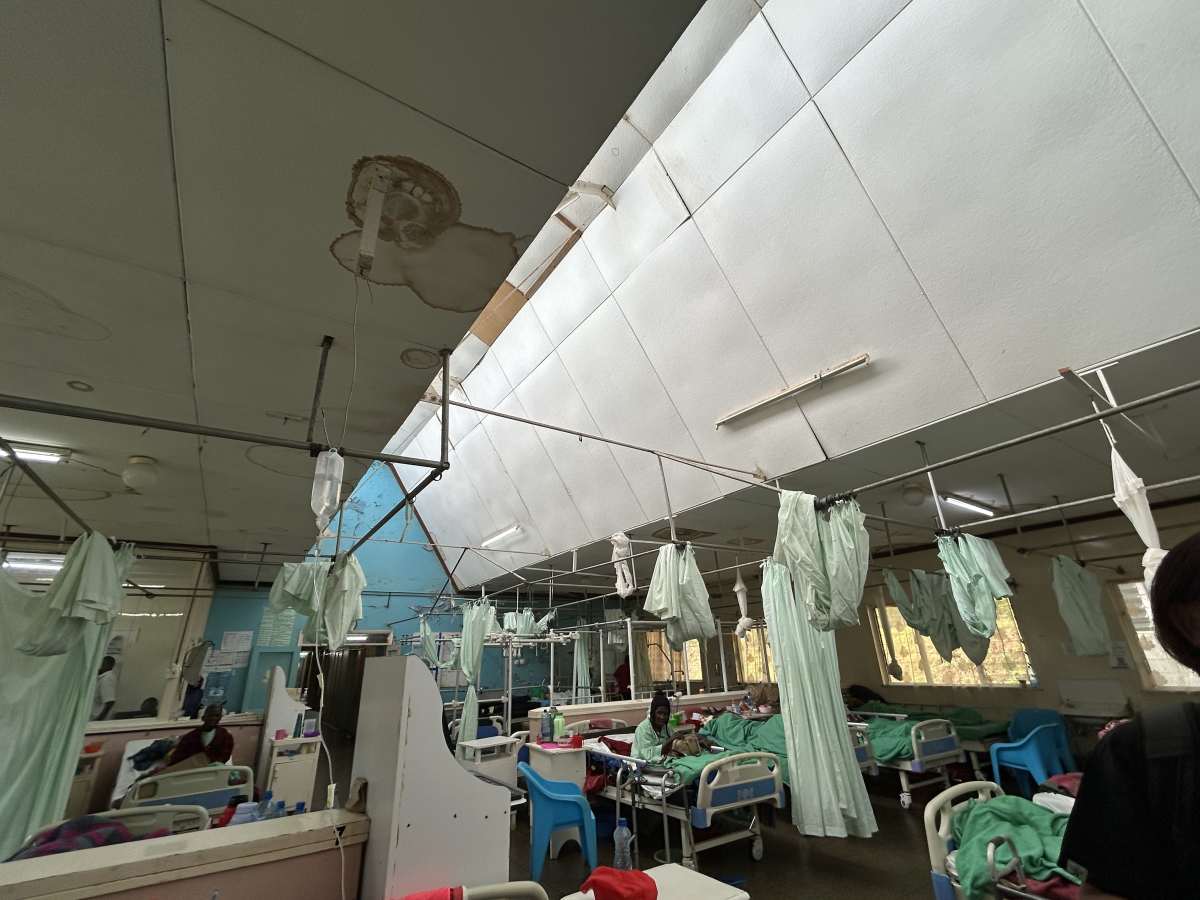
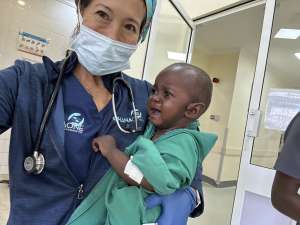
Beyond the operating theater, our team worked on the patient wards assisting with dressing changes, including burn dressings in the Burn ICUs. Many of these patients were children in critical condition with severe burn and inhalation injury, and some with severe malnutrition.
These cases were deeply difficult to witness. They also make clear why sustained partnership matters more than any single trip. Our presence on the wards was welcomed by the staff carrying this work every day.
Hospitality and partnership
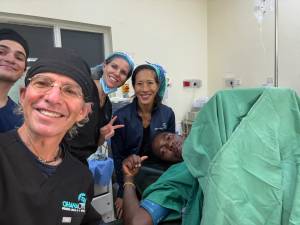
We were received with extraordinary warmth. The nursing staff at Kenyatta National Hospital presented our team with keychains and earrings in thanks for our help. The staff at Chogoria hosted a dinner for us and gave each team member a Maasai robe.
We arrived to teach and left having been shown a great deal about generosity and endurance.
What continues
The trip does not end when the team flies home. This is the cornerstone of the Ohana One model: mentor and mentee relationships that persist long after the plane leaves.
Ongoing commitments from this trip include:
• Continued nursing education sessions with staff at both hospitals
• Journal clubs with the surgical trainees
• Post-operative follow-up on the patients we operated on, in partnership with the local surgical teams
• Equipment left in place, including a handheld ultrasound and communication headsets
The headsets and ultrasound matter more than their price tags suggest. They allow our mentors to remain in the operating theater with our mentees, live and in real time, from anywhere in the world. A case in Chogoria can now be shared with a surgeon in Los Angeles as it happens. That is the difference between a visit and a relationship.
Acknowledgments
Our thanks to the surgical, nursing, anesthesia, and support staff at Kenyatta National Hospital and PCEA Chogoria Hospital; to Dr. Imran Sherman and Dr. Oscar Nyamunyamu for traveling so far to join us; and to every member of the Ohana One team who gave their time to this trip. Thank you as well to the Doximity Foundation for funding many of our medical team members’ flights to Nairobi! We are so grateful for your support!
Ohana One International Surgical Aid and Education

