
I am part of a group of physicians that travel to Botswana collectively 4 times per year to provide surgical care for pelvic floor disorders and fistulas. A big component of what we do is training local Ob/Gyn physicians on how to do these procedures and care for these patients so that the in-country workforce is better prepared to treat these conditions.
Women in Botswana with pelvic organ prolapse, urinary incontinence, fecal incontinence and fistulas will benefit from this work. The surgical management of these conditions is technically complex and highly specialized. As a result, women in low resource countries often would not otherwise have access to these quality of life saving options. I am going to Botwsana specifically because my home institution has a longstanding relationship with the Ob/Gyn department at the Princess Marina Hospital in Gaborone, and has helped to train Ob/Gyn's there for the past 15 years.
I intend to conduct surgical procedures for 12-20 patients while I teach the local gynecologists these techniques. As a result of this experience, I hope to help significantly improve the quality of life for these patients who are suffering from stigmatizing and debilitating conditions. I will also be contributing to the upskilling of the local Ob/Gyn workforce. I am always learning better ways to teach the practice of pelvic reconstructive surgery, so I expect to emerge from this experience with more insight on surgical teaching. I also expect to learn a great deal from my Ob/Gyn colleagues in Botswana. The practice of medicine is highly dependent on the context, so I look forward to learning how they evaluate and diagnose conditions differently, where imaging and other diagnostic techniques are more limited. This will continue to develop my own practice of providing urogynecologic care with over-relying on specialized scans.


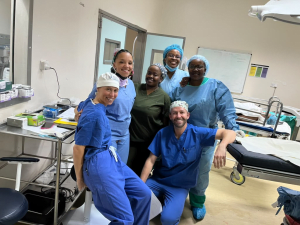
Over the course of two weeks, three Urogynecologists completed 90 outpatient consultations and follow-up visits, and performed 21 pelvic reconstructive surgeries at Botswana's largest tertiary care center. Some of the patients served were known to us from prior trips within the last 5 years, but most were new to our care. The conditions served included pelvic organ prolapse, vaginal fistulas and cloacal defects, fecal incontinence and childbirth injuries. Our patients ranged from age 23 to 78, and many came from rural areas. A major part of our mission is to teach local gynecologists how to provide medical and surgical care to women who have pelvic floor disorders, so every patient encounter was performed alongside Ob/Gyn faculty and residents in Gabarone. We are proud to report that each year we return, we find that providers are more knowledge and capable of perfoming these procedures independently, and more and more patients with pelvic floor disorders have been served in our absence.

