
As part of a longitudinal educational project, I plan to develop simulation-based training curriculum focused on training healthcare professionals that care for neonates in Neonatal Intensive Care Units. This curriculum will focus on resuscitation in the delivery room, emergency response to complications within the NICU and team-based training for doctors and nurses that care for neonates. This will be significant because though much work is being done to reduce neonatal mortality in low- and middle-income countries (LMICs) like Ghana, these efforts to improve health services may be hindered by several factors, including lack of effective healthcare provider education. Focusing on these gaps, it will enable healthcare providers within these settings improve their clinical decision-making skills, procedural skills and feel empowered when caring for babies. This could go a long way and reduce neonatal mortality in such places especially when it is part of a longitudinal educational project.
Young career physicians, pediatric residents and pediatricians caring for neonates in NICUs within Accra. This population of healthcare professionals work directly with term and premature neonates daily.
Expected impact involve immediate and long-term indices. Immediate impact includes enabling healthcare providers especially early career physicians and physicians-in-training within these settings improve their clinical decision-making skills, procedural skills and feel empowered when caring for babies. This could go a long way improve healthcare provider education and reduce neonatal mortality within the NICU especially when it is part of a longitudinal educational project.


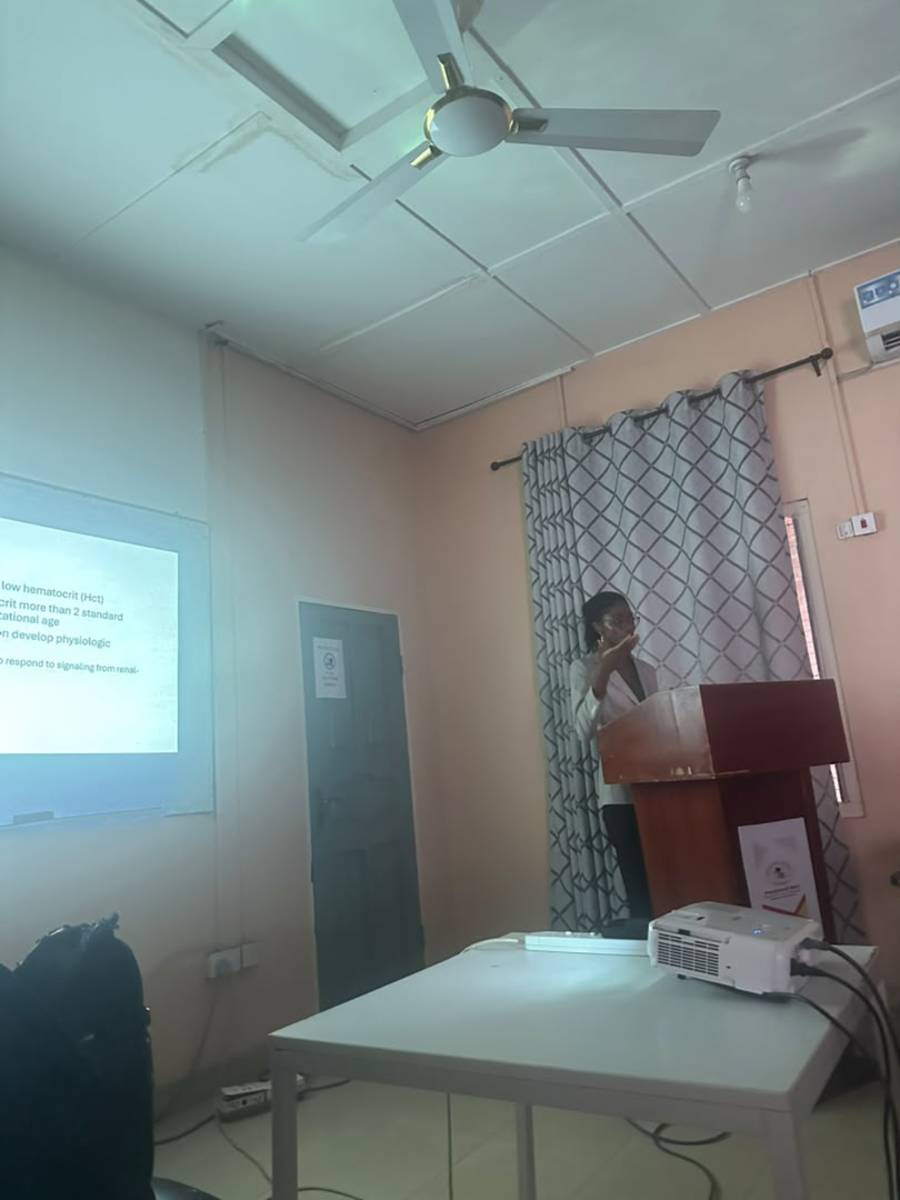


I spent a week teaching at the 37 Military Hospital- a major teaching hospital in Accra, Ghana. During the week, I delivered interactive lectures and case-based presentations to over 16 pediatric residents, 10 nurses and a few pediatricians. The lecture topics were chosen by the pediatric residents and ranged from Immediate Kangaroo Mother Care, Hypoxic Ischemic encephalopathy and therapeutic hypothermia, feeding and nutrition in the Preterm infant, blood and blood products transfusions in the newborn. During the week, lectures spanned from 2 to 4 hour sessions. These presentations involved didactics, case-based studies and interactive question and answer sessions at the end. We all reviewed recent updates in newborn medicine/neonatology and even reviewed a few clinical trials pertaining to recommended practices. The pediatric residents commented on how much they were learning from the sessions and would often present clinical cases from their NICU and attempt to apply the new knowledge they had just learnt to these cases.
It was such a joy to teach the Pediatric residents at 37 Military Hospital. They were so engaged, so eager, very knowledgeable and enthusiastic to learn new things. They shared their approach and the practice of medicine, and I also learnt from them. At the end of such a successful week, they asked for monthly or quarterly educational zoom sessions so the learning could continue. I look forward to visiting and teaching them again next year and the years to come.