
This project will implement a community-based dermatology outreach initiative in South Korea focused on improving awareness, early recognition, and referral of Central Centrifugal Cicatricial Alopecia (CCCA). CCCA is a progressive scarring alopecia that disproportionately affects Black women and remains significantly underrecognized, particularly in global settings with limited familiarity with textured hair disorders and skin of color dermatology.
Over a 5 to 7-day period, the initiative will collaborate with local physicians, community organizations, and hair professionals to conduct brief, evidence-based educational sessions focused on early recognition of CCCA, reduction of stigma surrounding hair loss, and appropriate referral to dermatologic care. The project expands upon an existing community engagement model currently being implemented in St. Louis, where Black hairstylists are being trained to recognize early signs of CCCA and encourage timely medical evaluation.
Educational materials will include concise visual guides, culturally sensitive scalp photography, and brief pre/post surveys assessing baseline awareness, symptom recognition, and referral intent. The intervention emphasizes that CCCA is a chronic inflammatory scarring alopecia requiring early diagnosis and treatment to prevent permanent hair loss.
This initiative also seeks to explore an important and understudied global health question: how hair loss disorders affecting Black patients are recognized, understood, and addressed within healthcare systems and communities outside predominantly Black populations. By engaging community-facing professionals and participants directly, the project aims to improve awareness while generating pilot data that may inform future international collaborations in skin of color dermatology, community-based hair disorder education, and culturally competent dermatologic care.
This project primarily serves Black expatriates, immigrants, international students, military-affiliated families, and multicultural community members living in or around Seoul who may have limited access to culturally competent hair and dermatologic education. Individuals with textured hair disorders frequently experience delayed diagnosis, misinformation, and barriers to specialty care, particularly in regions where skin of color dermatology and scarring alopecia education are less commonly emphasized.
The project will also benefit hairstylists and community-facing professionals who regularly interact with individuals experiencing early hair loss symptoms but may not recognize signs of inflammatory scarring alopecia. These individuals are uniquely positioned to encourage earlier dermatologic evaluation before permanent follicular destruction occurs.
CCCA remains one of the leading causes of scarring alopecia in Black women, yet awareness remains low even within highly resourced healthcare systems. This initiative addresses an important gap in global dermatologic health equity by improving awareness, reducing stigma, and promoting earlier recognition and referral in an underserved population.
Within one week, this project aims to provide targeted hair and scalp health education to community participants and professionals, improve recognition of early CCCA features, and increase confidence in recommending dermatologic evaluation for concerning symptoms. Immediate outcomes include measurable improvements in survey-based knowledge assessments and increased awareness surrounding inflammatory scarring alopecia in Black patients.
The broader impact of this initiative is the development of a scalable, community-centered framework for textured hair and scalp disorder education that can be adapted internationally. Educational materials, survey tools, and outreach strategies developed through this pilot will contribute to ongoing work in community dermatology and skin of color education both domestically and abroad.
Following the trip, findings will be shared with collaborators at Washington University and incorporated into ongoing CCCA community engagement research efforts currently underway in St. Louis. The experience will also help inform future initiatives focused on improving access to culturally competent dermatologic education in international and underrepresented settings.
Importantly, this project builds upon prior successful global health outreach experience conducting community-based hidradenitis suppurativa education in Lagos, Nigeria. Lessons learned from that initiative, including rapid educational deployment, culturally sensitive communication, and low-resource community engagement strategies, will directly inform implementation and sustainability planning for this project.


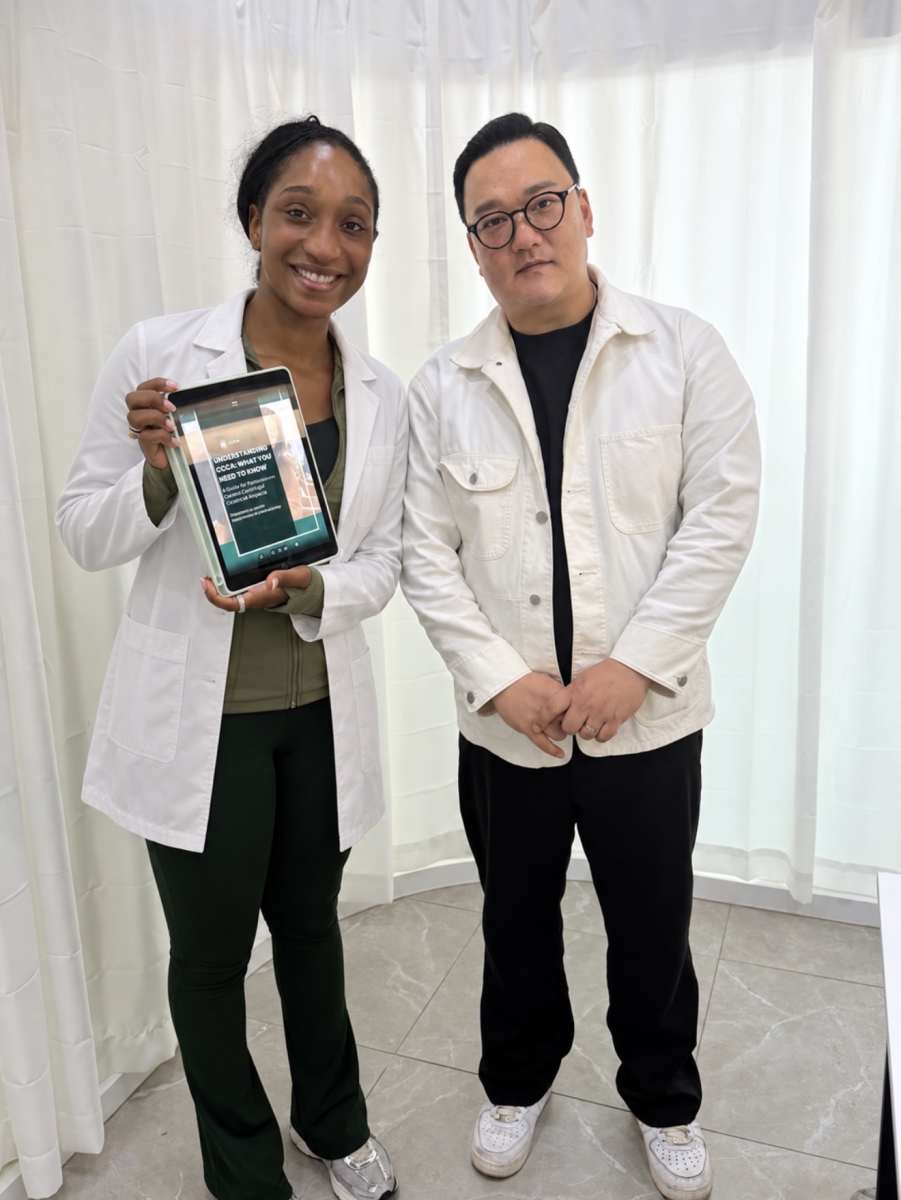




During my trip to South Korea, my colleagues and I visited several hair salons to provide small-group education on Central Centrifugal Cicatricial Alopecia (CCCA), a scarring hair loss disorder that disproportionately affects Black women. Our outreach focused on hairstylists as community-facing professionals who may notice changes in a client’s scalp or hair before that person seeks medical care.
Using visual educational materials, we discussed early recognition of CCCA and the importance of encouraging dermatologic evaluation. Our goal was to help stylists recognize when hair loss warrants medical attention, while emphasizing that diagnosis and treatment belong with a dermatologist. These conversations brought education about a condition affecting Black patients into salon settings in South Korea, extending the community engagement approach underlying our work in St. Louis.
The people directly reached were the hair professionals who participated in these discussions. Their clients represent a potential longer-term beneficiary of this education, although we did not establish whether the sessions led to subsequent referrals or changes in clinical outcomes. The project’s immediate contribution was creating opportunities for focused discussion about CCCA, textured hair, and the role of hairstylists in encouraging timely evaluation.
The trip also shaped my approach to future outreach. Delivering education within working salons reinforced the importance of brief, accessible materials and adapting sessions to the setting. It highlighted opportunities to strengthen local partnerships, document participation more systematically, and incorporate follow-up to understand whether education translates into action. I am grateful to the participating salon professionals for their time and engagement, and to the Doximity Foundation for supporting this community-based dermatology outreach.

