
For the second consecutive year, I have been invited by the Department of Pediatrics at the Mongolia National University of Medical Sciences (MNUMS) to provide pediatric resuscitation education through a simulation-based curriculum. Although funding limitations prevent this from being an officially sponsored American Heart Association (AHA) Pediatric Advanced Life Support (PALS) course, all content will be based on current AHA PALS principles and evidence-based educational methods.
This initiative addresses a critical gap, as there are currently no certified AHA PALS programs in Mongolia. During the inaugural program in 2025, we trained 20 pediatric physicians, donated PALS learner manuals, and established journal clubs to support ongoing learning. Due to strong participant and institutional support, the program will expand to approximately 50 learners in 2026, with both foundational and advanced learning tracks.
Participants will engage in low-fidelity, simulation-based training focused on recognition and management of pediatric respiratory failure, shock, and cardiac arrest. New this year, smartphone-based patient monitor applications will enhance realism and support clinical decision-making. Structured debriefing and introductory faculty development in simulation education will help build local teaching capacity and create a sustainable foundation for pediatric resuscitation education in Mongolia. By strengthening both clinical and educational skills, this program aims to improve emergency care for critically ill children while empowering local providers to serve as future educators and champions of pediatric resuscitation training.
This project will directly benefit pediatricians, pediatric subspecialists, and residents at the Mongolia National University of Medical Sciences (MNUMS), and indirectly the pediatric patients they serve across Mongolia.
Last year, I met with the MNUMS Dean of Pediatrics, the CEO of the Japan-Mongolia Hospital, and a regional health minister; all strongly supported continuing and expanding this program to broaden access to training to the local practicing pediatricians.
Mongolia currently lacks formal Pediatric Advanced Life Support (PALS) training. There are no certified American Heart Association PALS courses in-country, and many clinicians have limited access to structured pediatric resuscitation education, resulting in gaps in systematic assessment, algorithm use, and team-based response.
Providers face limited resources and long distances between facilities. Emergencies such as respiratory failure, shock, and cardiac arrest require rapid recognition and coordinated intervention; without ongoing training, performance and confidence may be compromised.
This simulation-based curriculum is adapted to local needs and will strengthen recognition and management of pediatric emergencies while promoting teamwork, communication, and crisis resource management.
Ultimately, children in Mongolia are the primary beneficiaries. By equipping providers with practical resuscitation skills, this program can improve emergency care, reduce preventable morbidity and mortality, and support sustainable resuscitation education nationwide.
Additionally, the program incorporates a train-the-trainer model and structured debriefing framework to support local faculty development and long-term sustainability, with ongoing evaluation to measure knowledge retention and clinical impact over time and scalability.
The expected impact of this project is immediate and sustainable. In the short term, pediatric physicians, residents, and emergency providers at MNUMS will gain knowledge and hands-on skills in managing pediatric cardiopulmonary emergencies using evidence-based PALS principles. Through simulation-based training, participants will strengthen clinical decision-making, communication, teamwork, and confidence in resuscitation. These gains may improve care quality and reduce morbidity and mortality from respiratory failure, shock, and cardiac arrest.
Long-term impact extends beyond training sessions. A key goal is building local capacity by identifying pediatric resuscitation champions who can sustain and expand training after my departure. I will provide teaching guides, debriefing frameworks, simulation scenarios, and adaptable materials. PALS textbooks, posters, and other resources obtained through fundraising will remain at MNUMS as durable assets for ongoing education and peer teaching.
This project builds on prior collaboration. PALS sessions last year were well received with strong engagement and positive feedback. Since then, I have maintained communication with MNUMS faculty and provided mentorship in simulation-based education. During my prior visit, I helped restore two non-functional high-fidelity pediatric manikins, enabling their use for training, and donated two CPR task trainers in 2025. In the upcoming visit, I will provide faculty development in simulation and debriefing. By strengthening clinical and educational capacity, this initiative aims to establish a sustainable, locally led pediatric resuscitation program with lasting impact on child health outcomes in Mongolia.


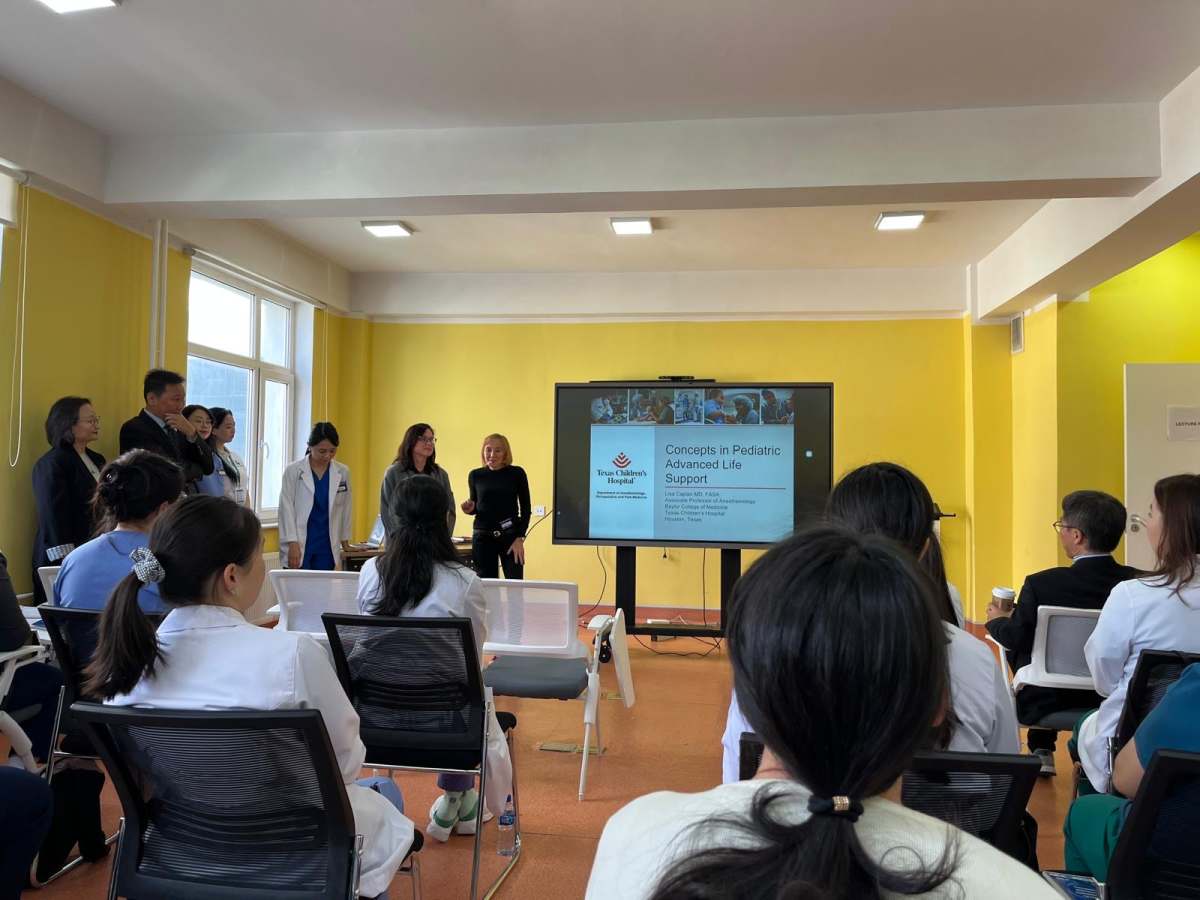


**Pediatric Resuscitation and Simulation Education in Mongolia**
As part of an international medical education initiative at the Mongolian National University of Medical Sciences (MNUMS), I provided pediatric resuscitation education to more than 44 pediatric faculty members and residents over three days. The course focused on strengthening participants’ knowledge of pediatric resuscitation principles, systematic assessment of critically ill children, and evidence-based management of pediatric emergencies using established resuscitation algorithms and clinical checklists. Learners represented a broad range of pediatric subspecialties, including pediatric cardiology, allergy and immunology, hematology, gastroenterology, endocrinology, and intensive care. This multidisciplinary participation created an opportunity to share resuscitation principles across specialties and strengthen the ability of clinicians throughout the department to recognize and respond to pediatric emergencies.
The curriculum incorporated didactic instruction and low-fidelity simulation to translate foundational knowledge into practical clinical skills. Participants reviewed established algorithms for evaluating and managing pediatric shock states and practiced applying these approaches to acute clinical scenarios. The combination of focused teaching, structured algorithms, checklists, and simulation-based practice emphasized systematic assessment, timely recognition of clinical deterioration, and organized crisis resource management. These educational strategies were designed to help learners develop a consistent approach to high-acuity, low-frequency events, reinforce clinical decision-making, and improve their readiness to manage critically ill children within their respective clinical settings.
In addition to the pediatric resuscitation course, I was specifically requested to provide a novice simulation educator course for 22 faculty members and other learners. This request reflected the Department of Pediatrics’ emerging commitment to incorporating simulation-based education into the training of residents and medical students. The session introduced foundational principles of simulation education and supported participants in developing the knowledge and skills needed to begin facilitating simulation-based learning. By providing this additional educator-focused training, the initiative extended beyond direct clinical instruction to support the development of local educational capacity.
The impact of this work therefore extended across two complementary areas: improving pediatric resuscitation knowledge and skills among practicing clinicians and trainees, and developing the foundational expertise needed to expand simulation-based education at MNUMS. In total, I directly taught more than 66 learners through the pediatric resuscitation and novice simulation educator sessions. The diversity of clinical specialties represented in the resuscitation course broadened the potential reach of the educational content, while the educator training offered an opportunity to help local faculty build sustainable teaching capabilities.
This experience reinforced the importance of adapting educational initiatives to local priorities and institutional needs. The request for novice simulation educator training demonstrated a desire within the Department of Pediatrics to establish and expand simulation-based education for future generations of physicians. By combining clinical education with faculty development, this initiative supported both immediate learning needs and longer-term efforts to strengthen pediatric training through simulation. The ultimate goal is to help establish a sustainable educational framework in which locally trained faculty can continue teaching resuscitation principles, facilitate experiential learning, and prepare residents and medical students to recognize and manage pediatric emergencies.

