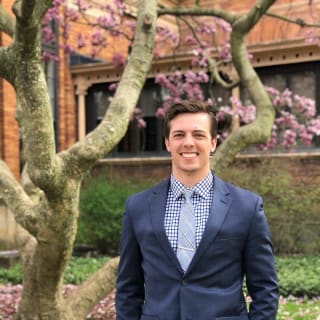
We are travelling to Azua, Dominican Republic, with the Community Empowerment initiative, providing orthopaedic surgical care and long-term follow-up to patients from impoverished, underserved areas. Our volunteer group partners with local nurses, therapists, anesthesiologists, and medical students, providing surgical expertise, sterile supplies, and implants for a high volume of orthopaedic surgeries, and training local providers so our presence builds lasting capacity, not dependency. All services and supplies remain free to patients. We fly into Santo Domingo October 3rd, depart October 10th, and travel to Azua to operate at Hospital Regional de Taiwan.
Now in my second year returning, I understand the surgical workflow, this population's needs, and this environment's sterilization and resource constraints far better than as a first-time volunteer. That lets me shift energy toward surgical execution and mentoring newer members. I have also spent the past year working with industry sponsors to secure more advanced hardware removal sets, addressing our most difficult case type last year: chronically infected implants requiring extraction with limited tools.
Our team includes returning and new members, letting us scale capacity while passing down what we learned. We anticipate removing infected hardware and debriding infection, fixing fractures to prevent deformity and arthritis,, and treating arthritis and stiffness to restore motion and function, alongside splinting, bracing, injections, and education for nonoperative cases.
We have spent the past year with Community Empowerment coordinators identifying which 2025 patients need follow-up care, structuring this trip for that continuity. Visiting with patients we treated last year, and seeing how they've recovered, closes the loop on relationships we began and establishes a more efficient system so that we can continue to impact more and more patients each trip within the 6 day period.
I was born with bilateral congenital foot deformities, so I have always been sympathetic to the everyday struggles of people living with chronic pain or disability. Multiple reconstructive procedures throughout my childhood gave me the function I rely on daily, both as a surgical resident and an active adult — and that early experience is why I committed to becoming a surgeon who could give others the same chance I was given. Throughout my training, I have focused my work in Spanish-speaking free clinics and, now, in my Chicago orthopaedic clinics, on serving Hispanic patients, and this mission trip is a direct extension of that commitment.
The population we serve is centered on rural communities around Azua, one of the poorest regions in the Dominican Republic, where over half of residents live far below the poverty line. We also see patients from Santo Domingo, evaluating them on arrival and transporting any who need surgery to Azua with us. This year, that population includes a growing subset we could not adequately serve last time: motorcycle trauma is rising sharply in the country. In 2025 we evaluated three Santo Domingo patients with significant nerve damage from accidents whose injuries were too severe to treat surgically; we could only offer referrals and physical therapy. We expect more patients with this trauma pattern this year, and hope a more consistent presence will attract more surgical candidates.
Beyond new patients, this year's population includes returning 2025 patients, tracked through the year via our follow-up system with local providers. Many have conditions — untreated fractures, chronic hardware infections, missed deformities — that took years to develop because of barriers that persist today: remote location, months-to-years-long surgical waitlists, out-of-pocket implant costs exceeding a family's annual income, and insurance, financial, and political factors putting surgical care out of reach regardless of medical need.
Last year this trip taught me to operate efficiently and creatively in a low-resource environment, and to build treatment plans around a patient's occupation, living situation, and circumstances rather than a standardized protocol. This year, as a more experienced resident, I can focus on higher-throughput surgical care and mentoring new members, so knowledge compounds trip over trip rather than resetting each year.
The clearest measure of expected impact is continuity of care. We will directly follow up on our surgical outcomes; seeing how patients I operated on a year ago are functioning today — and providing second-stage care some need — is the piece I look forward to most for patient care and as a part of my surgical training. Our impact also compounds: patients treated this year will refer community members to our partners, and the providers we cross-train continue building a self-sustaining system that is Community Empowerment's goal in Azua.
The hardware removal sets we secured through industry sponsorship should improve case efficiency, letting us treat more infected hardware patients per day than the limited tools of 2025 allowed. That efficiency, plus a team that understands the workflow, should let us reach more patients within the same six-day window, and new cases will force us to learn new creative solutions to complicated problems.
Longer-term, the medical Spanish and cross-cultural counseling skills I build by working with local community members and translators are skills I intend to apply on future global health trips and in my everyday practice with Spanish-speaking patients in Chicago. I do not intend for this to be my last year returning to Azua, and each trip strengthens my capability as a surgeon and the durability of the system Community Empowerment is building.
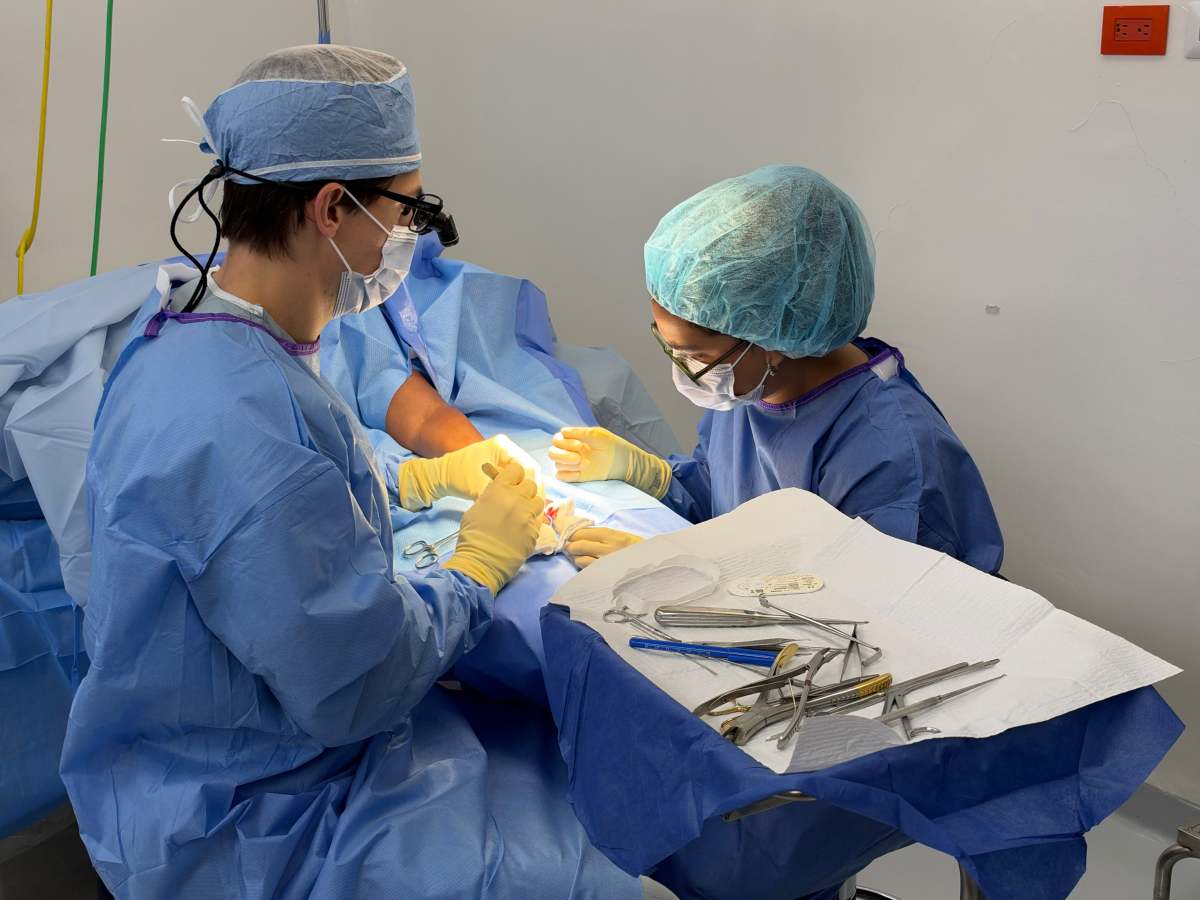
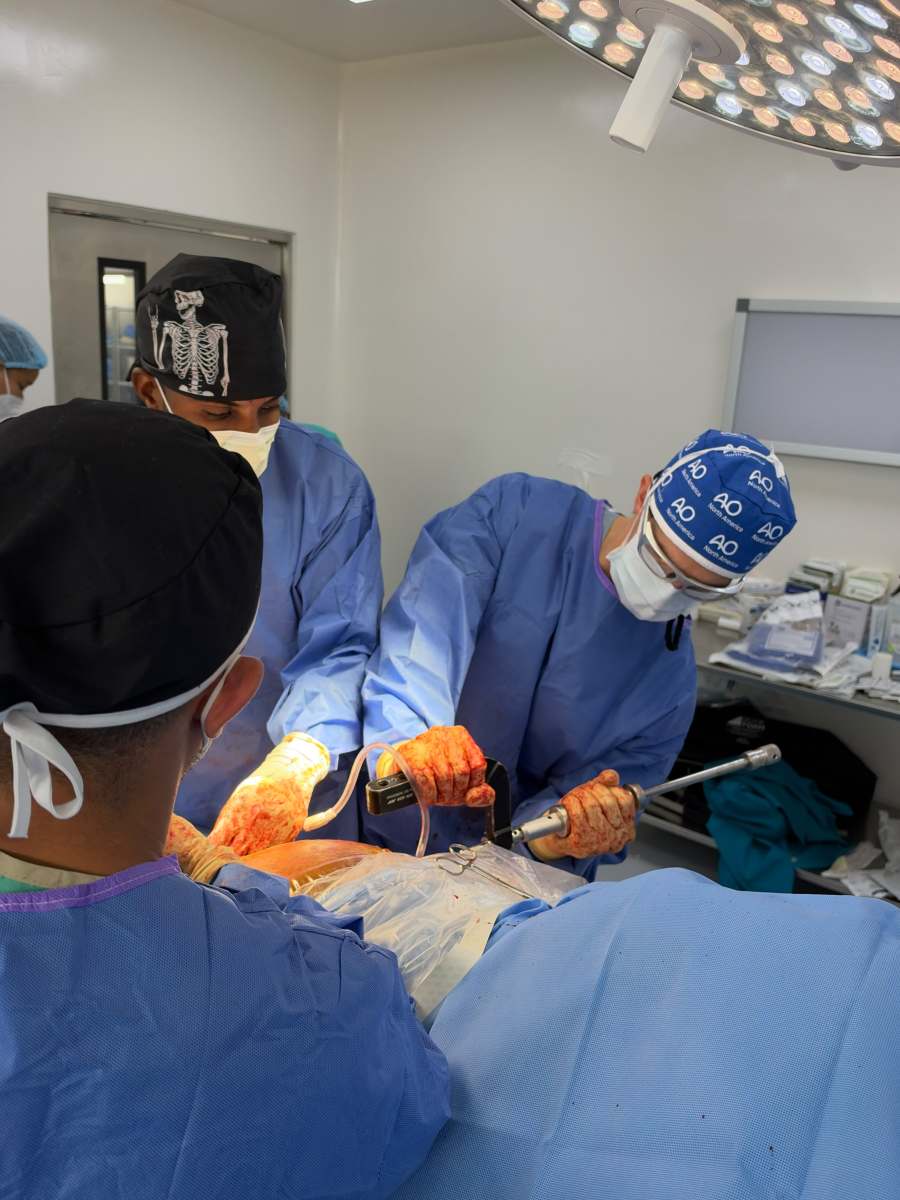
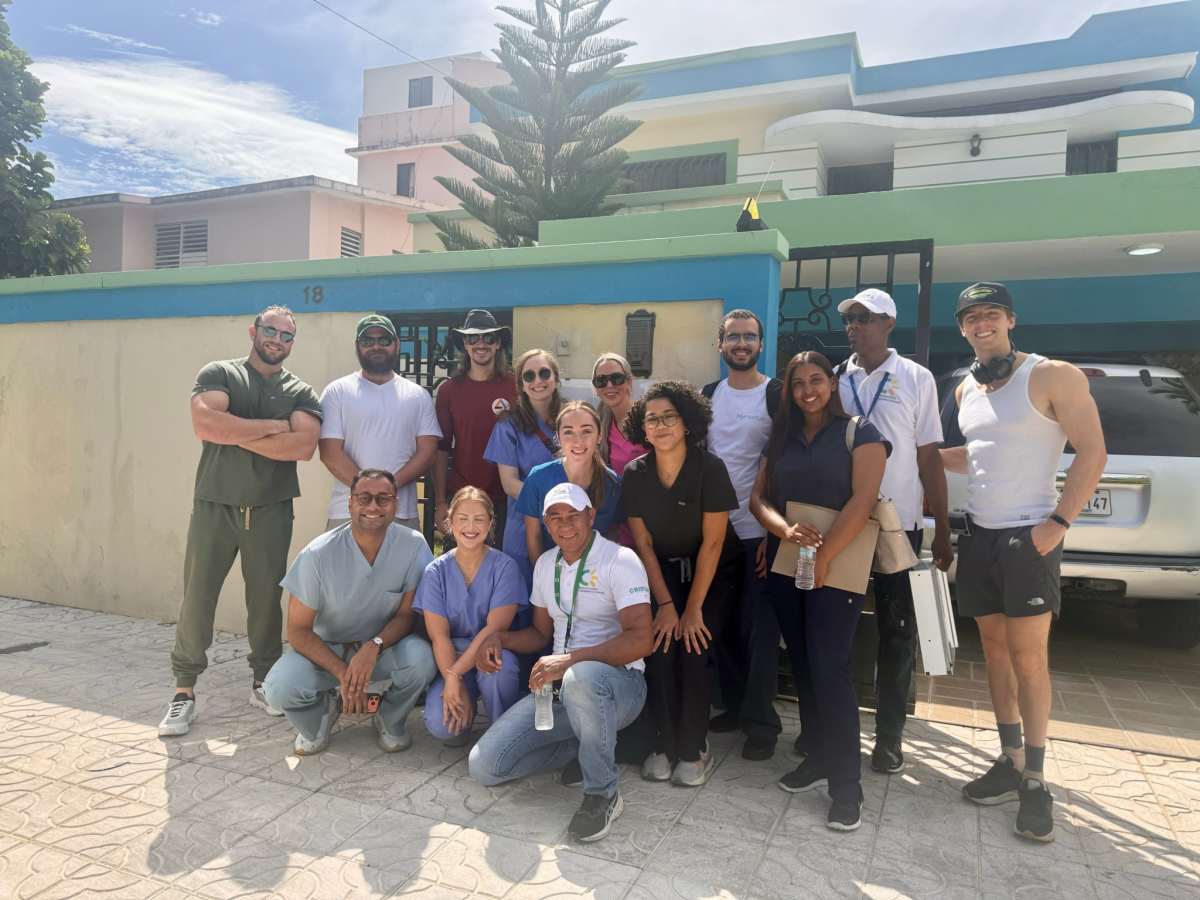
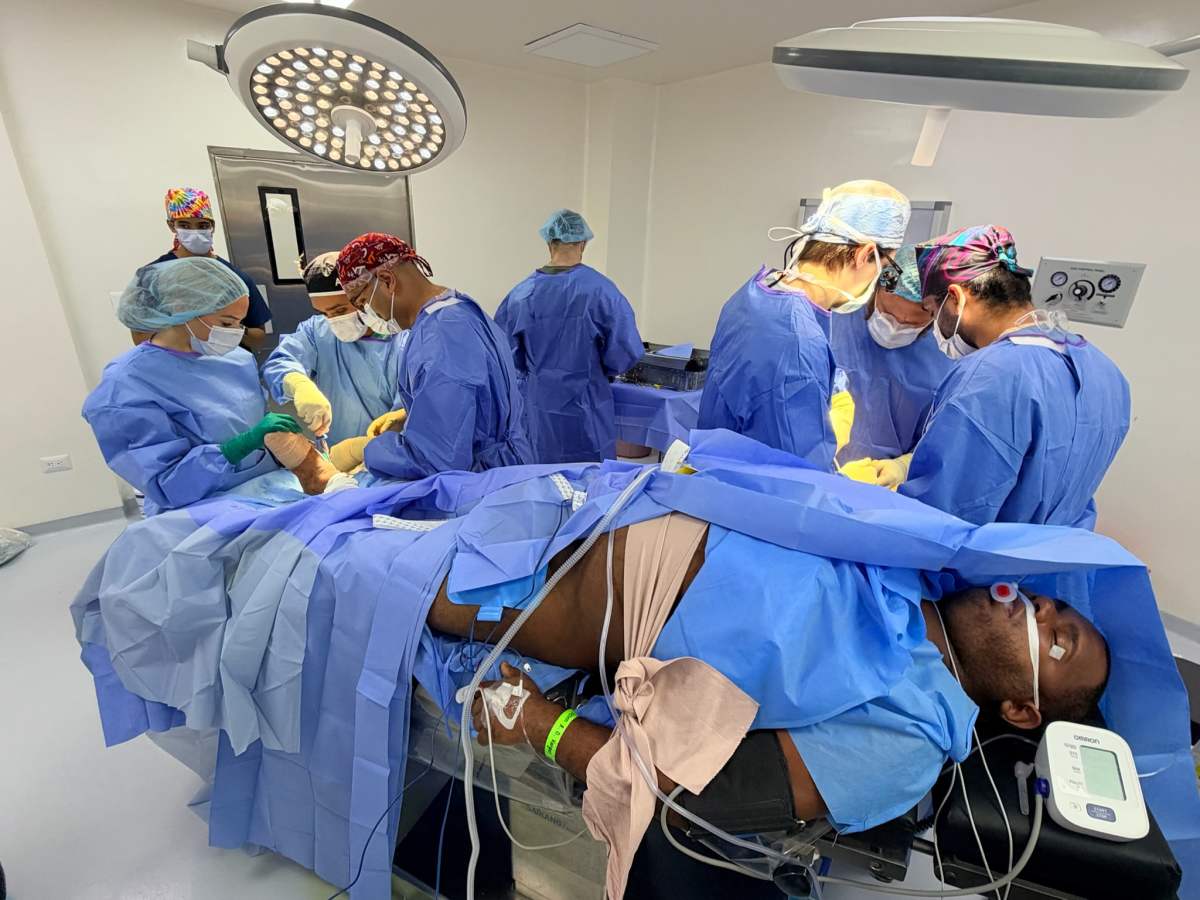
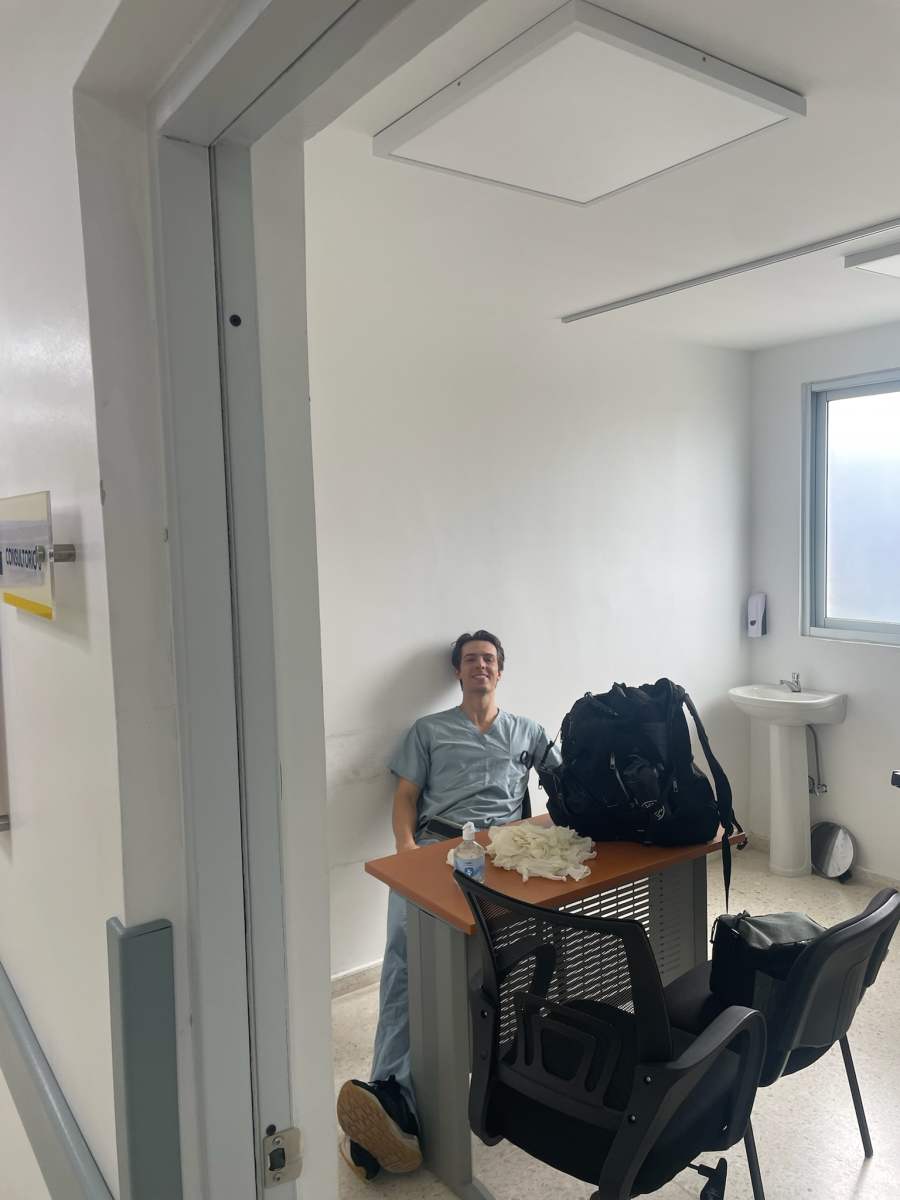
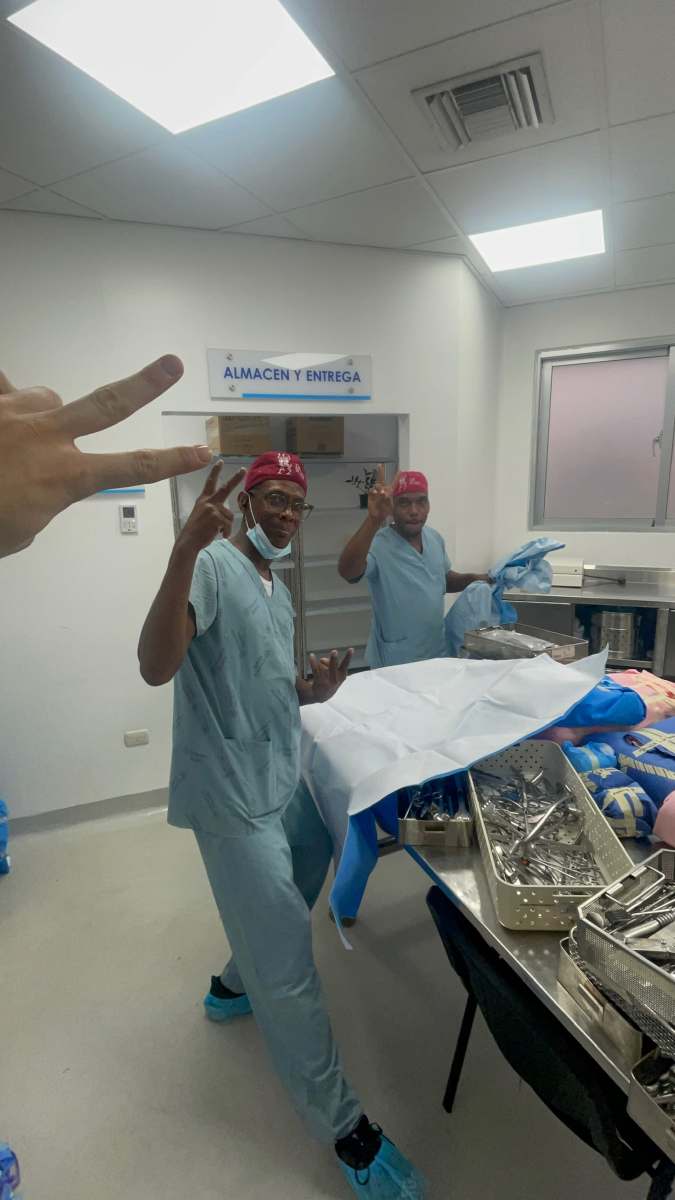
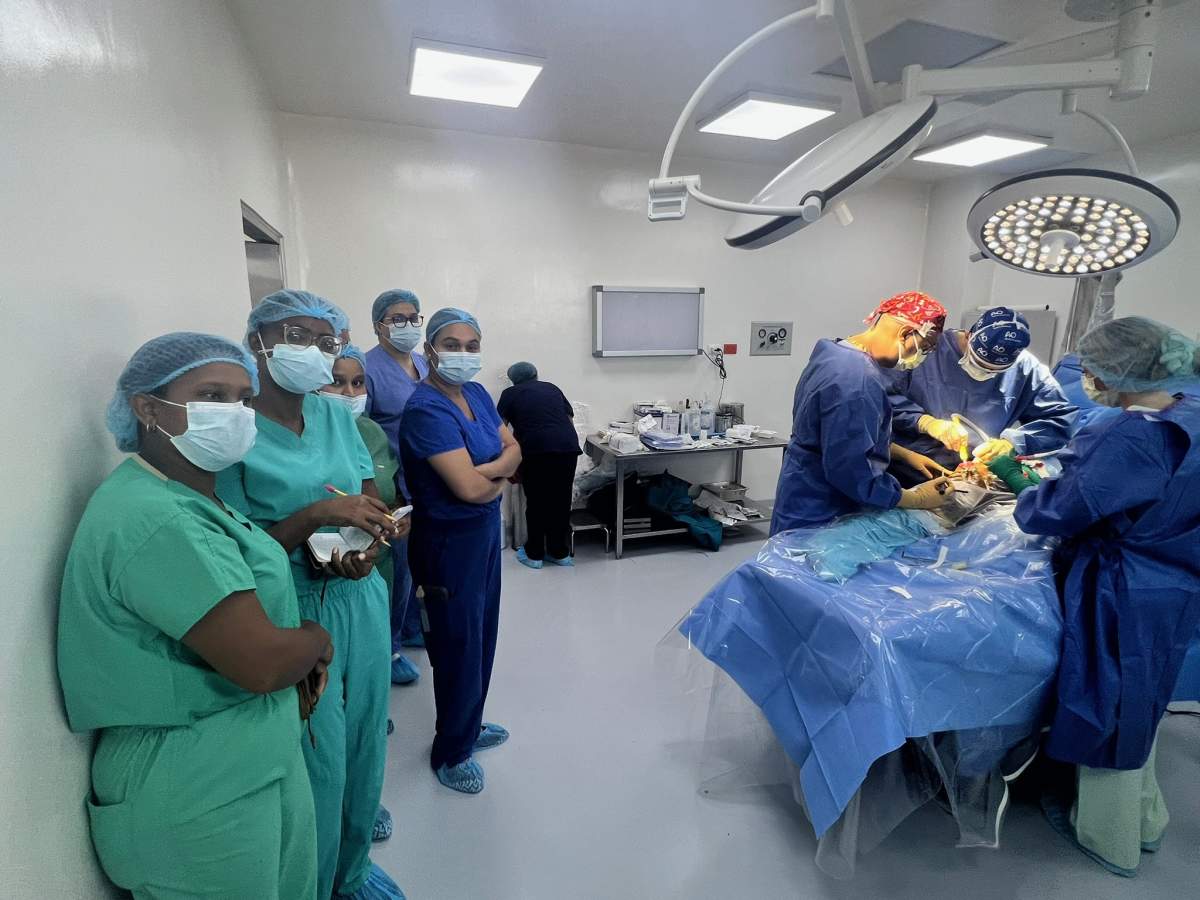
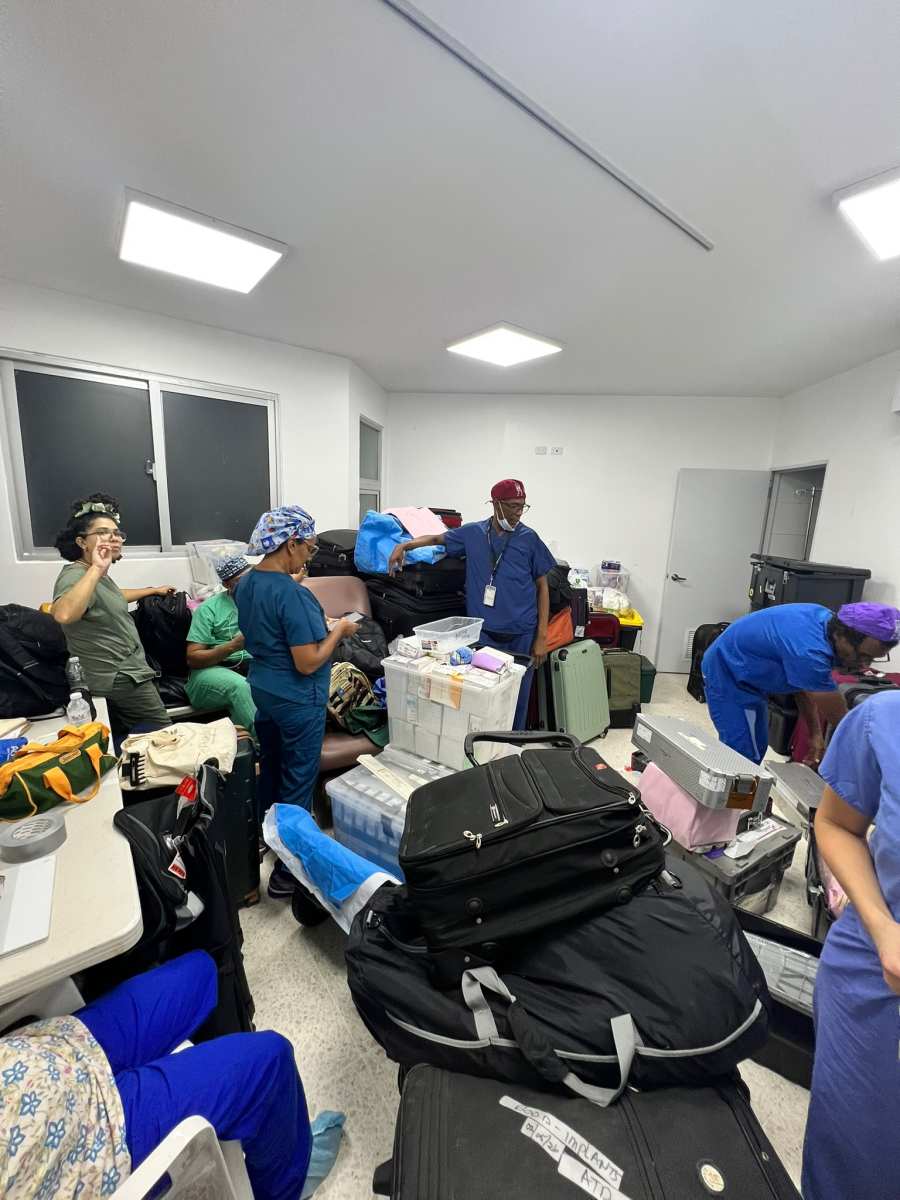


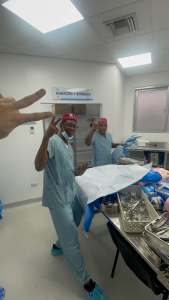
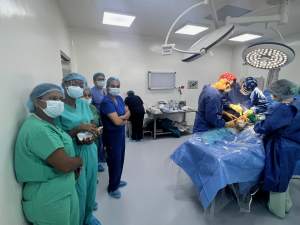
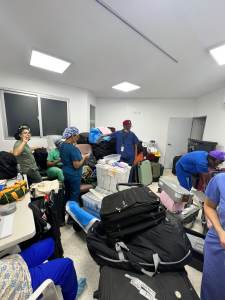
Thank you to the Doximity Foundation for the support that allowed me to return to the Dominican Republic for my second orthopaedic outreach trip. It was again an honor and a training experience I will not forget. Your funding helped us transport donated grafts, implants, and wound care supplies, and many of these surgeries would not have been possible without them.
This year, because of last-minute logistics and hospital renovations, we had to find a new community on short notice. Hospital Nuestra Señora de Regla in Baní welcomed us and gave us an entire surgical wing for the day, with three operating rooms. As the senior-most resident and having my experience from last year’s trip to Azua, I helped systematize our usage of these 3 rooms and led the two other residents and nursing staff through preoperative, intraoperative, and postoperative workflows.
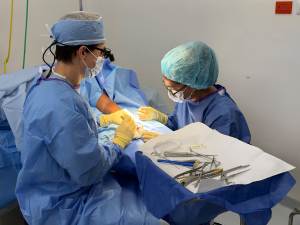
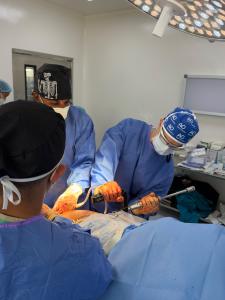
We arrived and saw three patients who needed surgery on Sunday morning, then drove to Bani where we evaluated about 50 more. Over four days we completed 29 surgeries, helping out patients with femoral and tibial shaft fractures, nonuntions, and infections, chronic wrist and ankle fractures and dislocations, elbow ligament injuries, nerve pathologies, and tumors. Several patients had severe extremity wounds that required debridement, ampuations, and washouts to prevent progression of their infection. As a whole, these cases were larger and more morbid than last year’s and required extensive preoperative planning and close coordination with the community hospital and medical device staff to acquire, prepare, and sterilize implants. We also worked beside 2 Dominican orthopaedic surgeons who knew their implant systems extremely well, which was pivotal for fixing these fractures without Fluoroscopy or Xray guidance. I enjoyed discussing each case with him in Spanish and expanding my knowledge of surgical techniques in the absence of certain technologies, which will directly improve my creativity and efficiency in the OR throughout my career. Our attendings also exchanged many pearls of expertise regarding soft tissue management, fracture fixation, and wound care approaches with the local surgeons, as well as the Dominican medical students, residents, and nurses who joined us in the OR. Their presence was vital to us tailoring our care to the needs of their patients.
What stays with me most is how our patients responded. Some had not walked in six months and wanted to walk home on postoperative day one. Others were overjoyed to move their hips, knees, and wrists after months in casts and splints. In the United States, similar patients might stay in the hospital for days on high-dose pain medication. Nearly every patient here wanted to be home with their family within one or two days, and they were grateful for the relief and the second chance.
This trip has made me a more competent surgeon and doctor even in just 6 days. Running multiple rooms with minimal personnel and no imaging sharpened my planning and efficiency. Since returning, I have been more comfortable managing complex lower extremity trauma, and I have applied these principles in cases where I had minimal assistance and had to operate within resource constraints. I plan to return next year, and am excited to see how our team can become even more efficient and expand our impact for the patients of whichever community we are welcomed into. Thank you again to the Doximity Foundation for the support, and to my residency faculty for allowing me to take part.

