
It is time for our annual medical mission trip to Ghana. Our team will provide free general medical screenings, along with specialized general, plastic, and ophthalmological surgeries to underserved communities. Additionally, several team members will provide critical training to local healthcare professionals. By delivering these essential medical services and educational programs, we aim to significantly improve health outcomes and quality of life in these deprived areas.
This project will directly benefit impoverished, rural patients in Ghana requiring specialized medical and surgical care, alongside the local healthcare professionals who will receive advanced clinical training. This population is specifically targeted because geographic isolation and financial barriers completely cut them off from specialized medical subspecialties, leaving them vulnerable to preventable blindness and untreated physical disabilities.
The mission trip creates an immediate, life-changing ripple effect across our host communities in Ghana:
Life-Altering Interventions: Specialized plastic and eye surgeries will restore physical function, repair deformities, and return sight to individuals who otherwise have no access to surgical care.
Proactive Community Health: Mass screenings will identify and address undiagnosed chronic conditions like diabetes and hypertension before they become life-threatening.
Economic Renewal: Restoring health allows breadwinners to return to work and children to return to school, breaking local cycles of medical poverty.
Carrying Learnings Forward
We design our mission around long-term sustainability rather than temporary relief:
Upskilling Local Staff: Hands-on clinical training sessions give local doctors and nurses the knowledge to handle complex cases independently.
Continuous Care Infrastructure: By collaborating with local clinics, we ensure patients receive proper post-operative follow-up and management long after we leave.
Enriched Home Practice: Our team members return with a deeper understanding of resource-conscious medicine, cultural humility, and clinical problem-solving that improves patient care back home.
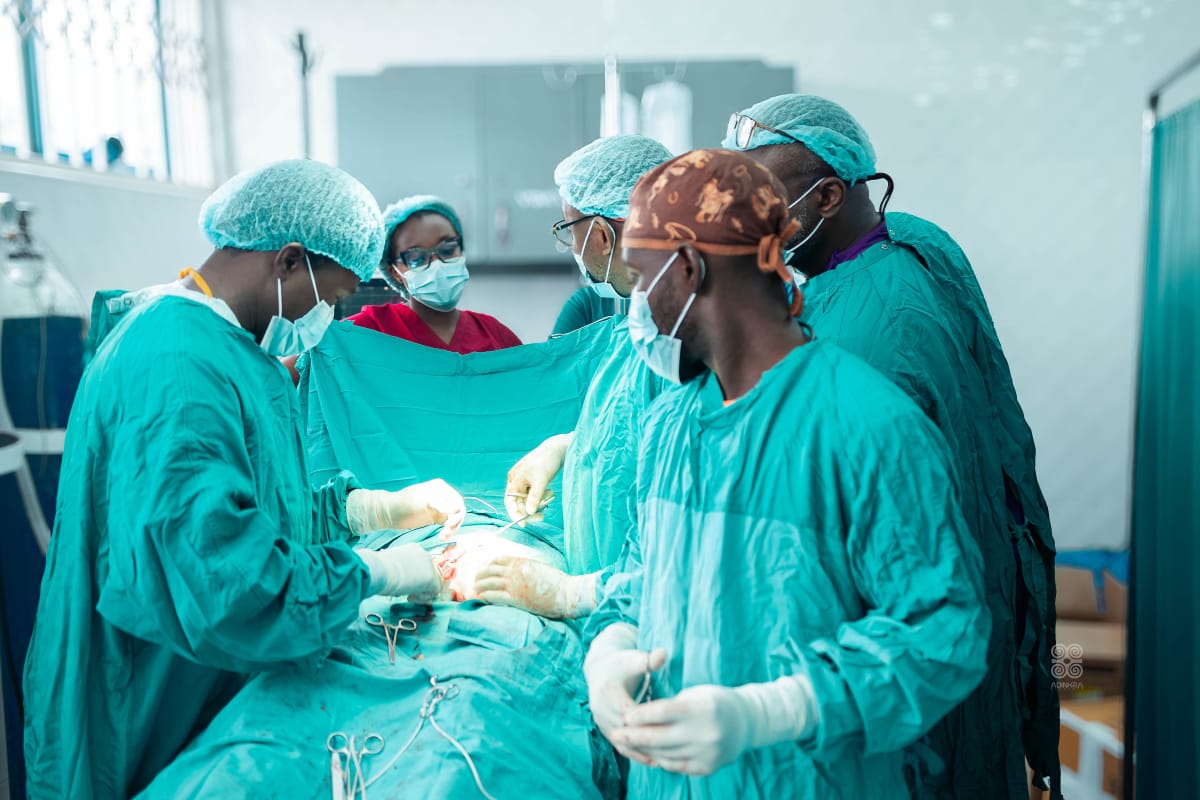


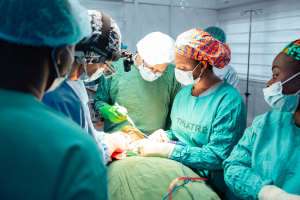
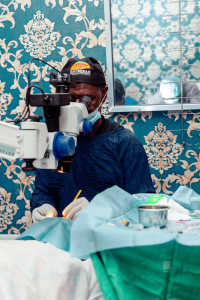
Behind the data logs, surgical rosters, and clinical metrics of the USTA Ghana Medical Missions 2026 trip are the profound, life-altering stories of the individuals who walked through our clinic gates. From September 21st to October 2nd, 2026, across four Ghana Adventist Health Services healthcare locations in Ghana, our team encountered families whose futures were restricted by treatable illnesses, physical pain, and a severe lack of healthcare access. By reviewing the human impact within each individual clinical hub, we can see exactly who these people are and how their lives have been fundamentally transformed.
I. The Ophthalmic Camps: Stepping Out of the Shadows of Cataracts
At Nagel SDA Hospital and WES Eye Services, the atmosphere was thick with quiet anticipation. Cataracts are the leading cause of blindness in Ghana, casting thousands of primary breadwinners and grandparents into total economic and physical dependency. The individuals impacted here were not just patients; they were individuals who had completely lost their personal autonomy.
Consider an elderly grandmother from a rural farming village outside Takoradi who had not seen her grandchildren’s faces in nearly five years. Forced to rely entirely on family members to guide her every step, her world had shrunk to the borders of a single room. When her bandages were carefully snipped and rolled away the morning after her free surgery, the instant registration of light, followed by her sudden realization that she could look directly into her daughter's eyes, shattered years of isolation.
Among the 2,341 individuals screened and 328 cataract surgeries completed were farmers who can now return to their fields to sustain their households, and community elders who have regained their dignity. For the 293 people who received a simple pair of prescription reading glasses, the world snapped back into clear focus, allowing tailors to thread needles again, artisans to resume their crafts, and children to read their schoolbooks without debilitating eye strain.
II. General Surgery: Breaking the Chains of Chronic Hernias
In the general surgery wings of Nagel, Asamang, and Techiman SDA Hospitals, the team encountered men and children carrying the visible, exhausting weight of advanced abdominal hernias and hydroceles. In rural agricultural communities, physical labor is survival. An unresolved inguinal hernia does not just cause discomfort; it destroys a family’s primary source of income.
The individuals impacted by the 509 combined hernia and hydrocele repairs were primarily working-class men who had been pushing through agonizing pain for years. Many had avoided surgical consultation because the cost of a single operation exceeded their entire annual household savings. They lived under the constant, terrifying threat of hernia strangulation—a fatal medical emergency in remote areas lacking surgical infrastructure.
One young father, who had been unable to lift his toddler or work his farm due to a massive, complex hernia, walked out of the Techiman facility cleanly repaired. The physical fix also relieved a heavy psychological burden; he was no longer an invalid in his own home. For the 144 individuals who had painful or disfiguring lipomas and tumors excised, the treatment restored their physical comfort and erased the heavy social stigma that often accompanies visible physical deformities.
III. Plastic and Reconstructive Surgery: Restoring Hope and Dignity
At Asamang SDA Hospital, the plastic surgery suite led by Dr. Anil Punjabi treated individuals dealing with severe trauma, congenital anomalies, or the restricting scars of past injuries. Reconstructive surgery in a mission environment is profoundly life-changing, altering a patient's entire social trajectory.
The 72 children and adults who underwent complex plastic reconstructions included young burn survivors whose skin had contracted as it healed, locking their fingers, elbows, or necks into restrictive, unyielding positions. Without intervention, these children were facing a lifetime of severe physical limitation and social isolation.
By meticulously releasing those restrictive burn scars and performing precise skin grafts, our surgical teams literally unbound their limbs. The impact here is measured in a child's newfound ability to raise their arm, hold a pencil, play with friends, and look forward to a future free from societal exclusion.
IV. Obstetrics and Gynecology: Silent Suffering Alleviated
The women who sought care at the OB/GYN clinics at Nagel, Asamang, and Techiman SDA Hospitals represent a population that frequently suffers in absolute silence. Conditions like symptomatic uterine fibroids are widespread, causing chronic pelvic pain, severe anemia from heavy bleeding, and reproductive challenges.
The 127 women who received life-saving myomectomies and hysterectomies were often exhausted mothers and wives who had spent years managing severe pain while trying to maintain their households and jobs. For many, these growing fibroids caused visible abdominal swelling, leading to cruel community misconceptions and severe psychological distress.
By removing these large masses, our surgical teams did not just resolve their chronic physical pain and anemia; they returned these women to their families healthy, vibrant, and fully capable of living without the constant drain of an unmanaged, painful condition.
V. Dental Clinics: Eradicating Chronic Pain
Dental health is frequently overlooked in global outreach, yet dental infections are a major source of systemic illness and relentless daily pain. At Nagel and Asamang, approximately 500 patients crowded the dental clinics.
The 90% of patients who received extractions, scaling, and fillings included school-aged children unable to concentrate in class due to abscessed teeth, and working adults unable to sleep or eat properly. By clearing deep-seated oral decay and restoring dental function, the team eliminated chronic, distracting pain for hundreds of people in a matter of days, giving them back their smiles and their quality of life.
VI. Medical Outreach: Uncovering the Silent Killers
At the bustling Mall Park in Takoradi, the impact shifted toward preventative care and public health screening. Hypertension and diabetes are often called 'silent killers' because they quietly damage blood vessels, kidneys, and hearts long before a patient feels visibly sick.
Among the 2,089 individuals screened, our team identified hundreds of citizens walking around with critically high blood pressures and dangerously elevated blood glucose levels. Many had no idea they were on the verge of a catastrophic stroke or diabetic coma.
By identifying these high-risk individuals in the open market, counseling them on lifestyle modifications, and providing immediate baseline medications, we did not just treat symptoms—we directly intercepted life-ending cardiovascular emergencies. The families of these individuals were spared the sudden, devastating loss of a parent or grandparent.
VII. Healthcare Professional Training: Empowering the Local Care System
The impact of our trip extended far beyond the patients we treated directly; it was systematically embedded into the future of the local healthcare workforce. At the Techiman VVU Campus, Dr. Bogdan Dumitru led intensive Basic Life Support (BLS) training.
The 80 local healthcare professionals and nursing students who earned their certifications are now equipped with the precise, high-stakes muscle memory required to resuscitate a patient in cardiac arrest. This means the next time a mother stops breathing in an emergency room or a trauma victim loses a pulse, these trained local practitioners will know exactly how to step in and save a life. This sustainable education protects the community long after our international delegation flies home.
VIII. Community & Spiritual Healing: Restoring the Whole Person
A medical mission must treat the whole person, recognizing that physical suffering is deeply tied to emotional and spiritual well-being. Through our partnership with Hope TV Channel Ghana, the nightly 'The Untold Truth' Bible lecture series provided a space for communal reflection, comfort, and peace after long days of physical treatments.
The 50 individuals who chose to be baptized at the end of the 10-day campaign experienced a profound sense of spiritual rebirth and community connection. For these individuals, the trip was a holistic transformation—their blind eyes were opened, their broken bodies were mended, and their spirits were anchored in a supportive community of faith.
IX. Summary Impact Matrix
Clinical Department Lives Impacted Direct Human Outcome
Ophthalmic & Optometry 2,341 Screened / 328 Surgeries Reversal of blindness; restoration of economic autonomy for families.
General & Hydrocele Surgery 509 Repairs Completed Eradication of chronic pain; safe return to vital physical agricultural labor.
Plastic & Reconstructive 72 Complex Cases Release of restrictive burn scars; elimination of lifelong social stigmas.
Obstetrics & Gynecology 127 Major Surgeries Relief from severe chronic pelvic pain and debilitating anemia.
Dental Services ~500 Screened / 90% Treated Instant eradication of severe oral pain and systemic abscess risks.
Medical Outreaches 2,089 Screened Early diagnosis and clinical management of life-threatening hypertension.
Professional Training ~80 Local Providers Broad-scale enhancement of emergency resuscitation capabilities in the region.
Spiritual Campaign 50 Baptisms Deep emotional restoration and integration into supportive faith networks.
In total, over 6,500 individual lives were directly touched by this collaborative effort. The true impact of the 2026 trip cannot be contained within an internal logbook; it lives on in the restored sight of a grandmother, the unlocked hands of a child, and the strength of a father working his fields.

