My commitment to global health began during college while volunteering at the Indo-American Eye Camp in India, where I witnessed patients waiting for hours—sometimes after traveling from distant villages—for access to care they had been unable to obtain for years. Seeing how something as fundamental as an eye examination, diagnosis, or treatment could restore a person's independence and ability to work profoundly changed my understanding of medicine. More importantly, I realized that global health is not simply about volunteering abroad—it is about partnering with communities to expand access to care in ways that are sustainable and respectful of local expertise.
As an orthopedic surgery resident at the University of Illinois Chicago, I will participate in our residency's longstanding annual surgical service trip to the Dominican Republic in partnership with Rush University's Office of Global Health and Community Empowerment. Rather than providing episodic care, this program has established enduring relationships with communities in Azua and San Juan. Local primary care partners identify and refer patients, U.S. volunteers work alongside Dominican surgeons, anesthesiologists, and medical students, and patients continue to receive follow-up care from local providers after the team returns home.
During medical school, I founded a Detroit chapter of Blueprints for Pangaea, a non-profit focused on creating systems to redirect surplus medical supplies from U.S. hospitals to underserved healthcare systems abroad. This trip represents the next step in that journey—from improving access through logistics to contributing directly to patient care while learning how sustainable global surgical partnerships are built. By helping restore mobility for patients while learning from local physicians, I hope to contribute to a program that creates lasting impact beyond a single week of service.
This project serves patients in the Dominican Republic who have limited access to specialty surgical care, particularly those living in and around the communities of Peralta, Azua, and San Juan de la Maguana. Many patients are referred by local primary care providers after facing significant geographic, financial, and healthcare barriers to obtaining operative treatment. The volunteer team works within under-resourced hospitals alongside Dominican physicians, ensuring that care is integrated into existing healthcare systems rather than delivered independently.
As an orthopedic surgery resident, I recognize that untreated musculoskeletal conditions often have consequences extending far beyond pain. Loss of mobility can prevent individuals from working, supporting their families, attending school, or participating fully in their communities. Restoring function through orthopedic care has profound downstream effects on independence, economic stability, and quality of life.
This population is especially meaningful because the program emphasizes partnership rather than short-term service. Local physicians identify appropriate patients, collaborate in their care, and provide ongoing follow-up after the volunteer team departs. That continuity makes the project both ethically responsible and sustainable while providing invaluable opportunities for mutual learning between U.S. and Dominican healthcare professionals.
The immediate impact of this project will be restoring function and improving quality of life for patients who otherwise have limited access to orthopedic surgical care. Equally important, the program strengthens long-term partnerships between Community Empowerment, Rush University, local healthcare providers, and participating residency programs, allowing each year's work to build upon the relationships established by previous teams rather than starting anew.
Personally, I expect this experience to shape the way I practice orthopedic surgery throughout my career. Working in resource-limited environments demands thoughtful decision-making, efficient use of available resources, adaptability, and close collaboration with local clinicians. These lessons will improve my ability to care for patients in any setting while reinforcing the importance of humility and partnership in global health.
The experience also carries special significance because of the longstanding tradition of UIC orthopedic residents participating in this trip. Continuing that tradition strengthens camaraderie within our residency and fosters a shared commitment to service that extends across resident classes. Those relationships, forged while caring for patients together outside of our usual clinical environment, ultimately make us stronger teammates and better physicians.
As I pursue a career in academic orthopedic surgery, I hope to continue participating in sustainable global surgery initiatives, mentor future trainees interested in global health, and build on the systems-based perspective that first inspired me through the Indo-American Eye Camp in India and later through founding Blueprints for Pangaea. This experience represents another step toward a lifelong commitment to expanding access to high-quality surgical care through enduring partnerships rather than one-time missions.
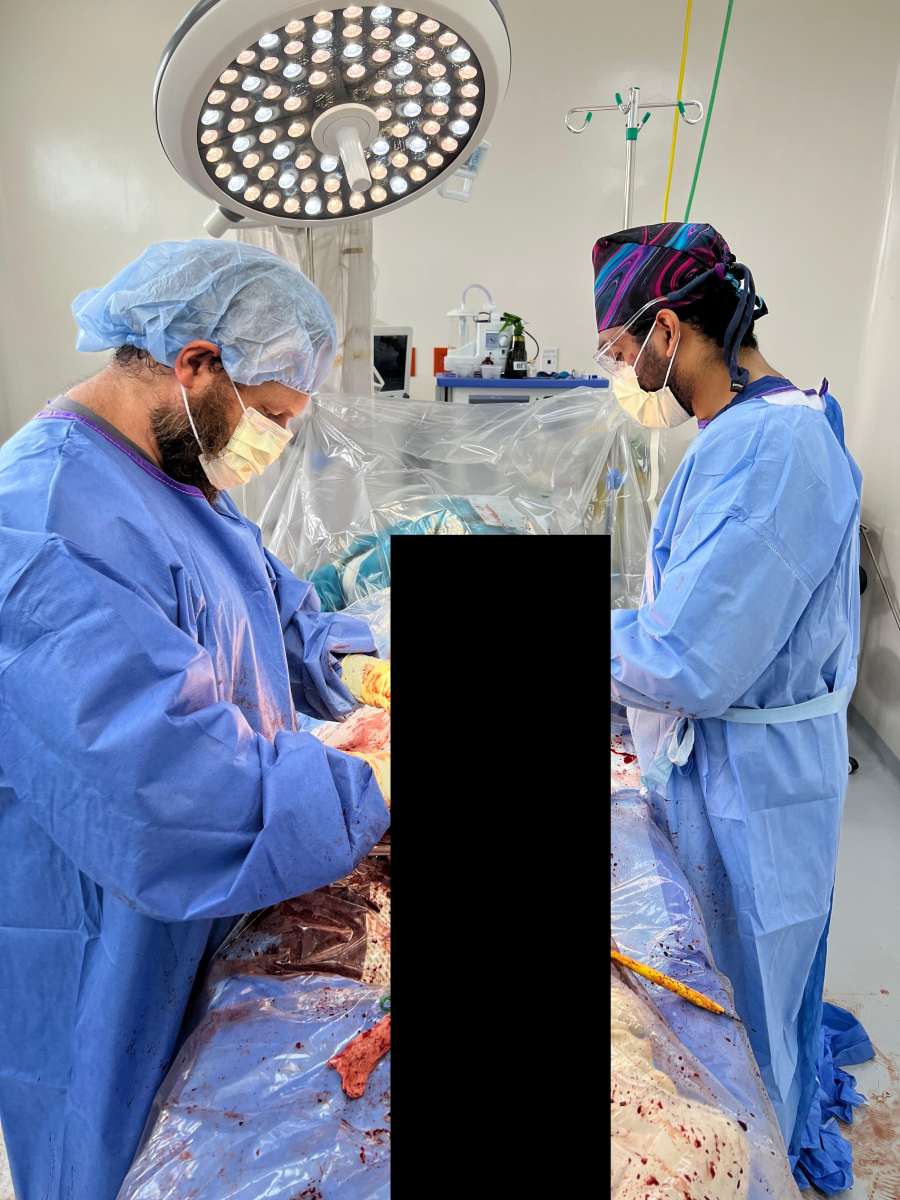

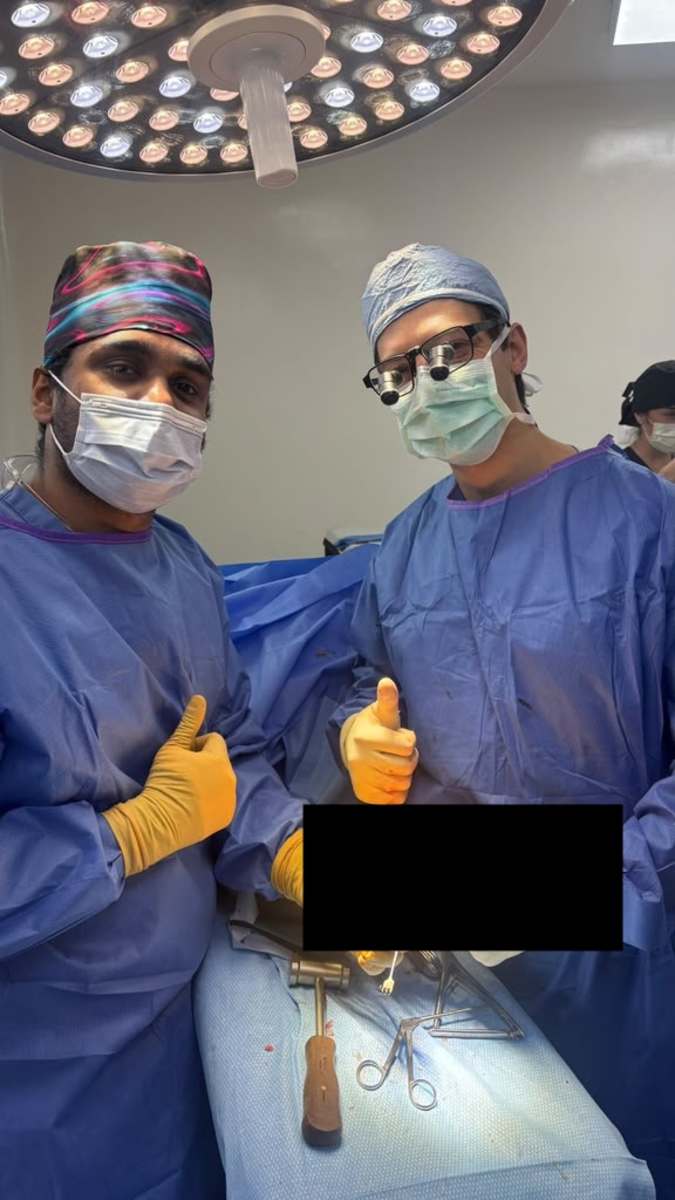
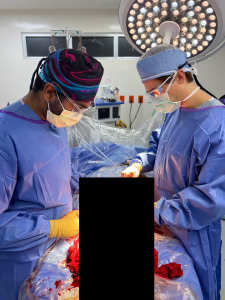

My orthopedic surgical mission trip to Azua, Dominican Republic, through Community Empowerment was one of the most meaningful experiences of my medical training. While the primary purpose of our trip was to provide surgical care to patients with limited access to orthopedic services, its impact extended far beyond the operating room. Over the course of our mission, our multidisciplinary team performed nearly 30 orthopedic surgeries, treating patients with a wide range of musculoskeletal conditions, including subacute long-bone fractures requiring fixation, orthopedic infections, and acute deformities. However, the true significance of the experience cannot be measured solely by the number of procedures performed. The trip impacted our patients, their families, the local healthcare professionals and medical students with whom we worked, and every member of our visiting surgical team. It also profoundly changed my own understanding of what it means to be a surgeon, a teammate, and a physician committed to serving others.
**The Patients and Families We Served**
The most immediate and tangible impact of our mission was on the patients who received orthopedic care that might otherwise have been delayed, financially inaccessible, or unavailable altogether. In the United States, we often take for granted the infrastructure that supports modern orthopedic surgery: timely access to specialists, advanced imaging, readily available implants, sterile instrumentation, trained operating room personnel, and established postoperative rehabilitation pathways. In Azua, I gained a deeper appreciation for how the absence of even one of these resources can profoundly affect a patient's treatment options and long-term quality of life.
Many of the patients we treated had been living with musculoskeletal conditions that interfered with their ability to work, walk comfortably, care for their families, or perform ordinary activities of daily living. Some presented with subacute long-bone fractures that required surgical stabilization after a period of delayed or limited treatment. Others required management of orthopedic infections, where timely intervention is particularly important to prevent progressive tissue destruction, chronic disability, and potentially limb-threatening complications. We also treated patients with deformities that affected their function and mobility.
For these individuals, orthopedic surgery represented far more than the correction of an anatomical problem. Restoring stability to a fractured bone could create an opportunity to regain mobility, return to employment, and resume responsibilities within the family. Treating an infection could help interrupt a debilitating process that might otherwise continue to compromise health and function. Addressing a deformity could offer the possibility of improved comfort, independence, and participation in everyday life. Although the ultimate outcomes of these procedures will depend on healing, rehabilitation, and continued follow-up, the opportunity to receive appropriate surgical treatment was itself an important step toward recovery.
I was particularly struck by the relationship between physical disability and economic vulnerability. For patients whose livelihoods depend on manual labor, mobility, or physical endurance, an orthopedic injury can have consequences extending far beyond pain or loss of function. An inability to work may affect an entire household, particularly when financial resources are already limited. Similarly, when a patient is unable to walk independently or perform basic activities, family members may need to assume caregiving responsibilities, potentially affecting their own employment and daily lives.
This reinforced an important lesson: **when we treat one patient, we often influence the well-being of an entire family.** A successful orthopedic intervention has the potential to restore not only physical function but also independence, dignity, financial stability, and a sense of possibility. The patients we treated were not simply a collection of diagnoses or operative cases. They were individuals with families, responsibilities, aspirations, and lives that had been disrupted by conditions for which access to treatment was limited.
The experience also deepened my appreciation for the trust patients place in their surgical teams. Receiving an operation is a significant decision under any circumstances, but it carries additional complexity when care is delivered by a visiting team working within an unfamiliar healthcare system. Our patients entrusted us with their health and their hopes for improved function. That trust created a profound sense of responsibility to approach every operation thoughtfully, communicate respectfully, and remain mindful of the broader circumstances surrounding each patient's care.
**The Local Hospital Staff and Healthcare Community**
Another group deeply impacted by the trip was the local hospital staff in Azua, although I believe the exchange was equally transformative for our visiting team. One of the most rewarding aspects of the experience was working alongside local healthcare professionals whose knowledge, resourcefulness, and commitment made our mission possible.
As visiting surgeons and healthcare providers, we brought specialized orthopedic expertise, equipment, and additional operative capacity. However, the local staff brought something equally essential: an intimate understanding of their hospital, their patients, their community, and the practical realities of delivering care within their healthcare system. Our ability to provide effective treatment depended on combining these strengths.
Throughout the trip, we collaborated with local personnel to coordinate operating room schedules, prepare patients, organize instruments, address equipment limitations, and manage the numerous logistical challenges associated with delivering surgical care in a resource-constrained environment. These interactions created opportunities for mutual learning and professional connection. We learned to adapt our familiar workflows to a different clinical setting, while sharing surgical techniques, organizational approaches, and perspectives from our own training.
What began as a professional collaboration quickly developed into genuine personal relationships. Working together through demanding operating days, unexpected challenges, and moments of shared accomplishment fostered a sense of camaraderie that transcended differences in language, background, and healthcare systems. I found these relationships particularly meaningful because they demonstrated how much can be accomplished when individuals with different experiences come together around a common purpose.
The local hospital staff were not simply supporting our mission; they were indispensable partners in its success. Their dedication reinforced that sustainable global health efforts should be grounded in collaboration, mutual respect, and recognition of local expertise rather than a one-directional model of assistance.
I hope our visit provided meaningful support to the hospital's ongoing work, just as our local colleagues provided us with invaluable lessons in adaptability, resourcefulness, and patient-centered care. The relationships we developed also highlighted the potential for future partnerships that extend beyond an individual mission trip.
**The Medical Students and Future Healthcare Providers**
One of the most personally fulfilling aspects of the trip was the opportunity to engage with and help teach local medical students. As an orthopedic surgery resident, education is an integral part of my own professional development, and I have benefited enormously from attending surgeons, senior residents, and mentors who have invested their time in my training. Being able to participate in that same process in a different country was especially meaningful.
Our interactions with medical students created opportunities to discuss orthopedic anatomy, fracture management, surgical indications, operative techniques, and the clinical reasoning underlying treatment decisions. Beyond the technical aspects of surgery, we were able to demonstrate how a multidisciplinary team approaches patient care, prepares for operations, responds to unexpected challenges, and prioritizes patient safety.
I believe these experiences can be valuable for students who may have limited opportunities for direct exposure to orthopedic surgery. Observing and participating in a busy surgical environment can help connect classroom knowledge with clinical practice, while also offering insight into the responsibilities and decision-making processes of surgeons.
At the same time, I was reminded that teaching is not simply the transfer of information from someone with more experience to someone with less. Effective teaching requires listening, understanding the learner's perspective, and adapting explanations to the circumstances in which that learner practices. Working with students in Azua challenged me to communicate concepts clearly, focus on fundamental principles, and recognize that techniques commonly used in well-resourced hospitals may not always be feasible elsewhere.
The experience also reinforced the importance of investing in the next generation of healthcare professionals. While our team could provide a finite number of operations during our visit, sharing knowledge and encouraging students has the potential to contribute to patient care long after our departure. Even a brief educational interaction can stimulate curiosity, build confidence, or strengthen a student's interest in a particular field.
I cannot know the long-term influence of these interactions, but I hope they contributed positively to the students' education and professional development. Their enthusiasm and willingness to learn certainly left a lasting impression on me.

