While in Vietnam, I plan to participate in the Vietnamese Society of Emergency Medicine (VSEM) Conference as both a lecturer and workshop instructor, teaching critical vascular access skills including ultrasound-guided peripheral intravenous access, central venous catheter placement, and intraosseous catheter placement, along with other emergency medicine topics through hands-on simulation and case-based discussions. I will also have the opportunity to engage with Vietnamese medical students, sharing practical skills and clinical knowledge while learning from their experiences and perspectives. During the second week, I will observe emergency departments at several hospitals throughout Vietnam, working alongside local physicians and residents to better understand how emergency care is delivered across different clinical environments. I am particularly interested in learning how clinicians adapt to resource limitations, manage common emergency conditions, and structure emergency medicine residency training. I hope to share practical, evidence-based approaches from my own training while gaining new perspectives and strategies that I can bring back to my residency program and incorporate into my future career as an emergency medicine physician. Most importantly, I hope to build meaningful professional relationships that can support future collaboration and contribute to the continued development of emergency medicine education and practice in Vietnam.
The primary beneficiaries of my role as a workshop instructor and lecturer will be Vietnamese medical students, emergency medicine residents, and early-career physicians participating in the VSEM Conference and educational sessions at Bach Mai Hospital, Cho Ray Hospital, and University Medical Center. Through hands-on instruction in ultrasound-guided vascular access, critical emergency procedures, simulation-based training, and case-based discussions, these learners will strengthen their clinical skills, evidence-based decision-making, teamwork, and communication in high-acuity situations. By sharing practical skills and educational approaches from my emergency medicine training, I hope to increase learners’ confidence, enhance their clinical education, and contribute to the development of the next generation of emergency medicine providers in Vietnam. The impact of this project will extend beyond the individual participants, as these trainees continue their education and careers and share the knowledge and skills gained with colleagues and future learners, creating a multiplier effect that strengthens emergency medicine education and patient care. Indirectly, patients will benefit from providers who are better equipped to perform critical procedures, make timely clinical decisions, and deliver high-quality emergency care. I chose this population because emergency medicine is a rapidly expanding specialty in Vietnam, and investing in the education of its future workforce offers a sustainable opportunity to strengthen emergency care capacity while fostering lasting international collaboration and the exchange of best practices between physicians in Vietnam and the United States.
The expected impact is a meaningful exchange of knowledge that benefits both Vietnamese trainees and my own professional development. Through teaching, collaboration, and observation, I hope to strengthen emergency medicine education while gaining new perspectives on delivering high-quality care in diverse healthcare systems. After returning, I will incorporate these lessons into my clinical practice and teaching by sharing insights with colleagues, promoting evidence-based and resource-conscious care, and applying innovative educational strategies. This experience will also reinforce my long-term commitment to global emergency medicine, fostering ongoing international collaborations and equipping me with the teaching skills, cultural humility, and global perspective needed to provide compassionate, high-quality patient care while educating future emergency physicians.
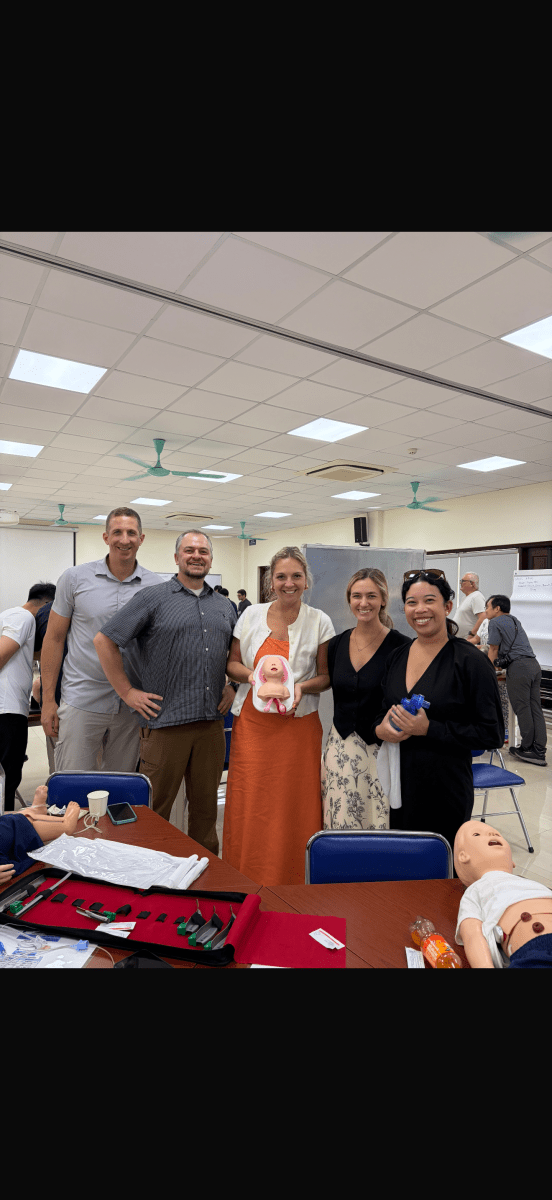
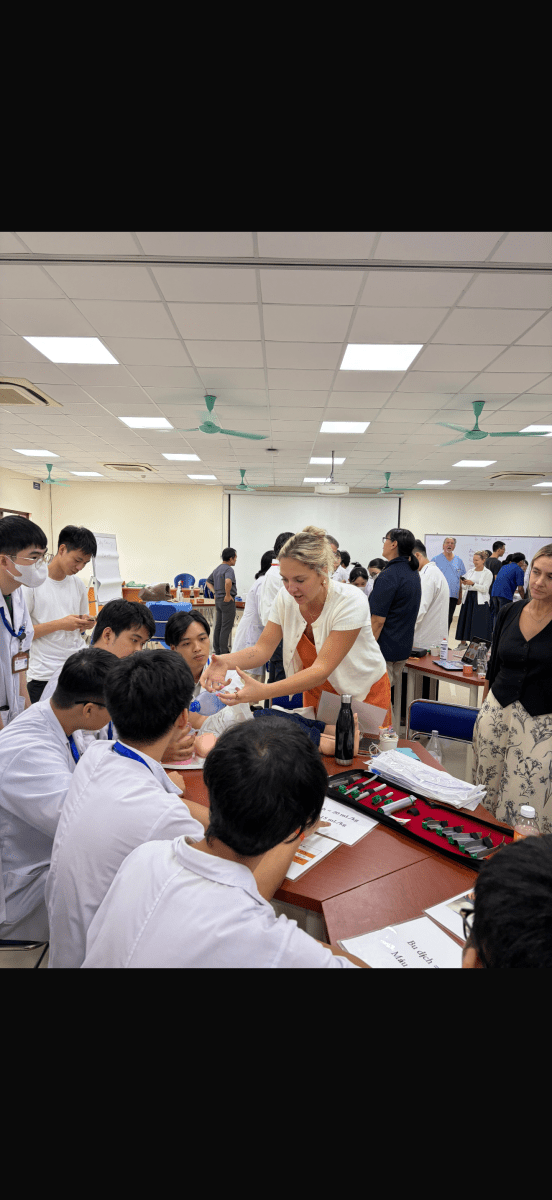
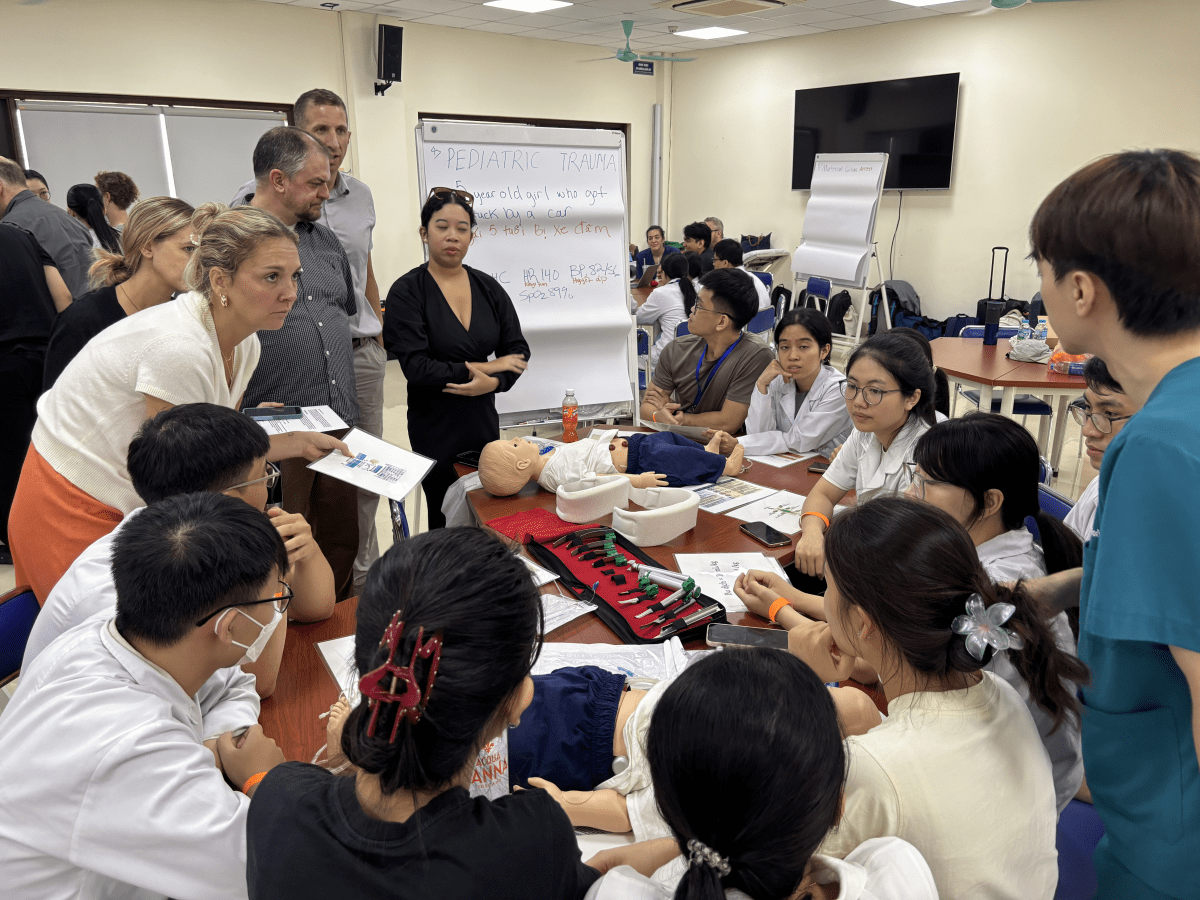
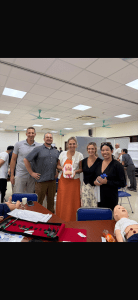

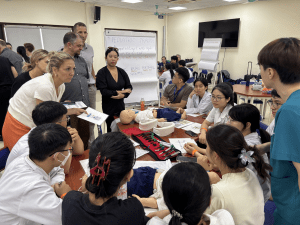
My teaching of vascular access techniques had a meaningful impact on medical students, nursing students, physicians, and other healthcare professionals throughout my time in Vietnam. Through hands-on workshops, simulation-based education, and interactive instruction, I provided training in ultrasound-guided peripheral intravenous (IV) access and central venous catheter placement. These sessions offered participants the opportunity to develop practical procedural skills, improve their understanding of vascular anatomy and ultrasound utilization, and gain confidence in performing procedures that are essential to emergency and critical care medicine. For many students and trainees, these workshops provided valuable exposure to techniques that may not be routinely emphasized in their traditional clinical training.
Medical and nursing students particularly benefited from the opportunity to practice these skills in a supportive, hands-on learning environment. By incorporating demonstrations, supervised practice, and discussion of real-world clinical scenarios, I was able to help bridge the gap between classroom knowledge and practical patient care. Emphasis was placed not only on the technical aspects of obtaining vascular access but also on recognizing appropriate indications, understanding potential complications, and selecting the safest and most effective approach for individual patients. These skills are particularly important in emergency settings, where timely vascular access can directly influence the ability to administer medications, provide fluids, obtain laboratory studies, and stabilize critically ill patients.
Physicians, residents, and other healthcare professionals also benefited from the educational exchange by discussing differences in procedural approaches, available resources, and clinical practices between Vietnam and the United States. Our discussions highlighted the importance of adapting evidence-based techniques to the resources available in different healthcare environments. Ultrasound-guided vascular access, in particular, represents an important skill that can improve procedural success, reduce complications, and minimize delays in patient care. Sharing these techniques also encouraged discussion about how ultrasound and standardized procedural training could be further incorporated into local medical education and clinical practice.
Ultimately, I hope my teaching contributed to building confidence, expanding procedural knowledge, and encouraging continued interest in emergency medicine education among the students and healthcare professionals I worked with. Just as importantly, the experience fostered a reciprocal exchange of knowledge, allowing me to learn from the unique experiences and perspectives of Vietnamese healthcare providers. I was grateful for the opportunity to contribute to the education of future physicians and nurses while supporting the continued development of emergency and critical care training in Vietnam.

